
Te kawa manaaki The Pastoral Care Code
The Pastoral Care Code outlines our role in making sure students are well and safe. Learn about our approach, view Code reports, or make a complaint.
Pastoral Care Code
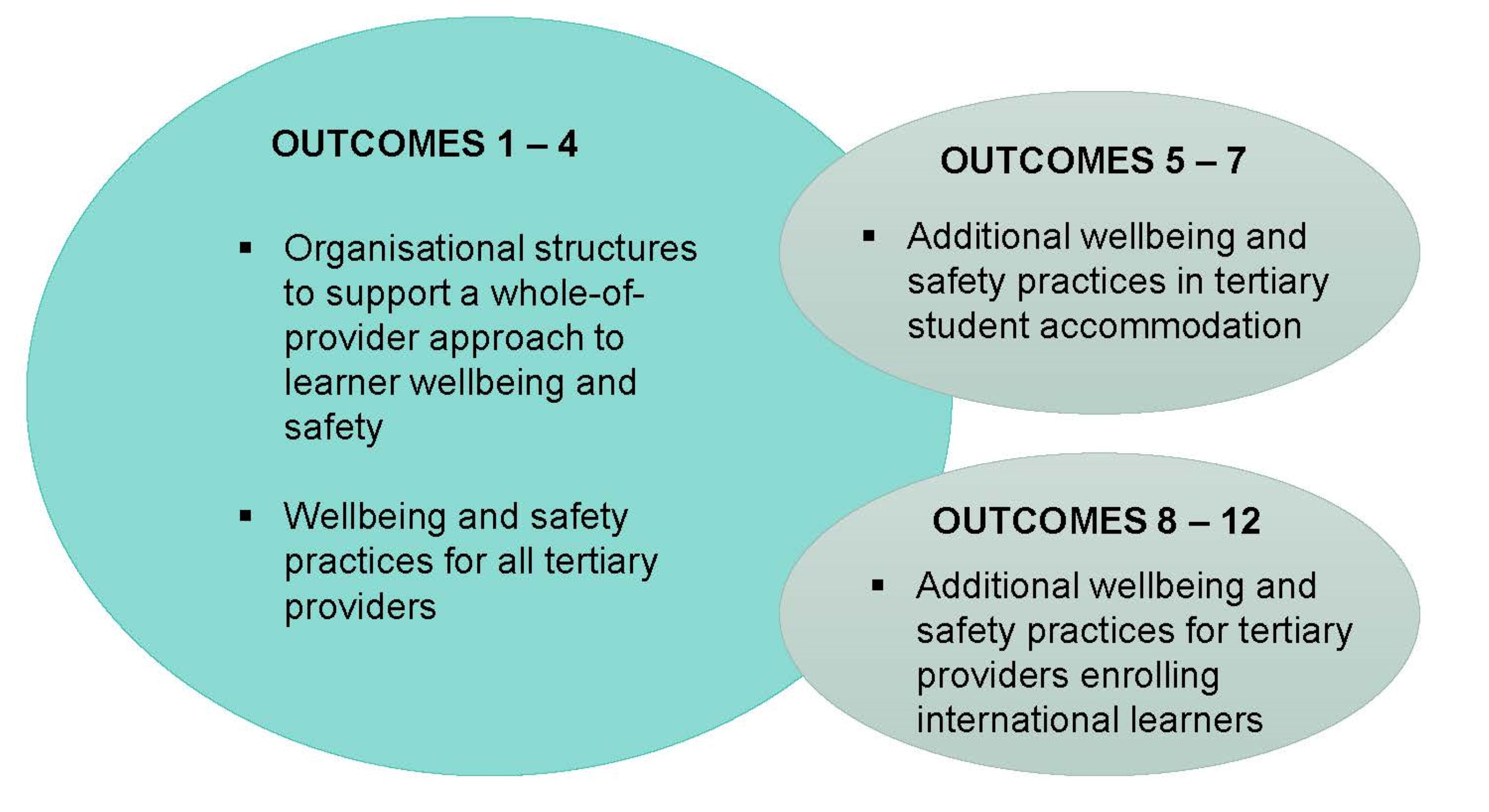
The Education (Pastoral Care of Tertiary and International Learners) Code of Practice 2021 (the Code) guides how universities and other tertiary providers support the wellbeing, safety, and success of their students. It outlines the roles and responsibilities of tertiary education organisations to achieve the 12 outcomes illustrated in the diagram below.
Our commitment to the Code
At Te Herenga Waka—Victoria University of Wellington, we are committed to creating a university community where every student feels safe, supported, and able to thrive.
We work alongside students to create an environment where they can be:
- safe, physically and mentally
- respected and accepted for who they are
- supported in their learning and wellbeing
- connected with their social and cultural networks
- able to have their say in decisions about service.
Our work related to the four cornerstones of the Code
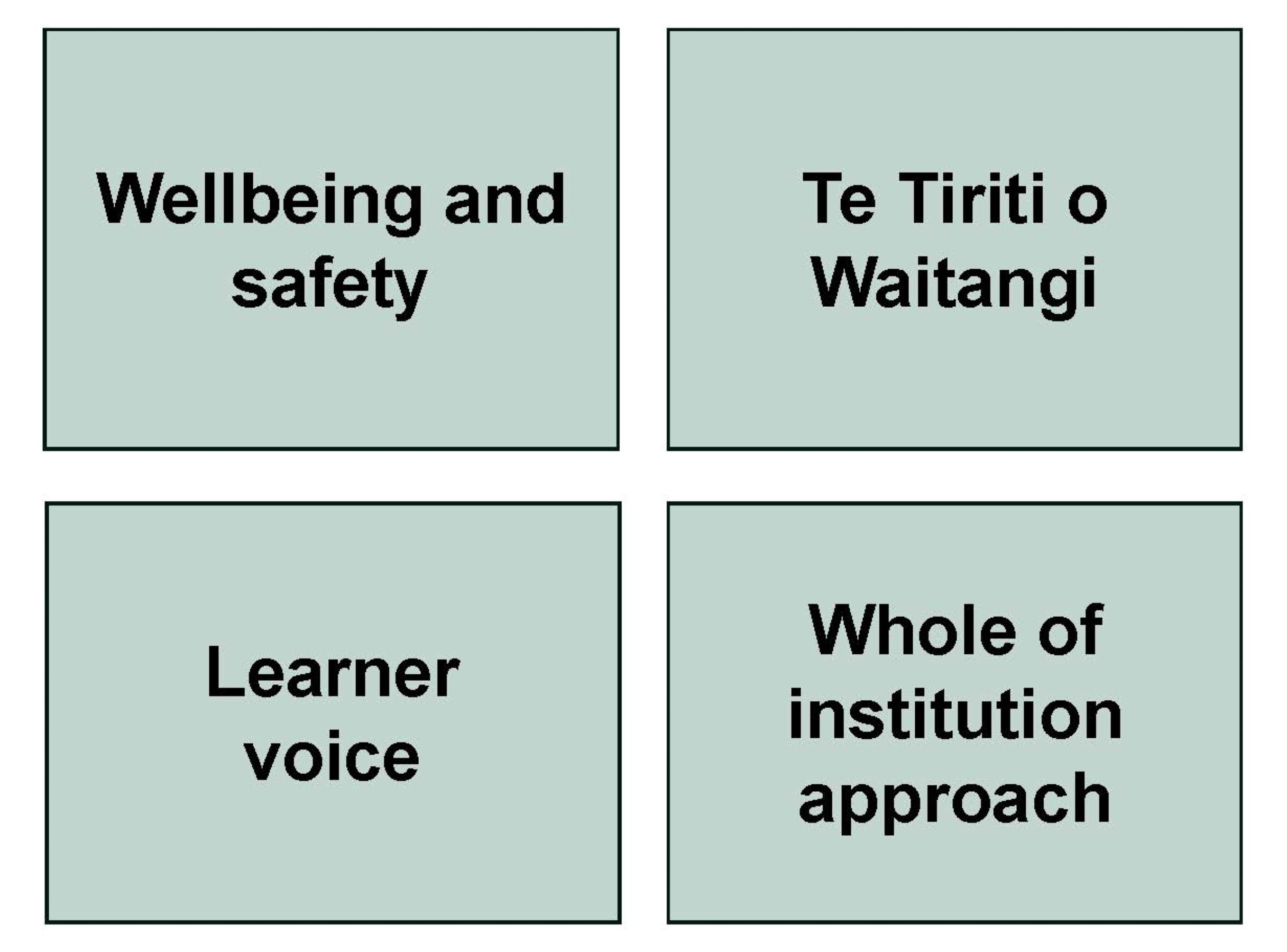
The Code has four cornerstones.
Wellbeing and safety
Ki te rā—Student Wellbeing Outcomes Framework 2024-2030 describes the University's commitment and approach to advancing student wellbeing. Te mahere whakahaere, the action plan for Ki te rā, sets objectives and actions that help everyone at the University understand and embed wellbeing into their mahi.
Te Tiriti o Waitangi
Te Tiriti o Waitangi is woven into the way we support students and shape our university community. Through the Te Tiriti o Waitangi Statute, Mai i te Iho ki te Pae—Māori Outcomes Framework, and the learning, cultural, and community spaces of Te Herenga Waka Marae and Ngā Mokopuna, we foster an environment where Māori can succeed as Māori and where all students experience the values of manaakitanga, whanaungatanga, and kaitiakitanga in practice.
Learner voice
Student voice informs how we improve services. We gather feedback, collaborate with student representatives, and use student insights to improve wellbeing and safety.
The Student Assembly is a student-led representative forum convened and chaired by VUWSA. It brings together representatives from key student groups to discuss significant University matters and provide collective student feedback to University senior leaders.
Students and staff co-design initiatives and solutions that enhance our student experience. Students who are trained in peer support work alongside our teams to foster connections and community. Examples include student wellbeing facilitators, international buddies, and PASS leaders.
Whole of institution approach
Supporting student wellbeing is a collective responsibility. Staff and students work together to create safe, inclusive environments, support wellbeing and respond to student needs.
Learn about our services and support for students.
Reporting on our compliance with the Code
All signatories are required to review and report on their compliance, as determined by NZQA, the governing body for the Code. Reports are submitted to Universities New Zealand Te Pōkai Tara, the statutory authority for monitoring Code compliance.
Read reports on Te Herenga Waka’s Code compliance:
- 2025 self-attestation report
- 2024 self-review report
- Annual formal complaints overview reports
- Critical incidents reports.
Complaints processes
External complaints
We ask that you raise any concerns or make a formal complaint to the University before engaging with external complaints processes.
Students can access free schemes for financial and contractual disputes. Both domestic and international students can use the Study Complaints service.
Pastoral Care Code compliance complaints
If you believe that the University is failing to meet the outcomes or requirements of the Pastoral Care Code, you can make a complaint to NZQA as the administrator of the Code.