
Medical emergency
Find out how to help someone experiencing a medical emergency.
Even if you haven’t had first aid training, you can still help.
- Check for any danger to make sure you are safe before helping others.
- If you find someone unconscious but breathing, place them on their side.
- Any person who is unresponsive and not breathing normally should be treated for cardiac arrest.
What to expect when you call Campus Security
When you call Campus Security, 0800 842 8888, you will need to provide clear information about your location, what type of medical emergency it is, and the number of people hurt. You will be asked your name and contact details.
Campus medics
Campus Security are responsible for dispatching campus medics, who serve Kelburn Campus where they are based. The small team of medics typically respond to over 30 events every year.
For medical emergencies at Pipitea and Te Aro campuses call Security, 0800 842 8888, and Security will dispatch a Security Officer and call 111. In our satellite facilities, call 111.
What to expect when you call an ambulance
When you call an ambulance, 111, you will be asked for a lot of information. This is to help the ambulance allocate its resources and know exactly where to send the crew.
- Specific location—you will be asked, “What’s the exact address of the emergency?” This includes street number, street name, suburb, building name, building floor and best road access. Campus is a complex environment, so this information is crucial.
- Callback number—a phone number is sometimes requested.
- What has happened—you will be asked to describe “exactly what has happened.” This helps the ambulance team to provide the rights skills at the right time. Instructions about patient care may be provided over the phone while the ambulance is on its way.
- Awake—you will be asked whether the person is awake.
- Breathing—you will be asked whether the person is breathing.
You will then be asked further questions to help emergency services prioritise their response. The sickest people get ambulances first. Follow-up questions also allow the ambulance to provide you with patient care instructions specific to the situation.
Sometimes, the call-taker will remain on the line to support you while an ambulance makes its way to you. In other cases, they will disconnect once they have all necessary information and ask that you phone back on 111 if anything changes.
If there are any delays, a call-taker will phone the scene back every 20-30 minutes to check in and update you on the ambulance’s estimated arrival.
Wellington’s ambulance service is free and provided by Wellington Free Ambulance.
Campus Security can help manage the situation and direct the ambulance to the scene.
Common medical conditions
Anxiety and panic attacks
Anxiety and panic attacks are common in younger people and often scary for people experiencing them. Symptoms include a sense of overwhelming panic or fear, chest pain, a high heart rate, and rapid breathing. A normal breathing pattern and emotional state can usually be established by providing the person with reassurance, support, acknowledging their distress, and encouraging them to breathe slower and relax.
Call Campus Security, 0800 800 8888, unless the situation appears critical or deteriorates.
Trauma
Trips, slips, and falls are the most common injuries, and may or may not be medical emergencies. A broken arm may not be an emergency but will require treatment. A suspected head injury should receive an urgent medical assessment for concussion. Suspected spinal injury requires an ambulance response.
Depending on the severity of the trauma, send for an ambulance, 111, then Campus Security—0800 800 8888.
Anaphylaxis
Anaphylaxis is a severe allergic reaction and can be life threatening. Common foods that may cause anaphylaxis are peanuts, nuts, cow’s milk, eggs, wheat, seafood, fish, soy and sesame. Some drugs can also cause anaphylaxis.
Symptoms of anaphylaxis include difficulty breathing, wheezing, swelling, difficulty talking or a hoarse voice, nausea, vomiting, and hives. Lay the person flat and prevent further exposure to the cause.
Send for an ambulance, 111, then Campus Security—0800 800 8888.
Seizure
A seizure is a sign of abnormal brain activity. Generalised seizures affect the entire body. The person will usually lose consciousness, may have jerking movements, and may breathe unusually. A focal seizure affects one part of the body and the person may still be conscious. Be aware that a focal seizure may progress to a generalised seizure.
Ensure a person having a seizure is safe. Time the seizure. Do not restrain the person or interfere with the seizure, unless this is essential for their safety. Turn them on their side when you can.
Send for an ambulance, 111, then Campus Security—0800 800 8888.
Diabetic emergencies
Diabetic emergencies relate to low (hypoglycaemia) or high (hyperglycaemia) blood glucose levels.
Hypoglycaemia symptoms include anxiety, sweating, shaking, dizziness, and difficulty following instructions. Stop any exercise and provide the person with sugar—common lollies (like jellybeans and Skittles) and sugary drinks are often used.
Hyperglycaemia is due to high blood glucose. Symptoms include excessive thirst, frequent urination, dry skin and mouth (signs of dehydration), nausea, vomiting and confusion.
Send for an ambulance, 111, then Campus Security—0800 800 8888.
Cardiac arrest
Cardiac arrest is where the heart suddenly stops beating. A person in cardiac arrest will be unresponsive and normal breathing will have stopped. This differs to heart attack, where the person will be conscious.
Anyone in cardiac arrest must receive cardiopulmonary resuscitation—or CPR—and a defibrillator (AED) as soon as possible if they are to survive. CPR emulates the person’s circulation and breathing. An AED delivers a shock to the heart.
Respond to cardiac arrest with the DRS ABCD.
- D – danger?
- R – responsive?
- S – send for help—call 111 for an ambulance and get someone to bring a defibrillator
- A – open the airway
- B – normal breathing? If not, start CPR
- C – CPR
- D – Attach the defibrillator (AED) as soon as available and follow the prompts.
CPR should be delivered at a ratio of 30 compressions to 2 breaths. However, untrained rescuers may be unable to provide effective breaths. In this case, your goal is to attempt to minimise interruptions to chest compressions.
Defibrillator (AED) locations
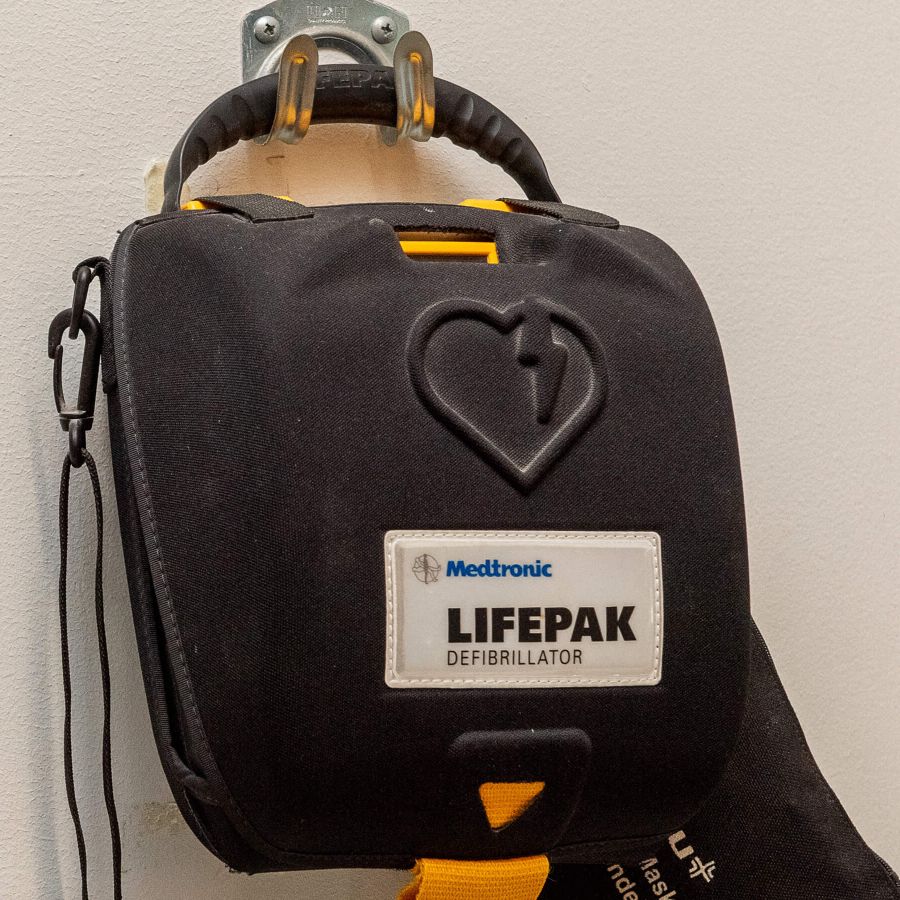
AEDs are critical lifesaving devices for cardiac arrest. Once you have the AED, simply turn it on—it will tell you what to do.
AEDs are available on some University campuses. You can also call Security, 0800 842 8888, to have one sent immediately to you and the collapsed person. AEDs on campus are indicated with green signage.
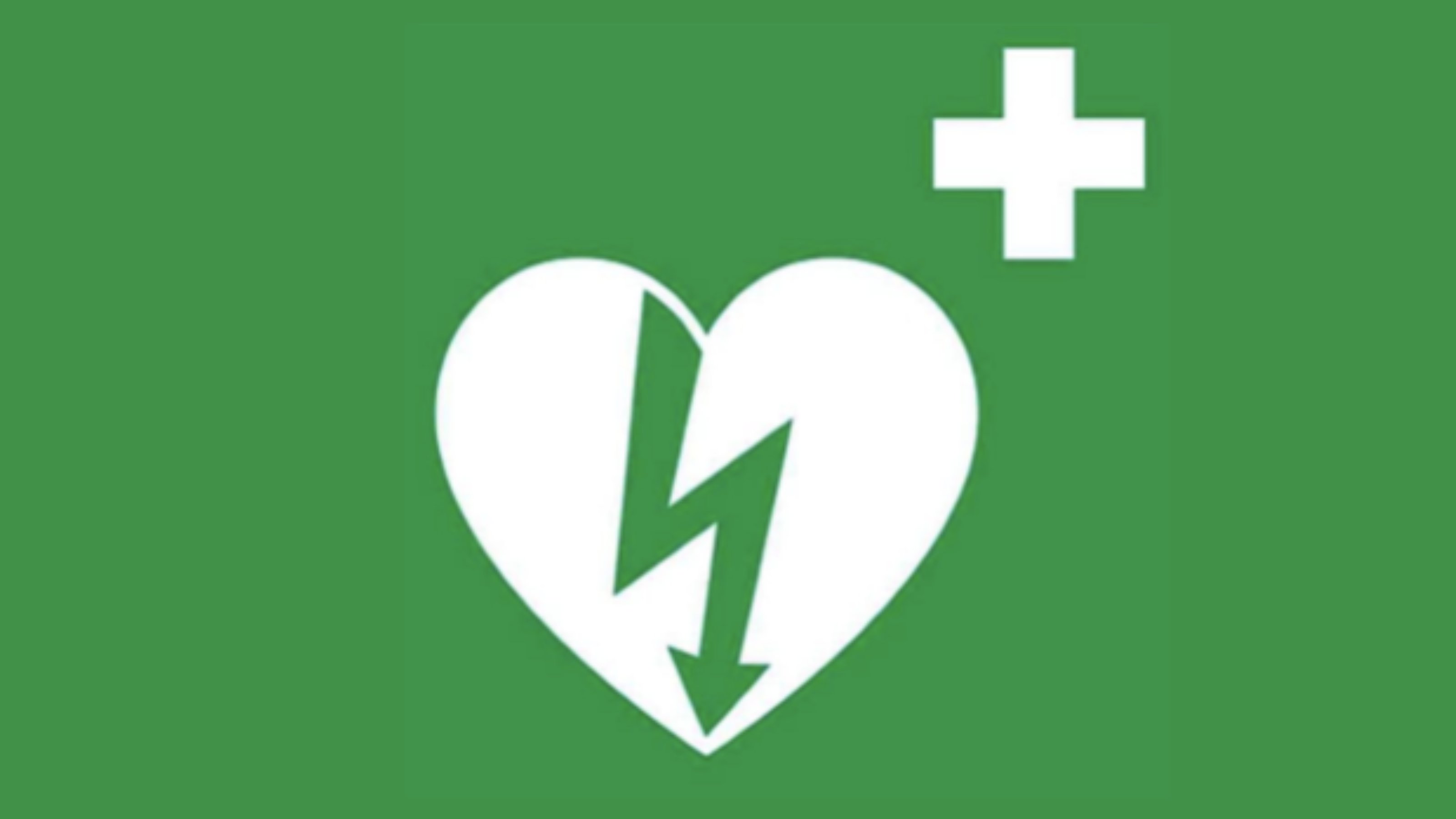
See the map of AED locations on campus listed below.
Get the AED locations app for AEDs in Aotearoa New Zealand.
Kelburn
- Hub (Level 2), next to the exit to Waiteata Access Road.
- Cotton Building, Level 1, next to the Faulty of Science information centre.
- Student Health Service, Student Union Building, Level 1.
- Central Services Building, Malaghan Institute of Medical Research foyer.
- Opposite 75 Fairlie Terrace, down from Gate 9, community lock box.
- Kelburn Parade, outside von Zedlitz Building, community lock box.
- Kelburn Parade, outside Kirk Building, community lock box.
- Recreation Centre, across from reception.
- Hunter Building, Level 2, outside of the Council Chamber.
- Ngā Mokopuna, ground floor kitchenette.
- Boyd Wilson Field, east side, community lock box.
Pipitea
- Rutherford House, ground floor on pillar near Wellington School of Business and Government Tītoko.
- Government Buildings, ground floor, outside Law Library help desk near civil defence cabinet.
Te Aro
- Vivian Street Building, ground floor, foyer at main entrance.
Island Bay
- Wellington University Coastal Ecology Lab.