
Current research
Information on our current research and collaborators.
Alpine plants in a changing world
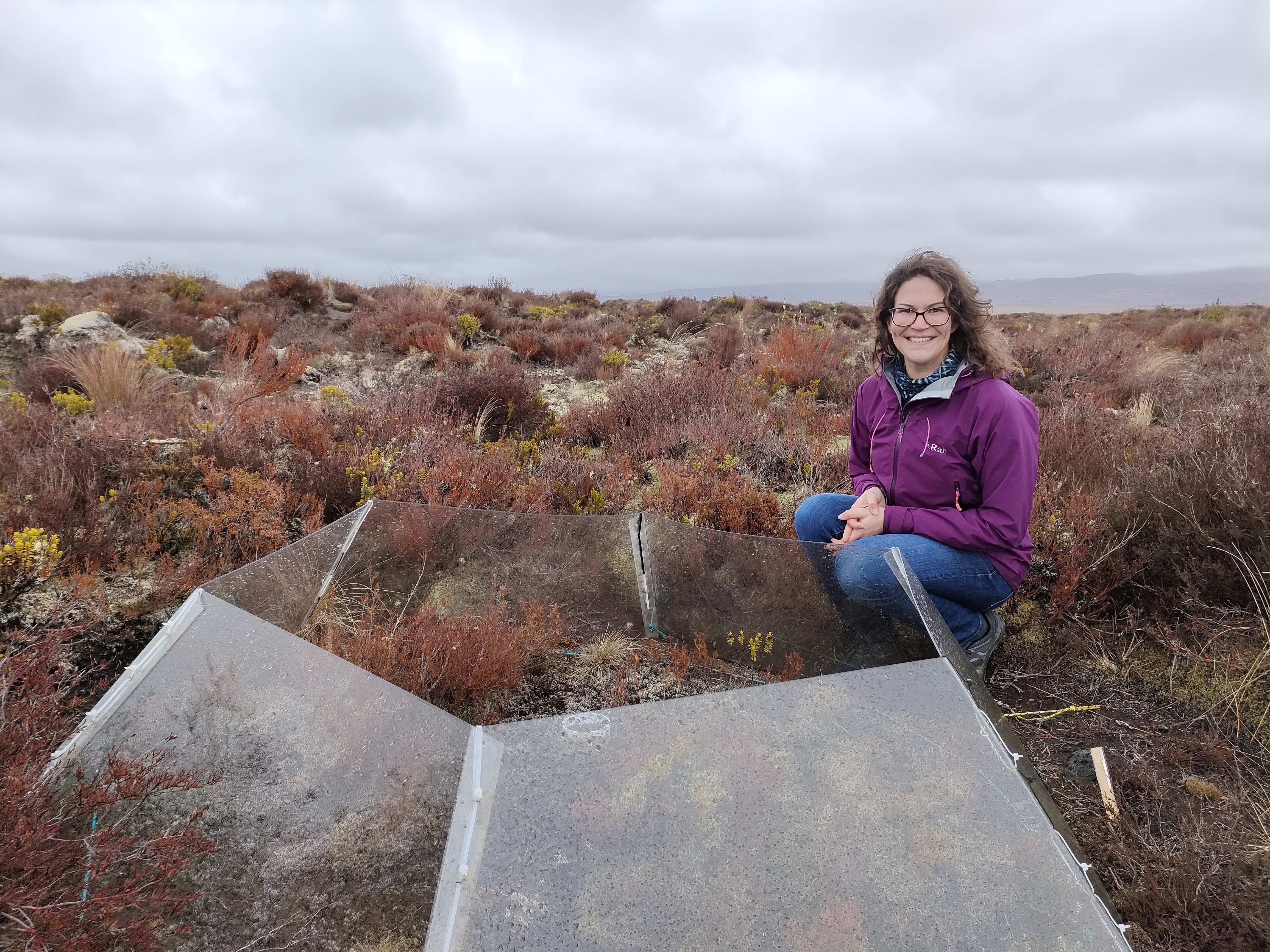
I am a plant ecologist focused on how environmental change, like climate and land use change and weed invasions, alter the structure and functions of ecosystems and their services to humanity. My team’s work ranges from fundamental questions in ecology to applied issues in conservation and restoration.
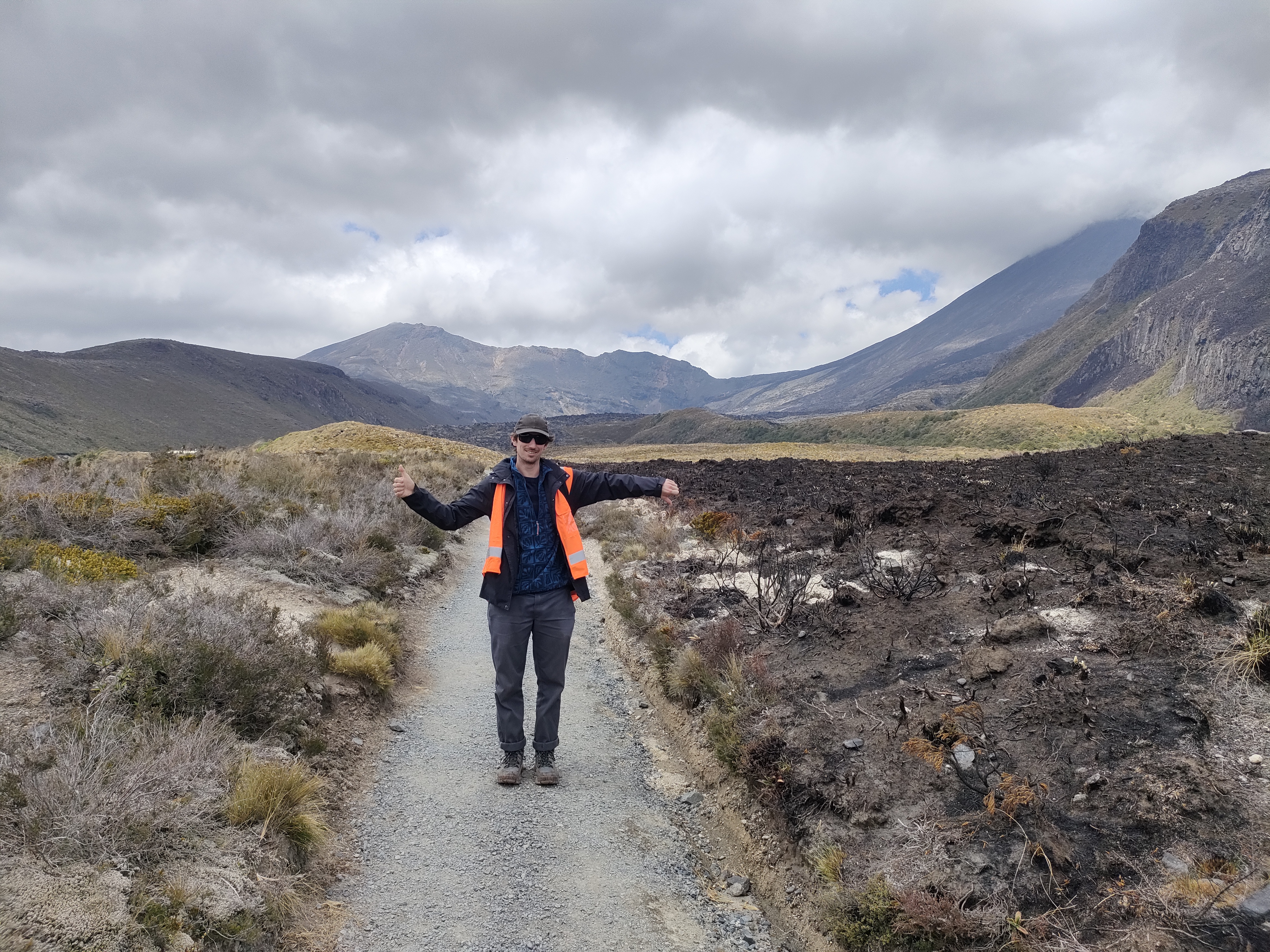
A major focus has been understanding how climate change and plant invasions affect native biodiversity and carbon balance in montane ecosystems (Deslippe and Veenendaal 2025). For example, recently we showed that invasion of Calluna vulgaris in Tongariro National Park (TNP) shifts these systems from net carbon sinks to sources (Leon et al. in review, Vought et al. 2026). Likewise our work has helped to identify native and endemic species at risk of decline due to invasion warming (Rixen et al. 2022, Moyle and Deslippe 2024). Our work contributes to global biodiversity monitoring in alpine zones (e.g., Intratrait. EnviDat). Locally, it has important implications for conservation management in TNP. For example, we showed that warming induced drought stress may constrain C. vulgaris invasion on the leeside of Mount Ruapehu (Leon-Garcia et al. 2025), making this region important for the conservation of drought tolerant endemic species as climate change proceeds. We work closely with the Department of Conservation, Ngāti Rangi and Ngāti Hikairo o Tongariro and wider Tuwharetoa hapu to ensure that management plans are ‘climate ready’.
Recent research funding in support of our alpine programme:
- Plant-soil interactions, biodiversity and ecosystem function in an era of global change JR Deslippe (PI). Royal Society of New Zealand Rutherford Discovery Fellowship - $800,000. 1/08/2023-31/07/2028
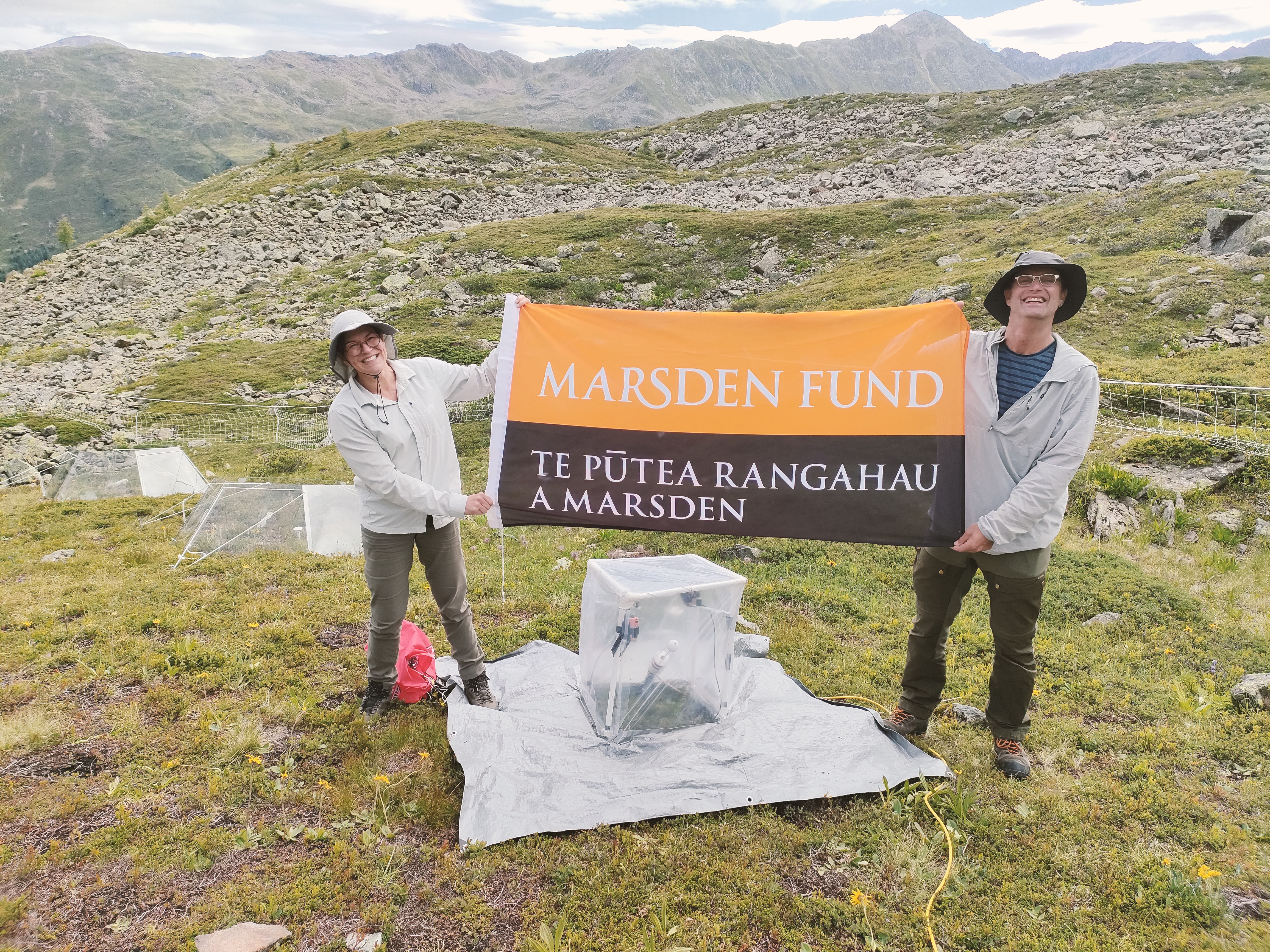
- Turning up the heat on soil food webs: will global warming erode ecosystem resilience? PIs: A Barnes (U Waikato), C Alster (U Lincoln); JR Deslippe (AI), L Shipper (AI). Royal Society of New Zealand Marsden $960,000; VUW portion $52,439. 01/03/2024-29/02/2027.
- Climatic sensitivity and trait change in alpine plants, JR Deslippe (PI). Research fellowship Swiss Federal Research Institute SLF, 11,000 SFr. (~$17,500 NZD) 1/6/2022 – 31/12/2022.
- Changing climate and biodiversity in mountains: understanding the interactive effects of warming, species extinctions and invasions on ecosystem function. JR Deslippe (PI) and A Classen, U. Michigan, USA (AI). Royal Society of New Zealand Marsden $960,000. 1/3/2021-30/09/2025.
Wetlands for People and Place
Another major research focus is developing knowledge to underpin the restoration of functional wetland ecosystems in agricultural landscapes (Deslippe and Bentley 2025). We apply transdisciplinary methods to gauge how wetland restoration affects biodiversity and ecosystem services to people (Tomscha et al. 2021, Bentley et al. 2022). Our spatial models of wetlands (Tomscha et al 2023) now are used by Greater Wellington Regional Council and the Wairarapa Moana Governance Board in wetland restoration planning processes.
A guiding question has been where to restore wetlands to maximise biodiversity and human benefits. A key approach has been to characterise the patterns of biodiversity of an ‘umbrella species’ a species that provides insight into a wider web of species interactions. We targeted the genetic diversity of an endangered wetland specialist tree species: maire tawake (Syzygium maire). Maire tawake was previously widespread in lowland forests and wetlands across the North Island of Aotearoa New Zealand. Its nutritional berries were a key food resource for native birds (e.g., kereru) and traditionally, for mana whenua Māori, who also used the dense and strong wood in tool making. However, widespread deforestation and land-drainage for agriculture and the arrival of the lethal fungal pathogen myrtle rust, have driven it dramtic decline and it is now of nationally critical conservation concern. Working with Rangitāne o Manawatū and colleagues at the Bioeconomy Sciences Institute we sequenced the genome of this rare tree (Balkwill et al 2024), following extensive wananga (discussion) iwi (tribe) partners named the genome ‘Ngā Hua o te Ia Whenua', translating to 'the fruits of the land'. It is believed to be the first genome to be given a te reo Māori name and the first genome named by an indigenous group globally. We then undertook a national sampling campaign to understand the genetic diversity of maire tawake throughout its range (Balkwill et al 2025), enabling us to inform a regional conservation plan for the species (Herbert et al. 2025), including for critically small remaining populations in the Rangitāne o Manawatū rohe (tribal region).
Recent research funding in support of our wetland restoration programme:
- Reimagining wetlands in productive landscapes facing emerging threats. JR Deslippe (PI) Bioprotection Aotearoa Centre of Research Excellence - $1,137,862. 1/6/2021-31/09/2025.
- Te Hā o Wairarapa Moana, Listening to Breath of the Moana: Establishing a Greenhouse Gas Baseline to Assess the Climate Co-benefits of Upcoming Wairarapa Moana Restoration Projects -Associate Investigator on Earth Sciences New Zealand-led Coastal People's Southern Skies Centre of Research Excellence Project $300, 000 (VUW portion $63,274 NZD) 02/26- 01/28.