
Pest management with a focus on bees, wasps & ants
Our research focuses on social insects and their interactions with pathogens, parasites, and other biological stressors, with the aim of developing biologically informed approaches to pest management and pollinator protection. A central theme is understanding how social organisation, immunity, and behaviour shape disease dynamics within insect societies, and how these processes can be exploited to improve outcomes for both managed and wild species. Much of this work uses honey bees as a model system, where colony-level processes offer opportunities for interventions that are more sustainable and targeted than conventional chemical controls.
We are particularly interested in developing and evaluating novel biological strategies that enhance honey bee health by reducing pathogen and parasite impacts, improving disease resistance, or disrupting transmission pathways within colonies. This includes work on host–pathogen interactions, immune priming, and biologically based control agents, with an emphasis on approaches that can be realistically implemented by beekeepers. Our goal is to contribute solutions that are effective, scalable, and compatible with long-term pollinator health and agricultural productivity.
We’ve had a major focus on the use of highly targeted biopesticides, such as double-stranded RNA (dsRNA) for use in the control of Varroa mites. These parasites are one of the key challenges that beekeepers face in New Zealand and around the globe.
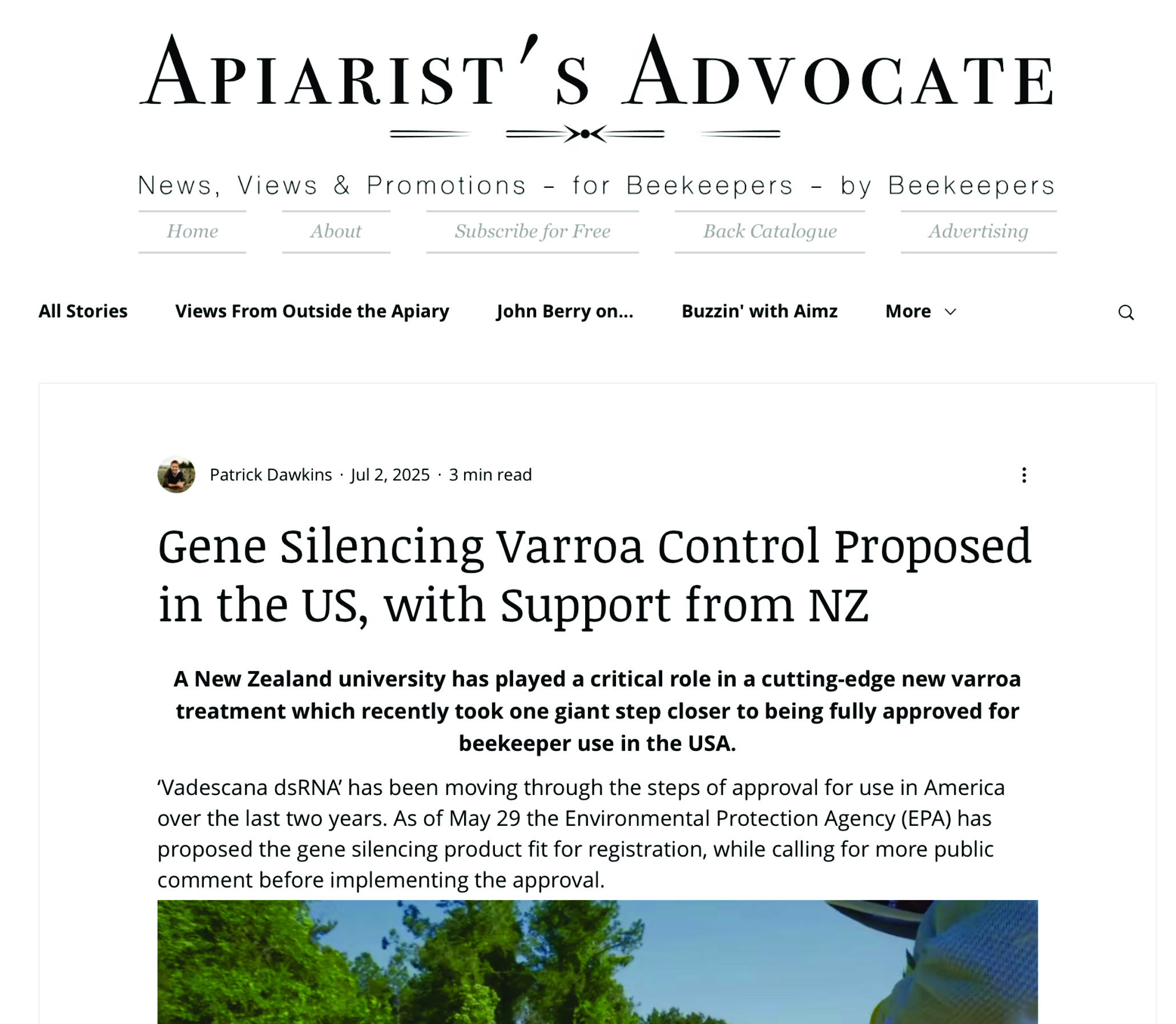
Apiarist's Advocate article: Gene Silencing Varroa Control Proposed in the US, with Support from NZ

We apply similar biological and ecological principles to the management of invasive social insects, including wasps and hornets that pose significant ecological, economic, and biosecurity risks. By leveraging species-specific pathogens, behavioural vulnerabilities, and colony-level processes, we aim to develop suppression tools that are more selective and environmentally responsible than broad-spectrum control methods. Across both pollinator protection and invasive species management, our work seeks to bridge fundamental ecology with applied outcomes that are directly relevant to practitioners and policymakers.
RNZ article: Huge wasp nest 'frighteningly large, but pretty amazing'
Contact

Professor of Biology
School of Biological Sciences