
WSBG post-budget event brings secondary school students closer to real-world economic decisions
At the annual Wellington School of Business and Government (WSBG) post-budget session, economists Craig Renney and Mark Cox spoke to secondary school students about the choices made by the government in this year’s budget.
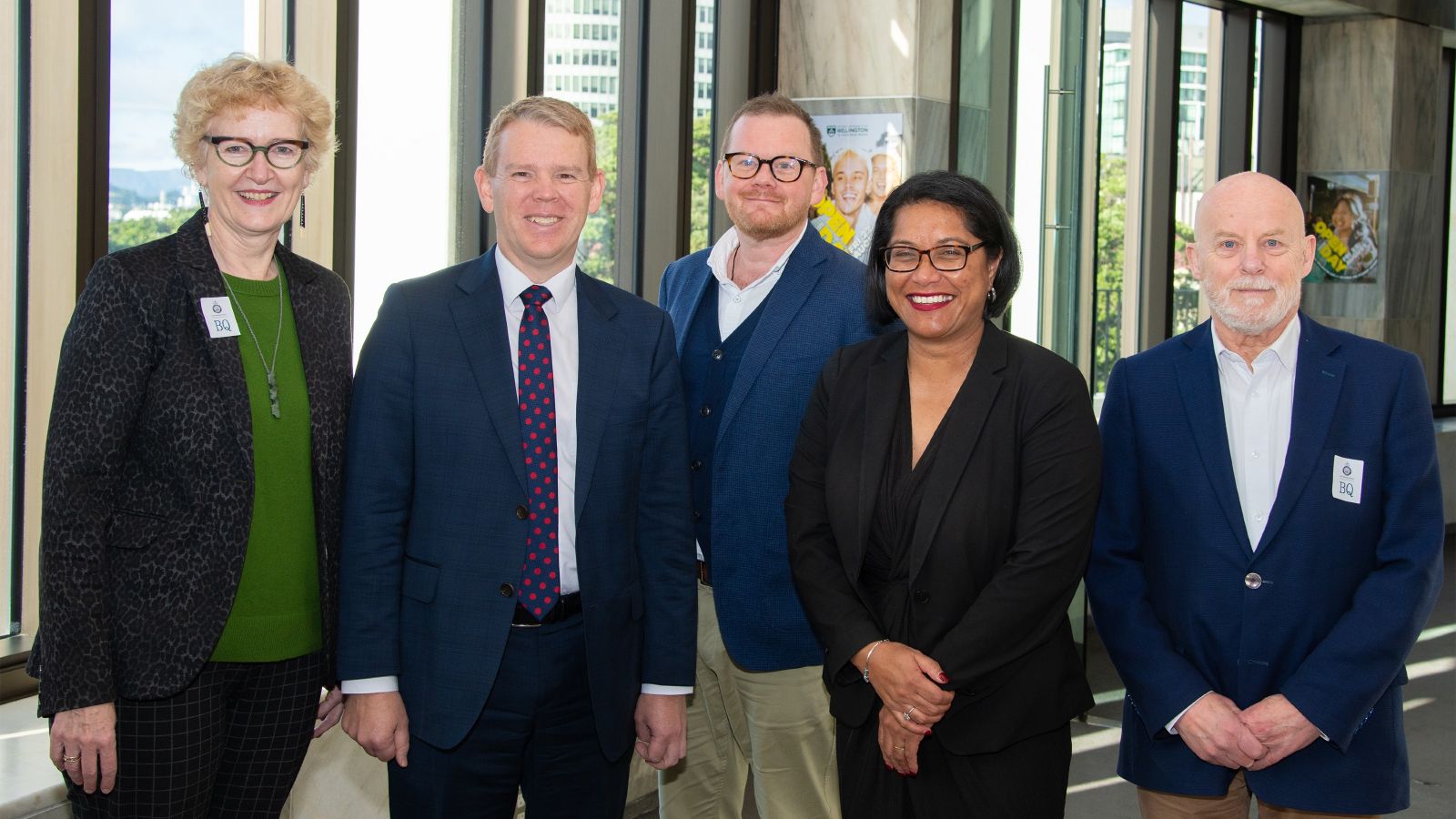
Around 200 students from Wellington schools came to the Beehive for this event hosted by Professor Jane Bryson, Dean, Wellington School of Business and Government, Hon. Barbara Edmonds, MP for Mana, and Rt Hon. Chris Hipkins, Leader of the Labour Party.
Professor Bryson highlighted WSBG’s capital city connections, the teaching and research informed by the organisations around us, and the real-world projects, internships, and engagement that our students benefit from.
Barbara Edmonds—who has three children currently studying at Te Herenga Waka—commended the students for their interest in the economy. She also emphasised the importance of a post-budget discussion, saying, “Budget decisions shapes lives... Budgets aren’t just about numbers on a page, they are a reflection of the values and the choices by the governing party.”
Choices and decision-making proved to be a recurring theme for the guest speakers, as they emphasised the Budget as a set of choices, decisions, and values throughout their presentations.
First acknowledging the challenges and limitations in creating a government budget, Business New Zealand’s Mark Cox closely examined areas of government spending, like health, social security and welfare, and superannuation. Craig Renney, from the New Zealand Council of Trade Unions, reiterated that the choices made within the Budget were “deliberate”, pointing out to students that not spending money on certain areas was also a choice, referencing the lack of funding for climate change and budget cuts toward conservation.
Chris Hipkins echoed these statements about choice, urging students to remember that “the Government’s budget measures the cost of government action; it does not measure the true cost of inaction,” and that decisions made by the government now would impact them as the “next generation of New Zealanders.”
Engagement from the students was evident during the Q&A portion of the event, with student questions centred around youth voices being heard and the opportunity to vote at a younger age.