
S.T. Lee Lecture 2025
Antarctic update 2025: evolving uncertainty in the future of the ice sheet
Wednesday 5 November 2025
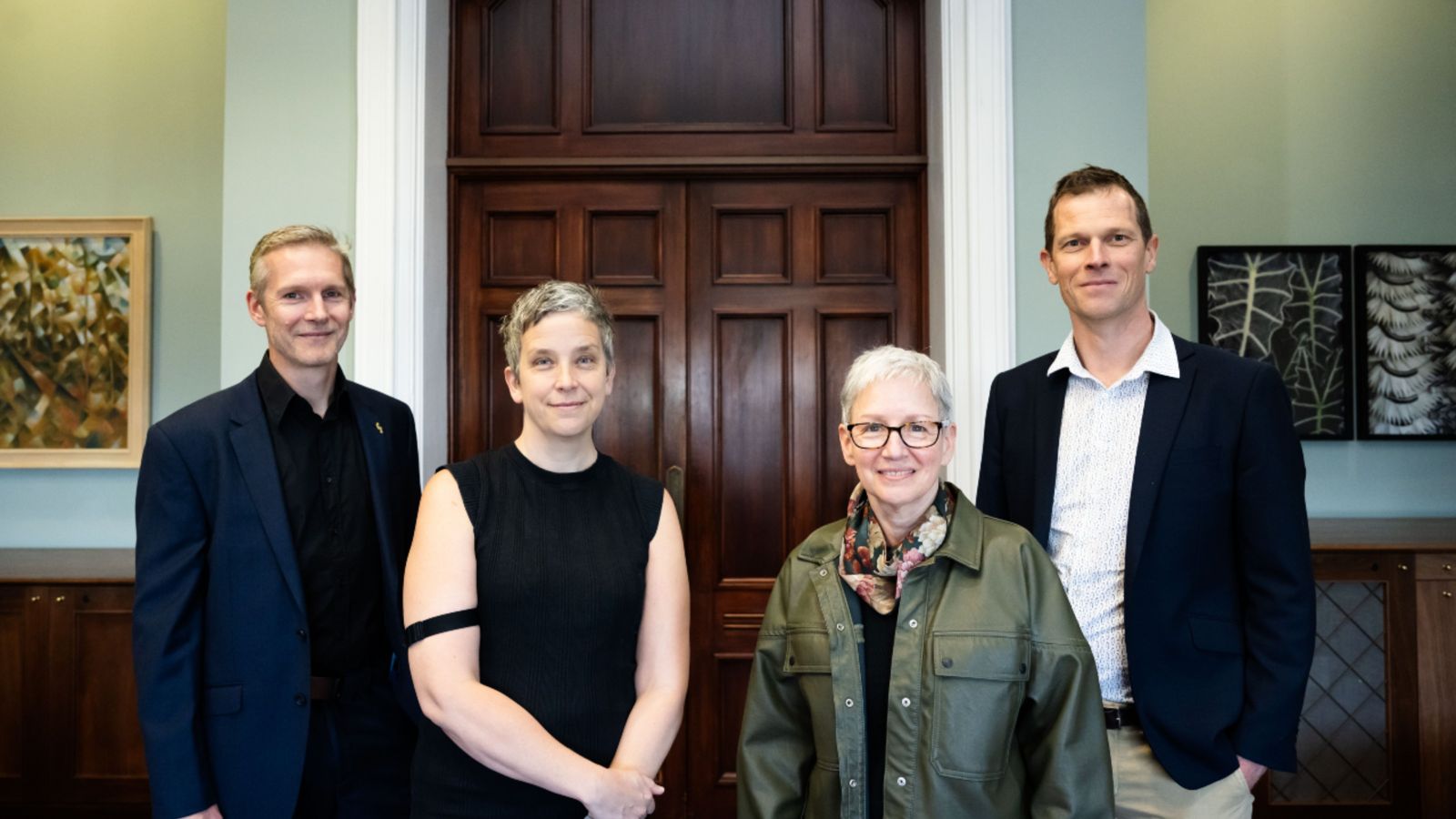
Professor Tamsin Edwards
King’s College, London, United Kingdom
Synopsis of lecture
Antarctica has long been the most uncertain part of future sea-level rise. In 2021, the Intergovernmental Panel on Climate Change (IPCC) Sixth Assessment Report assessed that continued ice loss from the Antarctic ice sheet is likely this century, with uncertainty arising from the degree to which increased snowfall will offset melting. But the report also stated that ice losses could be strongly increased, under high greenhouse gas emissions, from instabilities about which there is “deep uncertainty”. One study predicted that Antarctic instability could lead to a sea level contribution of 7-14 metres by 2300 under very high emissions: several times more than other studies. Such uncertainty poses substantial challenges for coastal risk management, and has motivated new avenues of research.
What has been learned about Antarctica since 2021? Has scientific understanding improved about the possibility of instability, and the range of potential contributions to future sea-level rise under different levels of global warming over the coming centuries? This lecture will examine the future of the Antarctic ice sheet through the lens of uncertainty – how we know what we know, and what we still don’t know – with a look forward to forthcoming results from the EU project PROTECT, and the outlook for the IPCC Seventh Assessment Report.
Tamsin Edwards
Professor Tamsin Edwards is a climate scientist specialising in quantifying the uncertainties of climate model predictions, particularly for the ice sheet and glacier contributions to sea level rise. She was a Lead Author of the Intergovernmental Panel on Climate Change (IPCC) Sixth Assessment Report published in 2021, and is a Coordinating Lead Author of the IPCC Seventh Assessment Report.
Tamsin provides expert advice on climate science to the public, policymakers, media and businesses. She was the first Parliamentary Thematic Research Lead for Climate & Environment, advising the UK Parliament on research evidence to better inform scrutiny, legislation and debate. She is an award-winning communicator, including writing articles for the Guardian and co-presenting the BBC Radio 4 series “39 Ways to Save the Planet”.
You can watch the full lecture here: