
ARC Endowed Development Fund
The Fund generously supports Te Puna Pātiotio—Antarctic Research Centre and our student researchers.
What is the ARC Endowed Development Fund?
The Antarctic Research Centre (ARC) Endowed Development Fund supports the critical work of Te Puna Pātiotio—Antarctic Research Centre by providing postgraduate and PhD support to students with research links to Antarctica, to take up amazing opportunities that would not have otherwise been possible. The Fund also supports the launch of new research programmes that support the Centre’s world-leading research on how the Antarctic is responding to climate change and its consequences, both globally and for Aotearoa New Zealand.
How you can support the ARC Endowed Development Fund
You can make a gift via the Victoria University of Wellington Foundation. All donations are eligible for a charitable gift taxation rebate.
Visit our donation page to donate by credit card or direct credit and find information about making a gift from the UK, US, Canada, or Hong Kong.
Or use this QR code.
To learn more about other ways you can support the ARC, please contact:

Senior Development Manager, Science and Engineering
Development and Alumni Relations Office · Development Office
We encourage supporters of the ARC to also consider a gift to the Centre through a bequest in their will—a tremendous way to show support while not impacting a donor's financial needs during their lifetime. For information visit legacy gifts
History of the Fund
The ARC Endowed Development Fund was launched in June 2004 by the late Dr Barrie McKelvey. The Development Fund is an endowment managed by Victoria University of Wellington Foundation, with interest income used to fund the grants, and the capital retained in perpetuity.
Message from ARC founder Prof. Peter Barrett
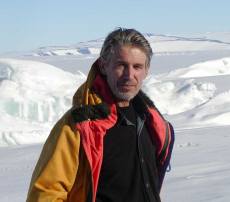
Victoria University of Wellington has conducted scientific expeditions to Antarctica every year since 1957. Professor Bob Clark and our two patrons, Professor Peter Webb and Dr Barrie McKelvey, began a wonderful tradition with that first small expedition. By the time I arrived 14 years later, it culminated in the formal establishment of the Antarctic Research Centre in 1972. Since then I have had the pleasure and privilege of "keeping the show on the road". Antarctic science and the experience it gives young people are of great value. We want to ensure that this tradition continues—you can help us with your support.
Message from patrons Dr Barrie McKelvey and Prof. Peter Webb

Over fifty years ago we sailed from Wellington on the HMNZS Endeavour for Antarctica. We had just completed Geology III and Professor Bob Clark had somehow got us on board, ostensibly to attempt gravity coring in McMurdo Sound. That coring never eventuated, but Victoria University of Wellington Antarctic Expedition (VUWAE) and many future Antarctic research careers did! A lot of people helped us achieve that first VUWAE field season in Southern Victoria Land. This generous support has remained at the heart of much VUWAE research ever since.
Antarctica has played a prominent part in both our research careers. But more importantly, the Antarcticans we met along the way, and the diverse situations we encountered, taught us a lot about cooperation, about coping, and about ourselves. We are the better for it. The ARC Endowed Development Fund will allow future graduate students, irrespective of the careers they pursue, similar opportunities and benefits to ours. We wholeheartedly commend the Development Fund to you, and warmly encourage your support.
How are the funds used?
Decisions on disbursements are made by a committee at Te Puna Pātiotio—Antarctic Research Centre. Funds are currently used in support of:
- a three-year PhD scholarship in perpetuity
- postgraduate students to undertake field work in Antarctica each year, ensuring the future of research and field experience at the ARC
- postgraduate travel to international summer schools in glaciology, modelling, and paleoclimatology
- postgraduate student travel to international conferences and workshops, to present their scientific discoveries on a world-stage
- opportunities to work with collaborators in world-class analytical facilities
- postgraduate students publishing their research in international science journals
- development of new programmes, eg costs of field equipment or analytical work beyond the scope or budget of current programmes.