
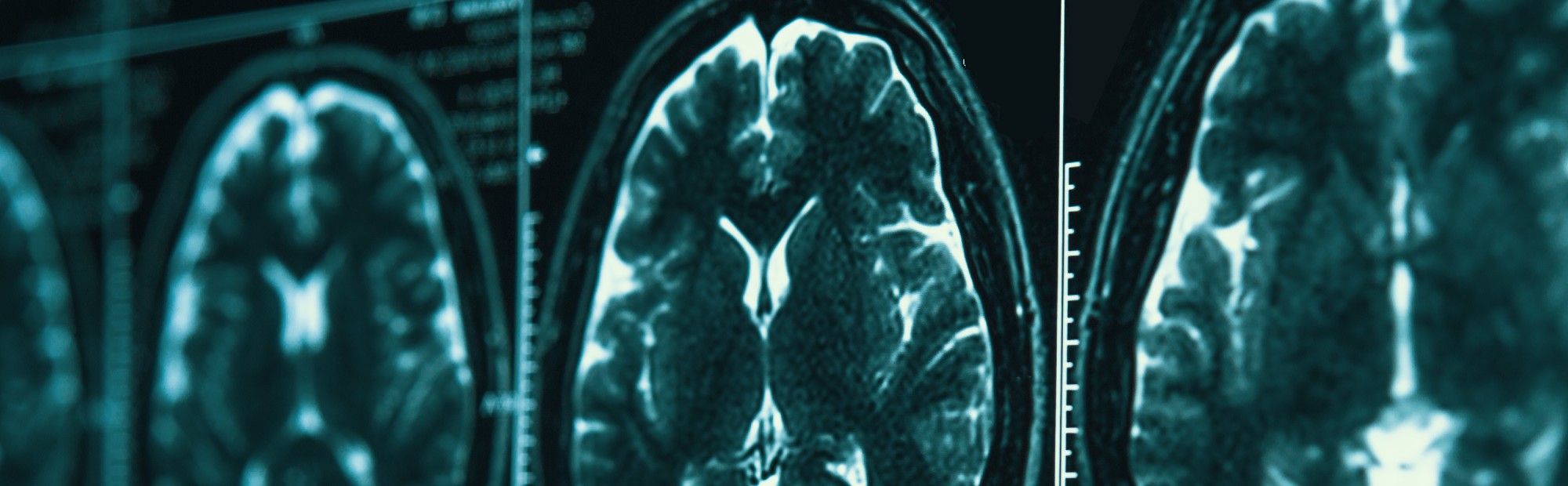
Making MRI more accessible
MRI is an area of immense relevance and potential to society's health and wellbeing. Our contribution lies in enabling new kinds of MRI–specialised, application
Magnetic Resonance Imaging—better known as MRI—has become one of the most powerful diagnostic tools in modern medicine. It allows clinicians to see inside the human body without surgery, using magnetic fields to create remarkably detailed images of organs, tissues, and especially the brain.
MRI is essential for diagnosing conditions ranging from neurological disorders to sports injuries, and for medical research to improve patient treatment and care. Yet, for all its benefits, MRI remains locked behind hospital doors. The machines are large, complex, and expensive to operate, requiring entire rooms of infrastructure and specially trained staff.
Opening new pathways in imaging through superconducting innovation
At Paihau—Robinson Research Institute, we are reimagining what MRI could be.
By drawing on our world-leading expertise in high-temperature superconductors and magnet technology, we are working to build a new generation of MRI systems—ones that are smaller, more efficient, and far more accessible and affordable. Our goal is to take this powerful diagnostic tool out of the exclusive realm of tertiary hospitals and place it within reach of more communities, both in Aotearoa New Zealand and around the world.
Designing a more accessible future
The idea of a compact MRI machine is not new, but making one that delivers clinical-quality images has long been considered a formidable challenge. To address this, we partnered with the University of Minnesota and other leading US institutions on an ambitious project funded by the National Institutes of Health. Together, we asked a bold question: could we reduce the size of an MRI scanner by relaxing some of the traditional constraints around magnetic field uniformity, and still capture images detailed enough for medical diagnosis?
We answered that question with a fully built prototype: a compact brain scanner centred around a 0.7 Tesla high-temperature superconducting magnet, designed and built here at the Institute. The system’s ergonomic design was developed with our colleagues at the School of Design Innovation at Te Herenga Waka—Victoria University of Wellington, ensuring that the technology would not only perform brilliantly but feel intuitive and comfortable for patients and operators alike.
The University of Minnesota has ethical approval to conduct human imaging with the scanner, and early results are promising. The images reveal the brain's fine structure with clarity that rivals that of conventional hospital systems.
Our teams are now working together to explore commercial pathways for this technology, with the vision of deploying these systems in regional clinics, outpatient centres, or anywhere a full-size MRI would never fit.
Imagine a rural health centre where patients can receive high-quality brain scans without needing to travel for hours to a major hospital. Or a future where focused MRI systems—built for knees, limbs, or spinal imaging—can be installed in sports clinics, emergency departments, or even mobile units.
This is where Robinson’s expertise in superconducting engineering intersects with real-world needs. By removing barriers to size, cost, and complexity, we can help make life-saving imaging technology available to more people in more places .
The science behind the scan
At its heart, an MRI machine speaks the language of atoms.
Every image it produces begins with the body’s most common element—hydrogen—abundant in water and fat. When a person enters an MRI scanner, their body is immersed in three carefully controlled magnetic fields. These fields—each playing a distinct role—coax hydrogen atoms into alignment, then gently nudge them out of place using pulses of radio waves. As atoms relax back to their natural state, they emit signals that can be captured and converted into images.
One of these magnetic fields must be incredibly strong, stable and uniform. A superconducting magnet generates this field, typically cooled to cryogenic temperatures to remove electrical resistance. Traditional MRI machines use low-temperature superconductors housed in massive cryostats filled with liquid helium. The result is a machine that, while powerful, is also expensive to run and demanding to maintain.
At the Institute, we work with high-temperature superconductors—materials that can carry electrical current without resistance, but at more manageable operating conditions. These allow us to design magnets that are both smaller and more energy-efficient, without sacrificing image quality. It’s a bit like replacing old-fashioned heavy CRT TV sets with a modern LCD one. It does the same basic job, but with improved performance and ergonomics.
The team behind the vision
This work is led by Ben Parkinson, a principal engineer at Paihau—Robinson and a specialist in magnetic resonance systems. Ben brings deep experience in magnet design and superconducting systems integration, and has helped guide this project from concept to working prototype. His team continues to explore new possibilities for compact imaging and commercial deployment.
As with all research at Paihau—Robinson, the MRI programme reflects our broader commitment: to take pioneering science and apply it with purpose—to create technologies that make a difference in people’s lives.

Senior Engineer
Robinson Research Institute