
An Aotearoa-specific approach for supporting autistic tamariki
Associate Professor Hannah Waddington and Dr Jessica Tupou's programme draws on mātauranga Māori to support young autistic children and their whānau.
An Aotearoa-specific programme that provides support for whānau of young autistic children and draws on mātauranga Māori has been developed by researchers at Te Herenga Waka—Victoria University of Wellington, and is having a big impact both locally and on an international scale.
Associate Professor Hannah Waddington and Dr Jessica Tupou (Kāi Tahu, Kāti Māmoe) lecture in Educational Psychology, and are focused on researching the benefits of early identification and support for young autistic children.
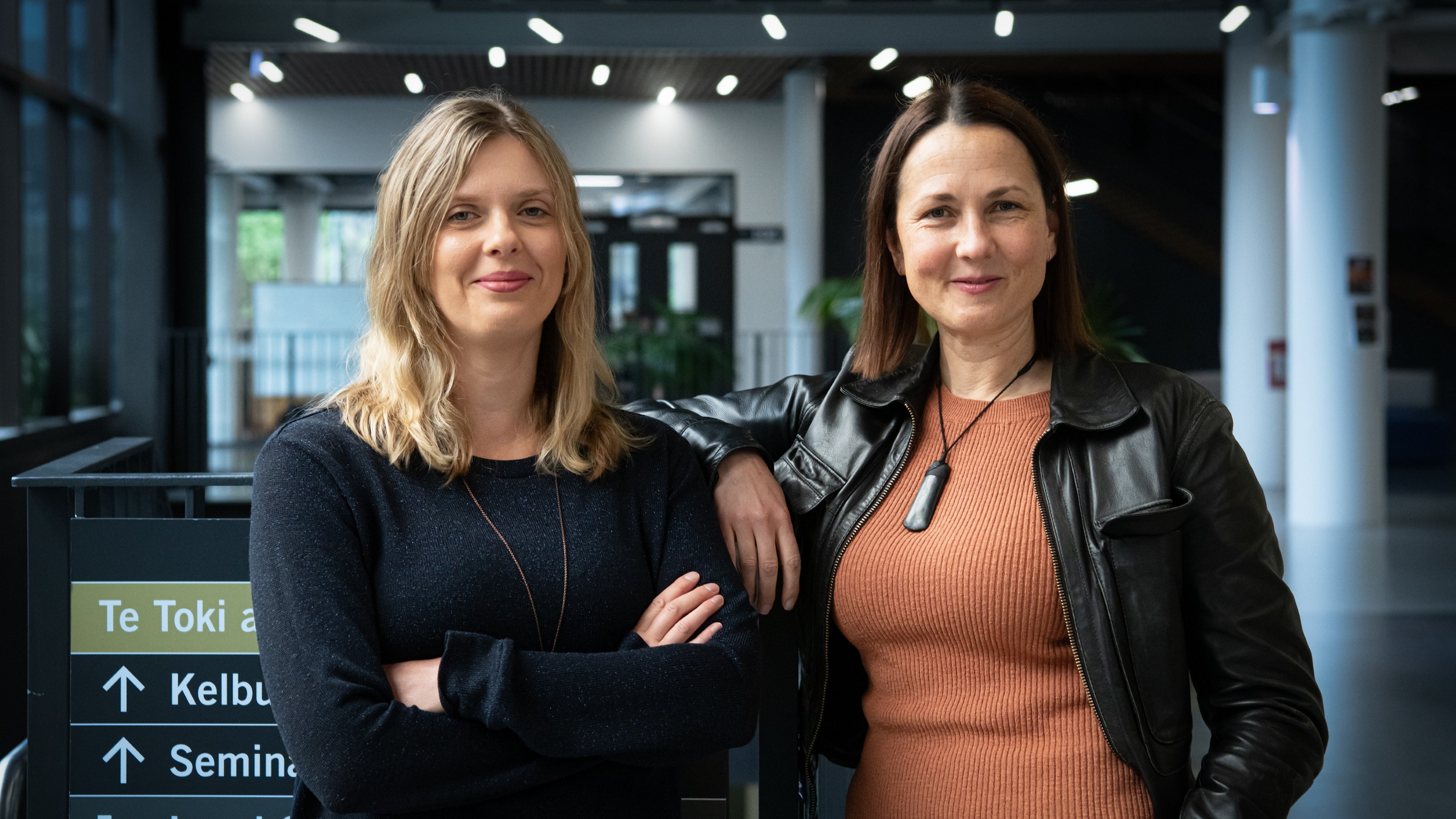
The pair had worked together establishing Te Herenga Waka’s Autism Clinic (Te Rāngai Takiwātanga), which operated from 2018 until the start of 2025. The clinic’s services were transitioned to be delivered via Autism New Zealand at that time, so that it could reach more of the community and make a bigger impact.
Recently, Jess and Hannah worked with Autism New Zealand to produce a series of videos called Autism in Aotearoa, which cover their research interests in neurodiversity, diagnosis, and education around autism.
“These videos really epitomise the way Jess and I like to work, which is bringing the community together—they give voice to autistic people, their whānau members, as well as researchers, and we think they are very useful tools,” says Hannah.
Co-design supporting diverse communities
Another focus of the pair’s research has been the development of a key programme called Raupī te Raupō, which draws on mātauranga Māori to understand and provide culturally responsive support for young autistic tamariki and their whānau.
The point of Raupī te Raupō is to support whānau to better understand and respond affirmingly to their preschool-age children who are autistic or potentially autistic. Because of the long diagnostic process due to the lengthy wait for assessment, it’s really important that families can access support as soon as a need is identified.
Associate Professor Hannah Waddington
Senior Lecturer, School of Education
Alongside Jess, Lee Patrick from Autism New Zealand,who is autistic, and Carla Wallace-Watkin, the parent of an autistic child, Hannah led the design of Raupī te Raupō with input from autistic, Māori, and Pasifika advisory rōpū (groups).
“It’s a whānau support programme—a coach meets weekly with families to help them better understand their child and to also provide practical support,” says Hannah.
“Some of the sessions are online, where they discuss strategies and reflect on videos of interactions, and some of the sessions are in-home with the child present and are very practical.”
What’s particularly special about Raupī te Raupō is that it’s designed with significant input from autistic and Māori communities, and marks a step-change in the way support has previously been delivered, says Hannah.
“That makes it unique on a global scale. Plus it’s designed to be really positive—it’s not about changing the child, it’s about supporting those around the child to understand and affirm them. That’s a real switch from the way support has been delivered in the past, which sees autism as ‘wrong’ and which tries to change the child to appear more like their non-autistic peers,” she says.
“We know from speaking to autistic people that that approach can be really harmful to their mental wellbeing—it sucks to feel like your way of being is not accepted by your parents or those professionals who support you.”
Drawing on Indigenous knowledge
Support for Raupī te Raupō from Te Herenga Waka’s Mātauranga Māori Research Fund has led to an important collaboration with a local iwi.
We’re working with Ngāti Toa to adapt and pilot Raupī te Raupō as part of their iwi-led service, which is very, very exciting. Some extremely cool ideas have come out of that collaboration which will be embedded in the general Raupī te Raupō programme, as well as the specific Ngāti Toa version.
Dr Jessica Tupou
Senior Lecturer, School of Education
Working with the iwi has led to the research team forging Indigenous connections much further afield, too.
“Ngāti Toa were very keen to connect with international colleagues, so we worked with them to apply for funding to do so—in 2025 Fran Kewene [from Te Herenga Waka’s School of Health] and I travelled with a group from Ngāti Toa to Canada to connect with the Maskwacis community and the University of Alberta,” says Jess.
“We were able to share so much Indigenous knowledge and understanding around autism. The Canadian team have since been to visit us here in Aotearoa—there’s a beautiful connection happening and we will continue working together develop resources for our communities centred around this Indigenous autism wisdom.”
Jess says the Aotearoa contingent have already learned a lot from their Canadian counterparts.
“One thing they have done a lot of thinking about is how to adapt their cultural ceremonies to make them more welcoming for autistic people. We spent some time at a powwow [Native American/First Nations traditional ceremonial gathering] with them and they’ve developed a sensory teepee that was a little bit away from the other teepee and had all kinds of sensory items in it so that autistic children and their families could go and hang out there. Powwows can be really loud and colourful and can be really overwhelming, so this was a safe space where these children are still connected,” explains Jess. “It gave us a lot to ponder in terms of how that might work at marae for example—how could we incorporate that same idea of providing space for connection, but also making sure that it's a safe and comfortable environment for autistic people?”
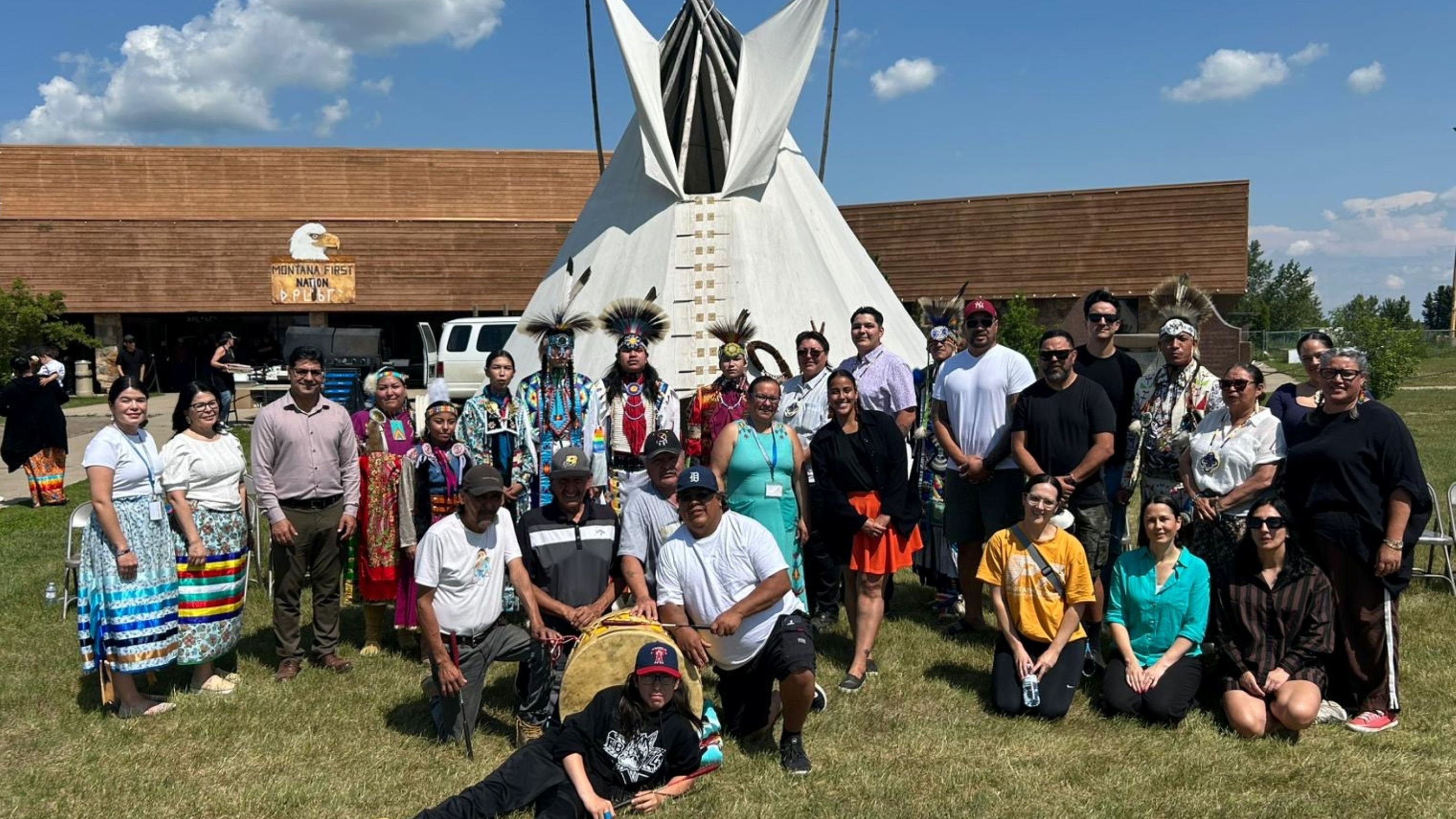
Jess says there were many similarities between Māori and Maskwacis cultures, despite being on opposite sides of the globe.
“It was just incredible how many shared understandings there were—we might have had different words for things, but the underlying values and ideas were very similar in a lot of different areas.”
Autism strategies for the Aotearoa context
Another collaboration with Professor Laurie McLay from the University of Canterbury will see Raupī te Raupō adapted into a digital version—this will expand its reach to parents who can’t access the face-to-face version, which is currently only available in the Wellington region.
Jess says it’s vitally important to have an autism service that is specific to Aotearoa.
“First and foremost, culture and cultural context have a huge impact not only on how we view and understand autism and neurodiversity, but also what support and resources look like,” she says.
Having something that’s developed from the ground up in Aotearoa means all of those things are embedded from day one, rather than taking a programme developed overseas and trying to squeeze it into the New Zealand context to align with our resource availability, mātauranga Māori, our way of doing things, and our understanding of autism.
Dr Jessica Tupou
Senior Lecturer, School Of Education
Hannah says the programme’s whanonga pono, or underlying values, are beneficial to everyone taking part in the programme.
“Te ao Māori strategies aren’t just for tamariki Māori—having a programme underpinned by these values is really appreciated by all families who participate, and by the coaches who deliver Raupī te Raupō. The ability to draw on these relational strategies to guide decision-making has been an awesome strength of the programme for everyone involved.”
Find out more about research at Te Whānau o Ako Pai School of Education.