
Brewing without the buzz
Te Herenga Waka scientists and a successful Kiwi brewery are working together to create great tasting alcohol-free beer and wine.
The market for beer and wine is being redefined. Demand for beer and wine that tastes great but has low alcohol is growing at an astronomical rate, fuelled by new products and discerning consumers. More and more people are seeking out low- or no-alcohol drinks than ever before, so meeting that demand has become a priority for brewers and winemakers.
But how do you create truly complex and delicious-tasting alcohol-free beverages? The answer might lie in a cutting-edge collaboration by researchers from Te Herenga Waka—Victoria University of Wellington, who are investigating how to make beer and wine the traditional way that packs all the usual flavour but has none of the punch.
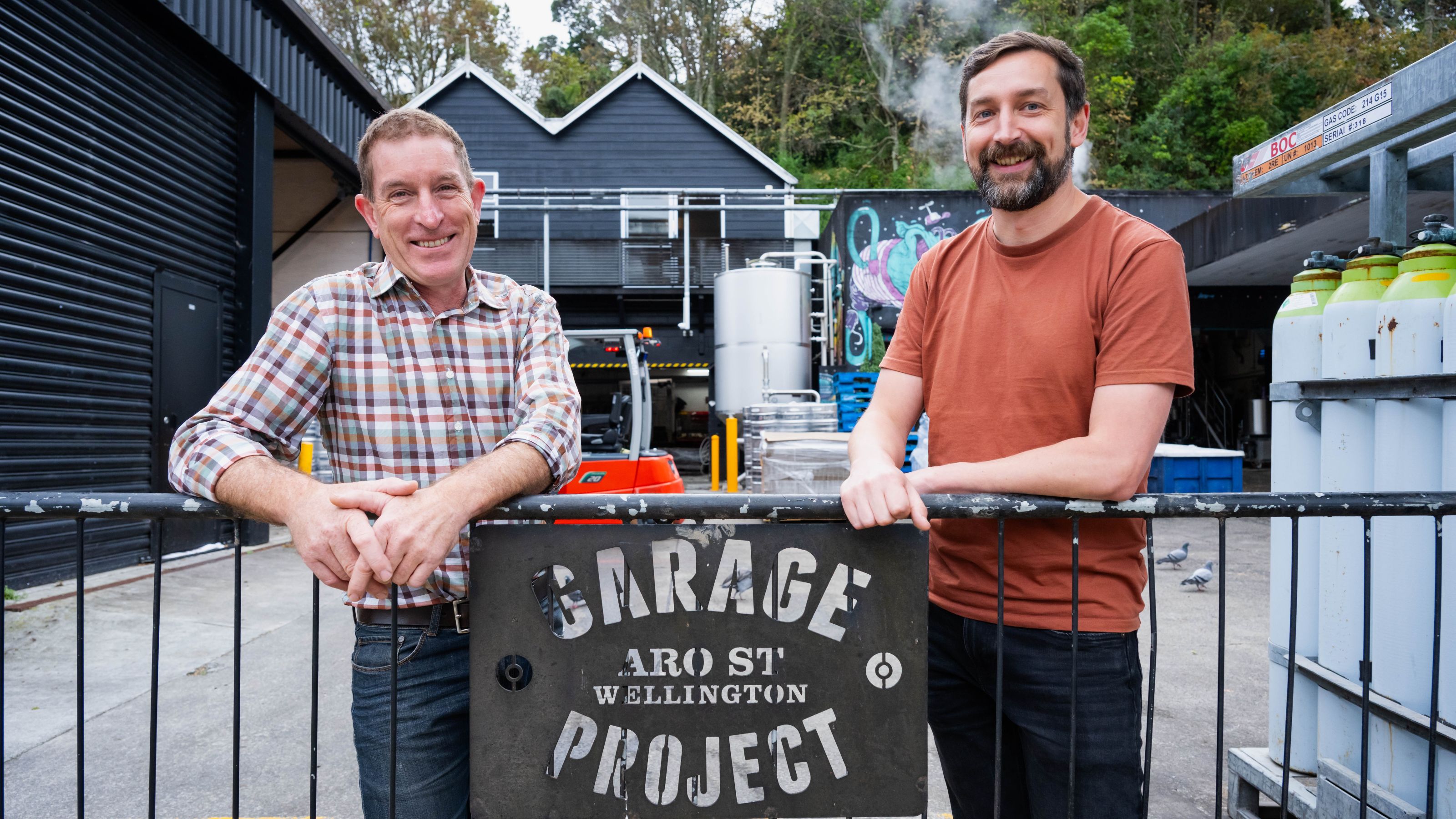
The project straddles academia and industry—it’s led by Associate Professor Simon Hinkley of Te Kāuru Ferrier Research Institute and Dr Peter Bircham, who is Head of Research and Development at Wellington brewery Garage Project and an adjunct research fellow at Te Herenga Waka’s School of Biological Sciences.
The team also includes researchers from the University of Auckland and Waikato University, the Bragato Research Institute and a number of leading local wineries, and yeast producers. The project has received $7.8 million from MBIE’s 2025 Endeavour Fund.
People seem to want a more adult-friendly alcohol-free choice, rather than being forced to choose a juice or a soft drink, which can be pretty calorie-dense and much less complex, flavour-wise.
Dr Peter Bircham
Head of Research and Development, Garage Project
“These customers are discerning and have high expectations of quality and how or where a product is made. So we want to find out how to improve the process using New Zealand ingredients and technology, to grow that market and give it as much attention as we do to regular beer or wine.”
Simon says non-alcoholic beers and wines still require traditional fermentation processes to retain their subtlety and complexity of flavour.
“What we’re trying to do is retune an age-old process with modern technology—it’s a big ask when you’re pulling out alcohol, which is one of the key flavour components as it changes the structure of the liquid and the way aromas are released,” he says. “But instead of trying to make an alcohol-free replacement drink that tastes the same as the original, maybe we will end up defining a whole new sector. We’re thinking of much bigger scope.”
Why go alcohol-free?
The Brewers Guild of New Zealand reports that the volume of low- and no-alcohol beer consumption has risen a staggering 750 percent since 2019. The research team is currently working to understand exactly why.
“We’re still trying to unpack the data. We would have expected health to be the main reason people wanted alcohol-free beer or wine, but it’s not that clear cut,” says Simon. “It’s very early days as far as that aspect of the research is concerned, so we are really interested to see what’s found.”
But Peter says one thing’s for sure: the demand for low- or no-alcohol options has grown exponentially.

“Garage Project picked up on this relatively early and it’s now a pretty big proportion of our portfolio—something in the vicinity of 20 percent of our production now is non-alcoholic, so that’s really significant. Each year we produce hundreds of different beers, but of those our single biggest seller is non-alcoholic, so it’s something we place a huge amount of value on,” he says.
That massive uptick in demand for great tasting alcohol-free products means the project has enormous commercial potential. That’s why the research team has roped in Associate Professor Fandy Tjiptono from Te Herenga Waka’s School of Marketing and International Business, who is investigating the consumer perspective—he’s doing everything from looking at global drinking trends, to running surveys down at the local pub to find out what people are looking for in alcohol-free beers and wines.
Fantastic yeasts, and where to find them
The research project is focused on how to create yeast strains that are tailored for non-alcoholic beer production, and the team is using non-GMO techniques to select for brewing yeasts with an enhanced ability to produce non-alcoholic beers.
“In order to direct or control the yeast metabolism, we’ve been synthesising some molecules which can probe the chemistry of how yeast behaves,” says Simon. “Our work at Ferrier as carbohydrate chemists is all about sugars, which is the basis of brewing, so this area is a natural extension for us. This project is taking us in some new directions too, and we’re looking forward to working with winemakers to try out some of their technology for taking the alcohol out of wine.”
The researchers are also exploring the use of non-conventional yeast species, including discovering wild yeasts that are indigenous to Aotearoa.
“There’s an incredible diversity of wild yeasts out there that hasn’t been fully explored yet, so we want to tap into that because we might discover an atypical one that would work for our purposes,” says Peter. “Some of the team are out there swabbing trees and building up a catalogue of what’s there, and from there we can work out who the relevant stakeholders are that we need to consult, such as local iwi.”
Simon says establishing a protocol for using native yeast strains is a complicated process but very worthwhile.
It’s great to have some resource and colleagues who are thinking about Indigenous rights, and working hard on setting up an effective framework to figure out the best way forward for identifying, commercialising, and sharing benefit from indigenous species like yeasts.
Associate Professor Simon Hinkley
Te Kāuru Ferrier Research Institute
Peter first started exploring the development of yeasts for brewing alcohol-free beer when living in Belgium, where he worked at a research institute. He wasn’t able to find a suitable partner there for the carbohydrate chemistry side of the research, but when he returned to New Zealand Te Herenga Waka’s Research Office connected him to Simon and the team at Ferrier.
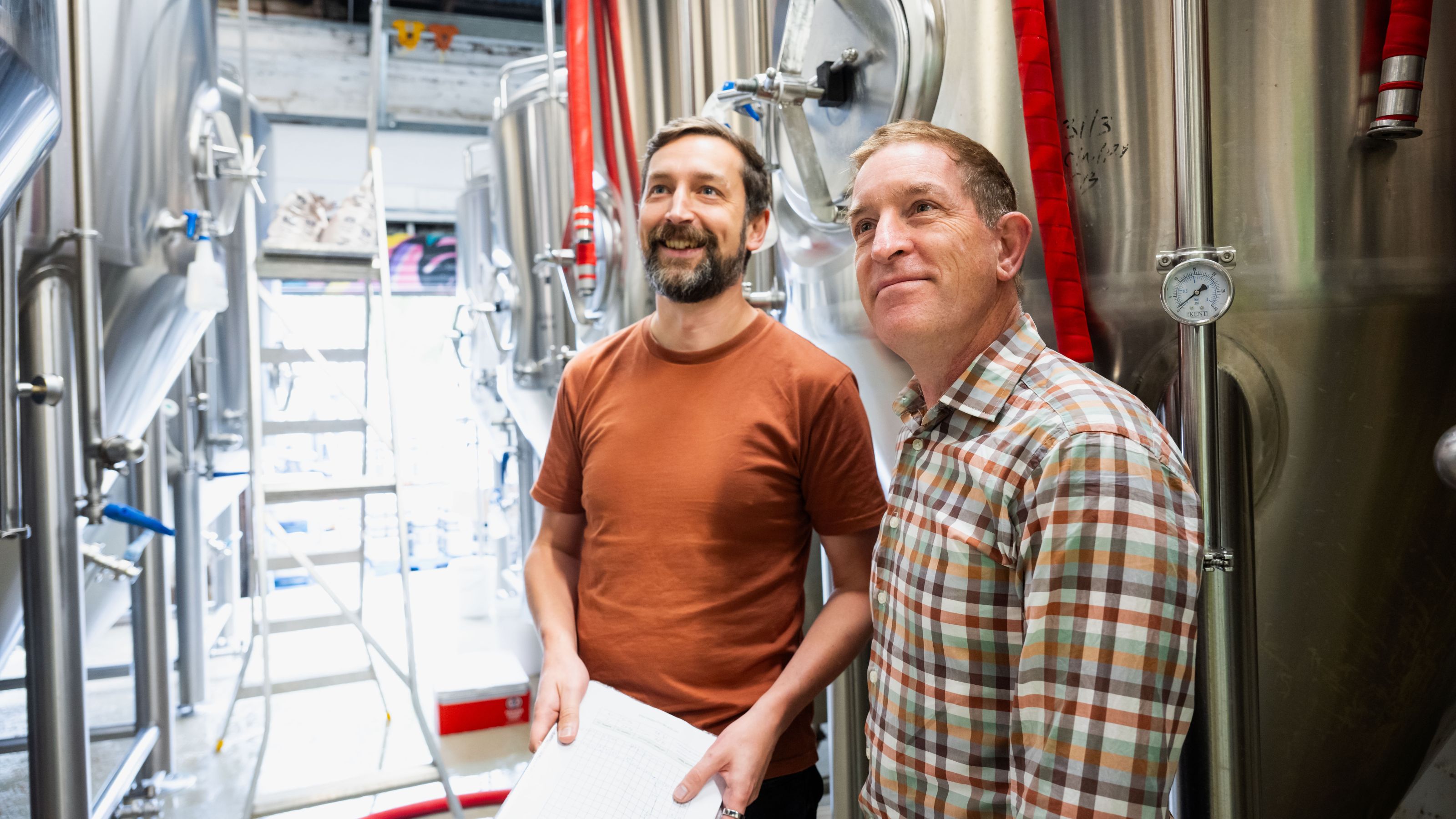
The approach for developing a non-alcoholic beer is fundamentally different to that of an alcohol-free wine—using their specialty yeast allows the team to brew alcohol-free beer from scratch, whereas wine still needs to be de-alcoholised retrospectively. That means the researchers are on the hunt for a yeast and fermentation solution that does both of those things.
Peter believes there’s clearly a gap in the market for these kinds of drinks.
“There’s a huge amount of interest around the world in alcohol-free beer and wine. The really big breweries recognise the value and are pouring a lot of resources into developing these products. But typically they’re de-alcoholising afterwards, because they want a mass-produced product that’s cost effective,” he explains. “But the industry here in New Zealand is smaller and not capable of producing at that expensive, macro scale, and they don’t want to do it that way anyway. So that’s why we’re going for a yeast solution, to retain the complexity of the fermentation process so that New Zealand’s craft beer and premium winemakers can create a really high-quality product.”
Peter says Garage Project is excited to be part of this research.
“It’s amazing to be able to give an industry insight and to work with the University to tackle questions that are beyond the scope of what a company like Garage Project can do on its own. It’s pretty exciting to be involved in developing this fundamental research into real science and applications for industry and the market.”
Learn more about research at the Te Kāuru Ferrier Research Institute and Te Kura Mātauranga Koiora School of Biological Sciences.