
The changing tides of the law of the sea
Professor Joanna Mossop is a world-leading expert on the law of the sea, and is closely involved in the development of an important international treaty.
Here in Aotearoa New Zealand, we’re surrounded by the ocean. It’s an important part of our lives for recreation, as well as for economics and the environment. The ocean is also what connects us to the rest of the world—it’s one giant interlinked bionetwork. That means the health of New Zealand’s coastal ecosystems, and the vital resources within, depend hugely on what happens in other parts of Earth’s oceans. So, how does the law protect the parts of the sea that sit outside of countries’ jurisdictions?
Professor Joanna Mossop from Te Kauhanganui Tātai Ture—The Faculty of Law at Te Herenga Waka—Victoria University of Wellington has dedicated her research and teaching career to the law of the sea. She teaches case law and international environmental law, as well as a popular 300-level Law of the Sea course.
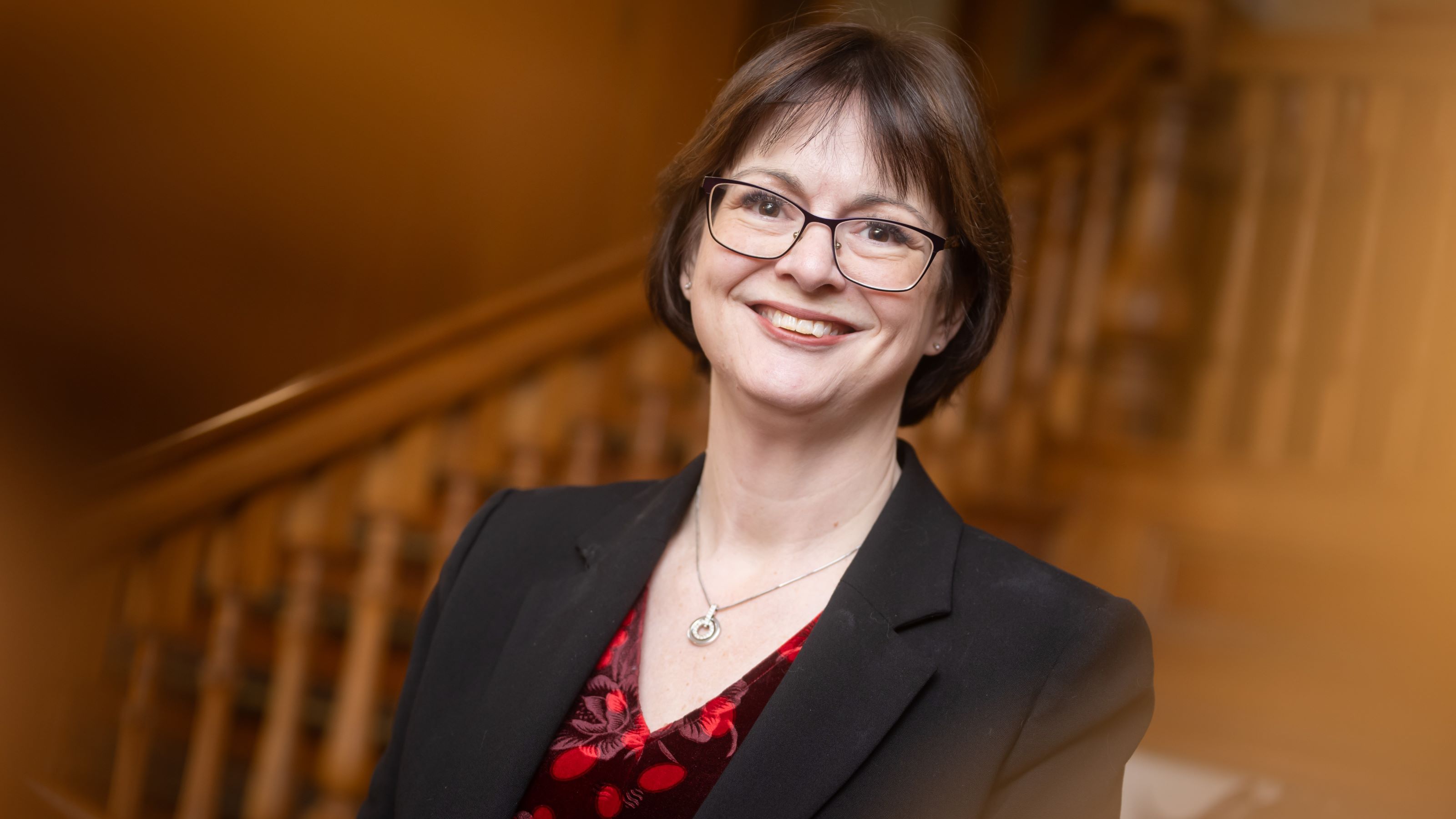
“The sea is something I feel deeply connected to—I had the typical Kiwi childhood swimming at the beach, and I’ve always been in awe of the amazing creatures you can find in the ocean,” she says. “But I’ve also found that I really care about how we manage the ocean. It can provide things like food, minerals, and even medicines—they’re so important, but they need to be sourced in a sustainable way. So that’s why I’m focused on how humanity can use the ocean in a way that ensures we can continue doing so in the future.”
Joanna says it’s important that we manage our actions in a way that doesn’t undermine the important work of ocean ecosystems.
Knowing what we’re doing to the ocean helps us to make decisions about how we use it into the future—I’m really interested in that intersection between science, policy, and law.
Professor Joanna Mossop
Associate Dean Research
Protecting ocean biodiversity
Joanna is one of a small number of legal academics worldwide who focus on the international law of the sea—she says it’s a topic that’s especially significant for Aotearoa.
“Our Exclusive Economic Zone (EEZ) is the fourth largest in the world, at more than four million square kilometres—that’s about 15 times the size of our landmass.”
These exclusive zones were prescribed in 1982 by the United Nations Convention on the Law of the Sea (UNCLOS), and give countries sovereign rights to use and manage natural resources within 370 kilometres of their coastlines. Countries with overlapping EEZs are required to negotiate a maritime boundary, and the area beyond any country’s EEZ—often referred to as the high seas or international waters—is open to all nations.

“It’s a very exciting area of law—the ocean has all sorts of different rules that apply. From an international law perspective, the way states cooperate and interact regarding the high seas is a fascinating logical problem.”
Joanna was closely involved in the development of an important international treaty that provides a governance framework for the use of international waters. The Biodiversity Beyond National Jurisdiction Agreement, or BBNJ Agreement, is an agreement drawn up under UNCLOS that aims to ensure healthy and resilient ecosystems through conservation and sustainable use of resources.
“Discussions about this treaty started in the early 2000s, when people started seeing there were challenges conserving the environment in the high seas. There were some important gaps in UNCLOS, which underpins the law of the sea globally, around the ability to create marine protected areas in international waters,” explains Joanna.
“UNCLOS was also missing anything related to ownership of marine resources, including any biotechnology that is developed from organisms taken from international waters. A lot of developing countries were pushing to get a treaty that would allow for benefit sharing between nations if a living organism was taken from the high seas and developed into a valuable product.”
As a recognised expert in the law of the sea, Joanna was invited to New York as part of a Ministry of Foreign Affairs and Trade delegation to attend negotiations to develop a treaty that would address those gaps in UNCLOS.
“I was incredibly lucky, because I’ve been able to follow the negotiations from the very earliest discussions. They were actually pretty intense. There were some very different views held by different groups of states, and trying to find a middle ground was actually really hard,” she says. “I got an inside view of the talks, and I also helped the head of New Zealand’s delegation to facilitate negotiations for a specific provision of the treaty relating to dispute settlement and compliance.”
Having a front row seat to the complex and dynamic BBNJ negotiations, and lending her expertise to help shape the treaty, gave Joanna an excellent understanding of the big issues. Building on this, Joanna developed a commentary on the treaty that covered the discussions behind some of the agreement’s major provisions. With co-editor David Freestone, she organised a team of authors made up of delegates and observers who’d followed the negotiations to tell the story of the agreement’s development. The resulting book, The Agreement on Marine Bioversity of Areas Beyond National Jurisdiction, was published by Oxford University Press in 2025.
Knowing the key debates that went into the BBNJ Agreement is really helpful for people when they’re trying to apply it in the real world—they can see what options were discussed, how the arguments developed and hopefully understand why the final treaty looks the way it does.
Professor Joanna Mossop
Associate Dean Research
“I had a number of people come up to me at the last meeting of the negotiations, and the word that I heard a lot about the book was ‘helpful’. For me, it's better than any academic accolade, that people who are working on this treaty find it helpful. That made me feel it was worth the hard work of bringing it all together.”
The BBNJ Agreement entered into force in January 2026, but there is still work to be done to agree on how it will be implemented. The treaty has been ratified by 90 countries so far, although not New Zealand—it’s been approved by Cabinet but can’t be ratified by Parliament until implementing legislation is passed.
“Because of the crowded legislative agenda, I’m not convinced we will ratify it before the first Conference of the Parties in 2027,” Joanna explains. “That’s a real shame because it means New Zealand won’t have a vote at the table—we won’t have a say in all these really important decisions that need to be made.”
A global impact
Joanna is regularly invited by governments and institutions around the world to speak about the law of the sea and to deliver training workshops to government advisers, officials and academics. She has published widely on the topic, and recently was appointed an adjunct professor at the Norwegian Centre for the Law of the Sea (NCLOS), a world leader in ocean governance and legal research based in Tromsø, Norway.
“They’re doing really exciting theoretical and practical work, and they have links all around the world. This opportunity will provide me with an intellectual community that will enrich my own research—sometimes it can feel a bit lonely as there are not many of us working in this discipline! So I am looking forward to participating in their research projects and working with students and academics there,” Joanna says.
“Tromsø is located within the Arctic Circle, so their focus is in the Arctic, while Victoria University has expertise in the Antarctic—they’re both places that face similar challenges, so I’m hoping I might be a bridge between them.”
Last year Joanna received a travel award from the Borrin Foundation, which helped her attend the latest meeting of the BBNJ Preparatory Commission. She was also recently awarded a Ki te Pae Excellence Award in Research Mobilisation Excellence, one of Te Herenga Waka’s Staff Excellence Awards. It was given in recognition of the meaningful, real-life impact of Joanna’s research.
“Most legal academics aim for their research to have real-world impacts,” she says. “I feel lucky to have this opportunity to directly contribute to the negotiation and implementation of this important Agreement, and to share my insights into that.”
Find out more about research at Te Kauhanganui Tātai Ture Faculty of Law.