
Is the next big breakthrough really, really, really small?
Natalie Plank is working at the cutting edge of nanotech research to find new ways to improve our lives and push the boundaries of what’s possible.
Nanomaterials exist on a scale that’s almost impossible to visualise—one nanometre is a billionth of a metre, or about 50,000 to 100,000 times smaller than the width of a human hair. At this microscopic size, materials can behave in surprising and useful ways.
Associate Professor Natalie Plank, from Te Herenga Waka’s School of Chemical and Physical Sciences, is working at the cutting edge of nanotech research to find new ways to improve our lives and push the boundaries of what’s possible.
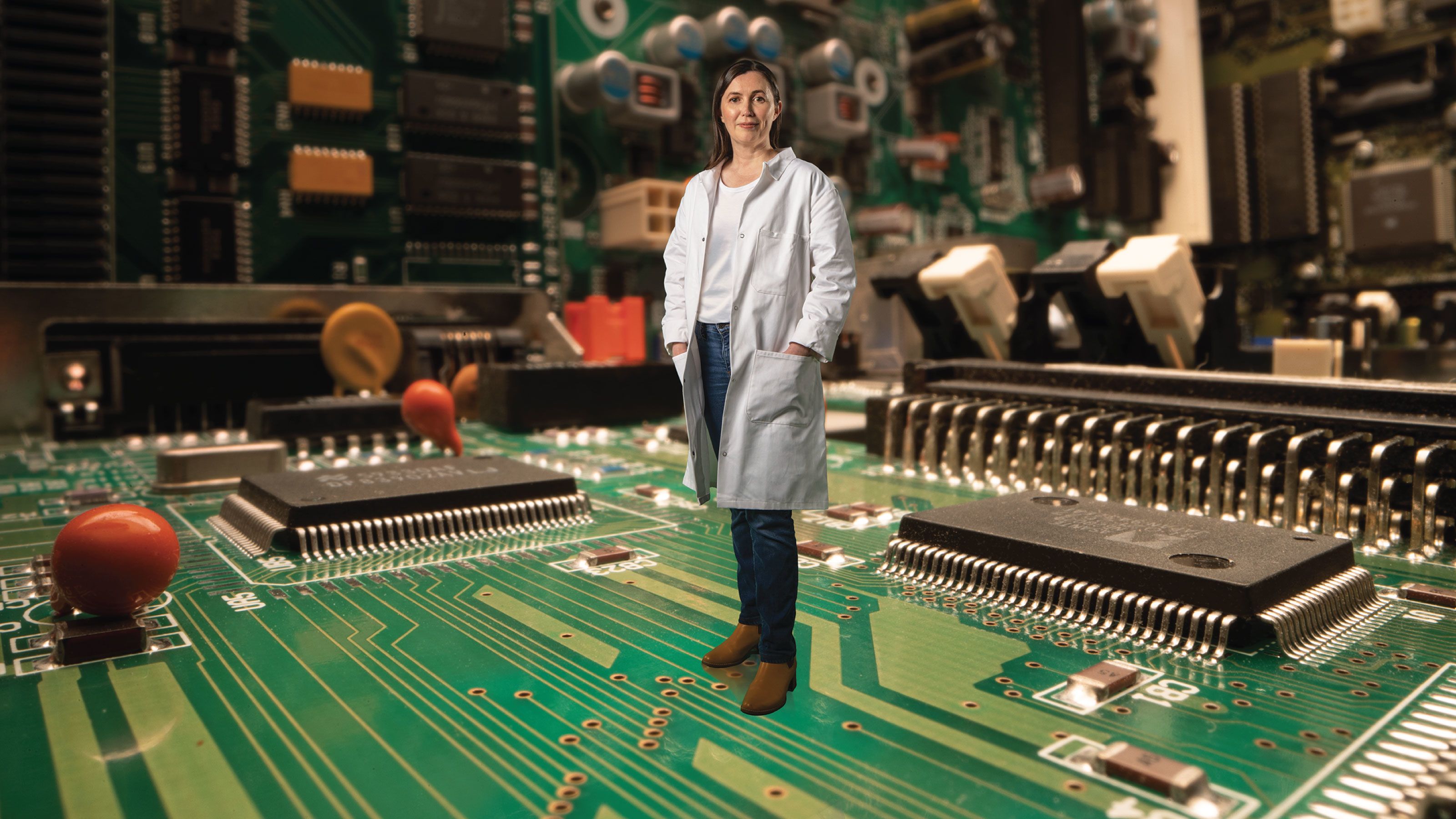
Inspiration for research can come from all sorts of places, says Natalie.
I was aware of people trying to have babies, who were going through hormone treatment and IVF. So I thought, wouldn’t it be good if they had access to a faster, easier way of detecting hormone levels so they didn’t have to constantly go back and forth to the blood test clinic?
Associate Professor Natalie Plank
Deputy Director for Commercialisation and Industry Engagement
“I wanted to solve that problem, so I started researching whether aptamers could be used as receptors in an electronic biosensor for hormone detection” she explains.
Although that particular project is currently on hold, it segued into a major collaboration with Plant & Food Research (which has now become part of the Bioeconomy Science Institute) that uses the same underlying nanoelectronics platform technology, but different bioreceptors, namely odorant receptors from insects, which are so sensitive they can detect a single molecule.
“We can stick these nanoscale receptors onto the sides of the carbon nanotubes we create in our lab and make different kinds of devices that can ‘see’ what the proteins in the insect receptors are doing,” Natalie explains. “Using this method, we can make all kinds of biosensors that can detect chemicals in the environment. There’s a big need worldwide for high fidelity sensors that are extremely accurate and very sensitive—this research might be applied to detecting diseases, sniffing out invasive species at the border, or telling us if food is safe to eat.”
About nanomaterials
As well as lecturing at Te Herenga Waka, Natalie is a Principal Investigator and Deputy Director for Commercialisation and Industry Engagement at the MacDiarmid Institute for Advanced Materials and Nanotechnology.
Her specialty area is the study of carbon nanotubes.
“They’re basically a sheet of graphene, or carbon, that is rolled up on itself to make a tube. Depending on how it’s rolled up, the carbon nanotubes have very different electronic properties. It might be a metallic and conduct electricity really well, or it might be a semiconductor like silicon that we use to make computer chips.”
She says the whole point of working on the nanoscale is that certain materials behave in radically different ways than they do when they’re bigger.
“They can become more sensitive and have different kinds of interactions—they might change the way they conduct electricity or interact with light. For scientists, it’s about exploiting those new properties that you don’t get at larger scales. You can do things with a conductive material on the nanoscale that you just couldn’t do with a large slab of it.”
The fortuitous chat that led to a new research direction
It was a research catch-up with a colleague at a meeting that led to another significant collaboration for Natalie, one which is hoped will help artificial intelligence models work more like human brains.
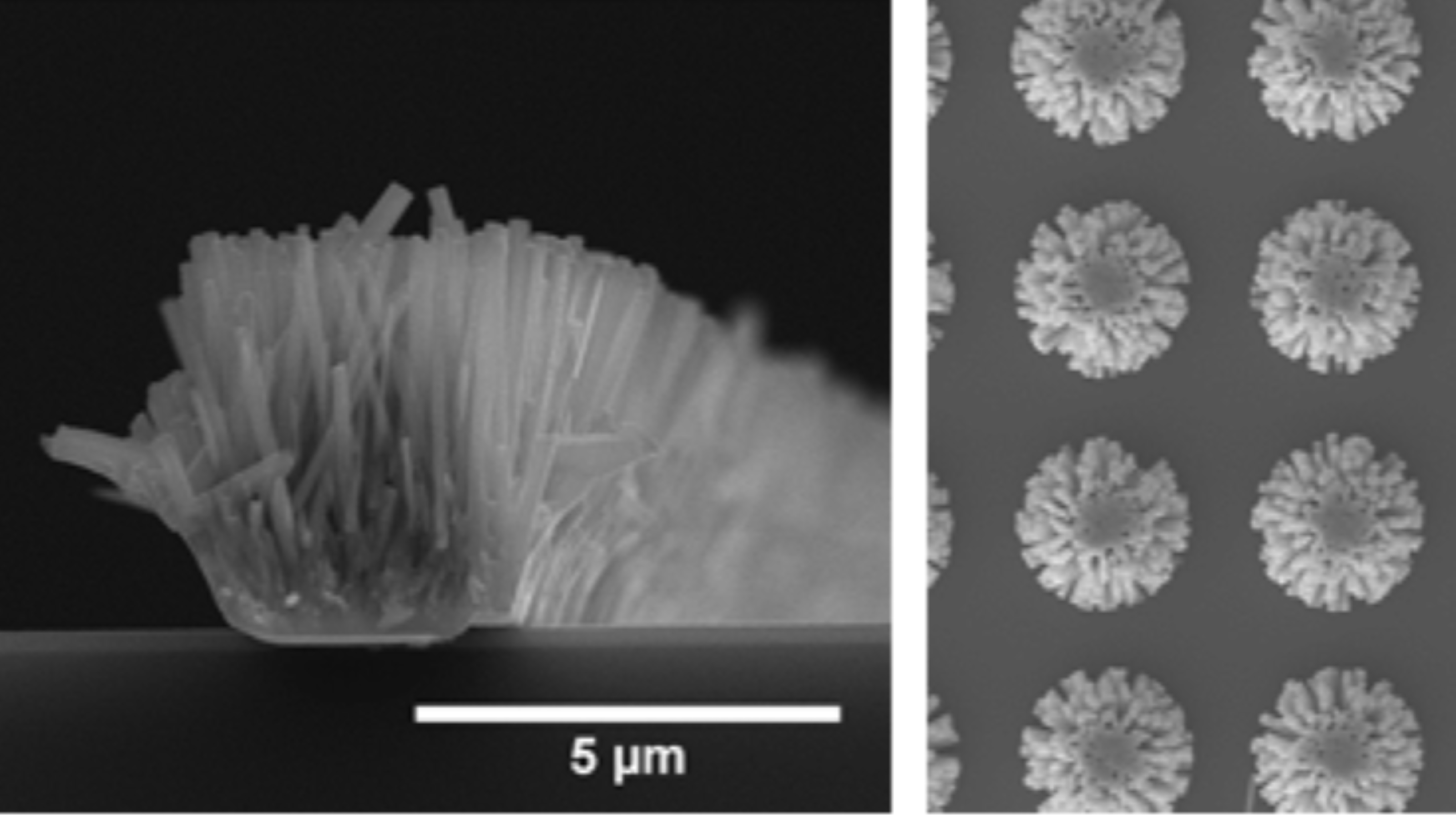
“Simon Brown said to me, ‘Your nanowire materials would be really useful for these artificial neural network devices I’m building—I think there’s some synergy there.’ So we started working together.”
Artificial neural networks are computational models that are designed to mimic the human brain, giving machines the ability to make decisions or take actions based on the data available to them. They are designed to improve the way AI systems solve complicated problems, allowing them to do things—for example, summarise text, analyse medical imagery or recognise faces—with greater accuracy.
The chips being produced by Natalie, Simon and their teams at the MacDiarmid Institute use less energy to operate, and can hold onto information for a long time.
“This technology is very, very new but would be low cost, low weight and require less power. While it’s still early days, these chips could eventually be attached to things like wind turbines, power lines or bridges to detect changes in vibration that could indicate a fault,” Natalie explains. “It would send a message back saying something was not right, so that maintenance work could be carried out before anything goes wrong.”
She says the chips could also be helpful in the field—literally.
“They’d be very useful embedded onto any device that is in a remote location, including herd monitoring on farms—basically any isolated place where ‘edge-computing’ is performed.”
Natalie and recent PhD student Marissa Dierkes are working with Victoria’s research commercialisation arm, Wellington UniVentures, to explore ways the artificial neural network chip can be applied impactfully in the real world.
Why collaboration is key
A lot of the “fun stuff” in research is happening at the boundaries of disciplines, Natalie reckons.
I’m really inspired by the way nanotechnology pulls together physics, biology, chemistry, and engineering. It’s one of those truly interdisciplinary fields where it takes a lot of different people’s brains to understand something
Associate Professor Natalie Plank
Deputy Director for Commercialisation and Industry Engagement
“We’ve come a long way from that stereotype of the lone ‘mad scientist’ cliché. We have to be super collaborative, share equipment and communicate in teams. Most of our ideas are generated through these kinds of discussions—it’s really exciting and very motivating.”
Find out about research at Te Wānanga Matū School of Chemical and Physical Sciences.