
How can we make Aotearoa’s criminal justice process work better for everyone involved?
Yvette Tinsley researches ways to make the criminal justice system better for everyone it touches, and her investigations have led to important policy changes.
The criminal justice process has been shown to have a harmful impact that is felt by people far beyond just the victims or offenders. That’s why Professor Yvette Tinsley is focused on ways to make the system better for everyone it touches.
Yvette teaches in the areas of Criminal Law and Criminal Justice at Te Kauhanganui Tātai Ture—the Faculty of Law, and has a special interest in legal policy reform.
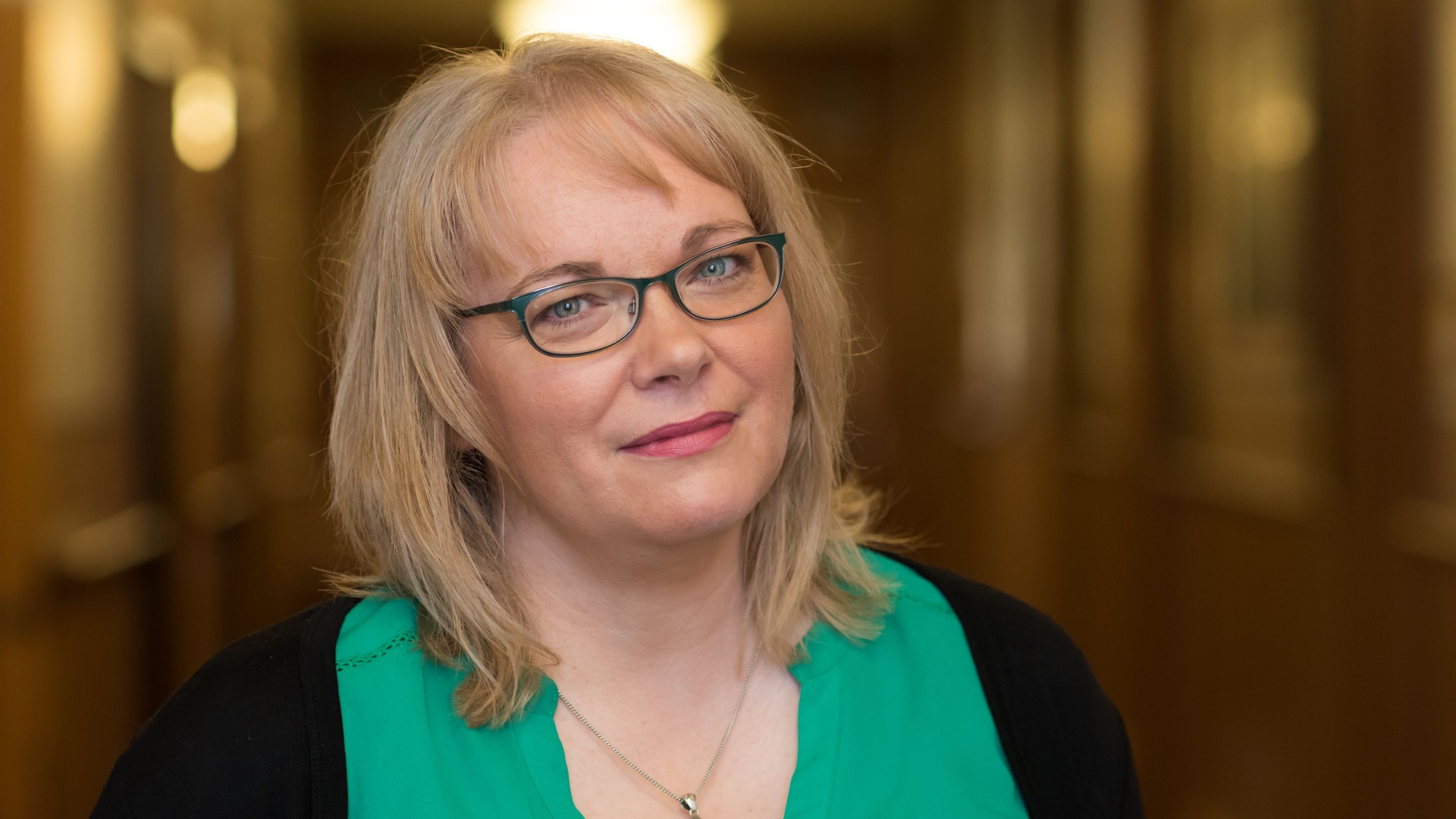
My research looks at the people involved in criminal justice in all types of different ways—professionals, complainants, defendants, their whānau—everyone who gets touched by it in different ways. I think there’s potential for us to make it better.
Professor Yvette Tinsley
Professor of Law
Yvette’s research is having an impact at the highest level—many of her evidence-based research projects have contributed to extensive legal and policy change, including the areas of jury trial practice and sexual violence pre-trial and trial reforms. In recognition of her leading contribution to socio-legal research in her field, she was elected in the 2024 cohort as a Fellow of the Academy of the Royal Society Te Apārangi.
Yvette is also the academic co-director of Te Herenga Waka’s Centre for Justice Innovation, an independent research organisation that investigates, evaluates, and educates to enable change in the way justice is delivered in Aotearoa. The Centre provides an evidence base for informed debate and delivers innovations in specific areas of practice as well as more broadly across thinking and practice.
Her fellow Centre directors are Judge John Walker, a former Principal Youth Court judge, and Everard Halbert (Rongowhakaata, Ngāti Tama, Ngāti Whiti), who has a background in Māori Studies and law, including mediation and resolution. The Centre also consults other researchers with relevant expertise—Yvette says it’s crucial to apply an interdisciplinary lens to this kind of research.
“Of course it’s important for us as lawyers to take a legal scholarly approach to it, but that only gives us a partial answer,” she says. “A lot of the problems of the criminal justice process are social justice problems that show up at the pointy end of the legal system. So there’s no way we can ever effect meaningful change by only reforming the law itself.”

Court appearances via video call: a help or hindrance?
One of the Centre’s initial projects is focused on remote participation in court.
“There are a number of potential advantages to remote participation in court proceedings. For example, it could be a way to improve court waiting times and access to justice, especially in the parts of Aotearoa where courts are harder to access. On the other hand, if someone’s appearing in court on a screen on a video call, then it raises questions around potential fair trial rights—have they got satisfactory access to legal advice? Are they able to run their defence adequately? Can we make an accurate assessment about whether they’re vulnerable and might require some extra assistance to ensure they’re capable of giving instructions?,” explains Yvette. “We want to establish when the most appropriate times might be to use remote participation, and when it is best to be a bit more cautious about it.”
The wider impacts of custodial remand
Another of the Centre’s current funded projects relates to custodial remand, which is when a person is held in prison or in police custody while awaiting a court hearing, trial, or sentencing.
“We want to understand what’s happening in courts around bail decisions, and look at remand conditions and what the impacts of those are on individuals and their whānau. That might be financial or emotional, or it might have an impact on the children caught up in the process, too.”
Aotearoa has one of the highest remand in custody rates in the world, says Yvette.
“It’s around double that of the United Kingdom. Furthermore, around 60 percent of our women prisoners are on remand awaiting trial or sentence—that’s a huge percentage, and they haven’t even received their sentence yet. They’re being kept in remand longer because of delays in court, too, so we want to find out how all those things might be addressed.”
Yvette says another aim of the remand research is to counter common tropes about offenders.
I think sometimes people forget about the humans behind the media reports, the trauma that may have led them to that point, and the context that might make them a smaller or greater risk to the community.
Professor Yvette Tinsley
Professor of Law
“That's not to say that everyone should be out in the community, but we want to assist with informing the public about the realities of being remanded in custody, and the impacts on that person, their whānau, and their community.”
Why wellbeing is paramount for people working in criminal law
Yvette is also leading research on the wellbeing of people working in criminal law who are exposed to secondhand trauma on a daily basis.
“It includes people like judges and criminal lawyers, but I’m also really interested in the hidden staff, such as court workers, who are exposed to some awful things but who don’t necessarily get a lot of training or help in how to deal with that.”
People tend to forget that lawyers are doing a public service, says Yvette.
Lawyers are actually a form of caring profession, particularly in the criminal and family courts. They are looking after people, sometimes to their own emotional detriment.
Professor Yvette Tinsley
Professor of Law
“Some of the stories we’ve heard are very concerning—this work is having some really big impacts on people's lives, to the point where it's affecting relationships, it's affecting their whole worldview. Lawyers may be struggling to look after their own wellbeing adequately because they’re facing stress after stress after stress—there’s the general stress of being a lawyer, which is compounded by being exposed to vicarious trauma and by the emotional labour of remaining professional in the face of difficult situations,” she says.
“Our argument is that if lawyers are not well, they can’t do a good job, which then has an impact on their clients and their families too. So there really does need to be a cultural shift in the way that lawyers think about looking after themselves, and how we support them in that.”
Translating research into real-world change
The landscape is a difficult one for securing funding for legal research, and Yvette is grateful for the support of funders throughout her career, most recently the Michael and Suzanne Borrin Foundation. Although the funding environment is challenging, she believes the environment for conducting applied criminal justice research in New Zealand—and at Te Herenga Waka’s Law school in particular—is otherwise good.
“We're a relatively small jurisdiction, we've got an active judiciary who are interested in reform, and that all helps when you're wanting to do this kind of applied, real-world research. And being based in Wellington, you also are able to forge relationships across government, judiciary, and with academics from other disciplines relatively easily,” she says. “But I also think the legal profession is much more open than in some other jurisdictions to being part of research and learning about what they do and how they might do it better.”
Yvette says the nature of her work is challenging, and can be personally upsetting.
I’ve had times where I’m emotional after I hear people’s stories. There’s a real privilege of seeing inside someone else’s world—I hold that privilege carefully, it's a precious thing. I respect it, and that’s partly because I know it can be extremely useful and lead to change that makes things better for others.
Professor Yvette Tinsley
Professor of Law
She says there are many more issues in New Zealand’s justice system that need to be addressed, but she is hopeful the work of the Centre for Justice Innovation will be able to bring about further meaningful change.
“A research centre like ours provides the opportunity for us to step back in the way that academics do best, and take a neutral, objective, evidence-based look at cross-cutting issues. We can identify what's happening, what’s contributing to the problem, and how we might start to address it. That's the unique selling point of a university-based centre like ours—we’re not wedded to any kind of government policy or way of thinking. We are committed to letting the evidence speak. And I think that's something that only academia can do.”
Find out more about research at the Faculty of Law.