
What is the price of not responding to the climate crisis?
Professor Ilan Noy researches the economic consequences of everything from climate change to earthquakes to COVID-19.
The cost of climate change
Events such as floods, droughts, and storms cause a lot of damage to societies and economies, but can we quantify the role of climate change in the impact of these events?
“The climate crisis is changing the frequency of these events, and they are becoming more intense and more damaging to the economy,” says Professor Ilan Noy, who is the Te Āwhionukurangi Chair in the Economics of Disasters and Climate Change in the University’s Wellington School of Business and Government.
By combining an economic assessment of damage from extreme weather events with an atmospheric science assessment of the increased likelihood and intensity of these events, he calculates the current economic impacts of a changing climate.
“We can measure exactly the climate change footprint of floods in New Zealand, for example, in terms of economic damage.”
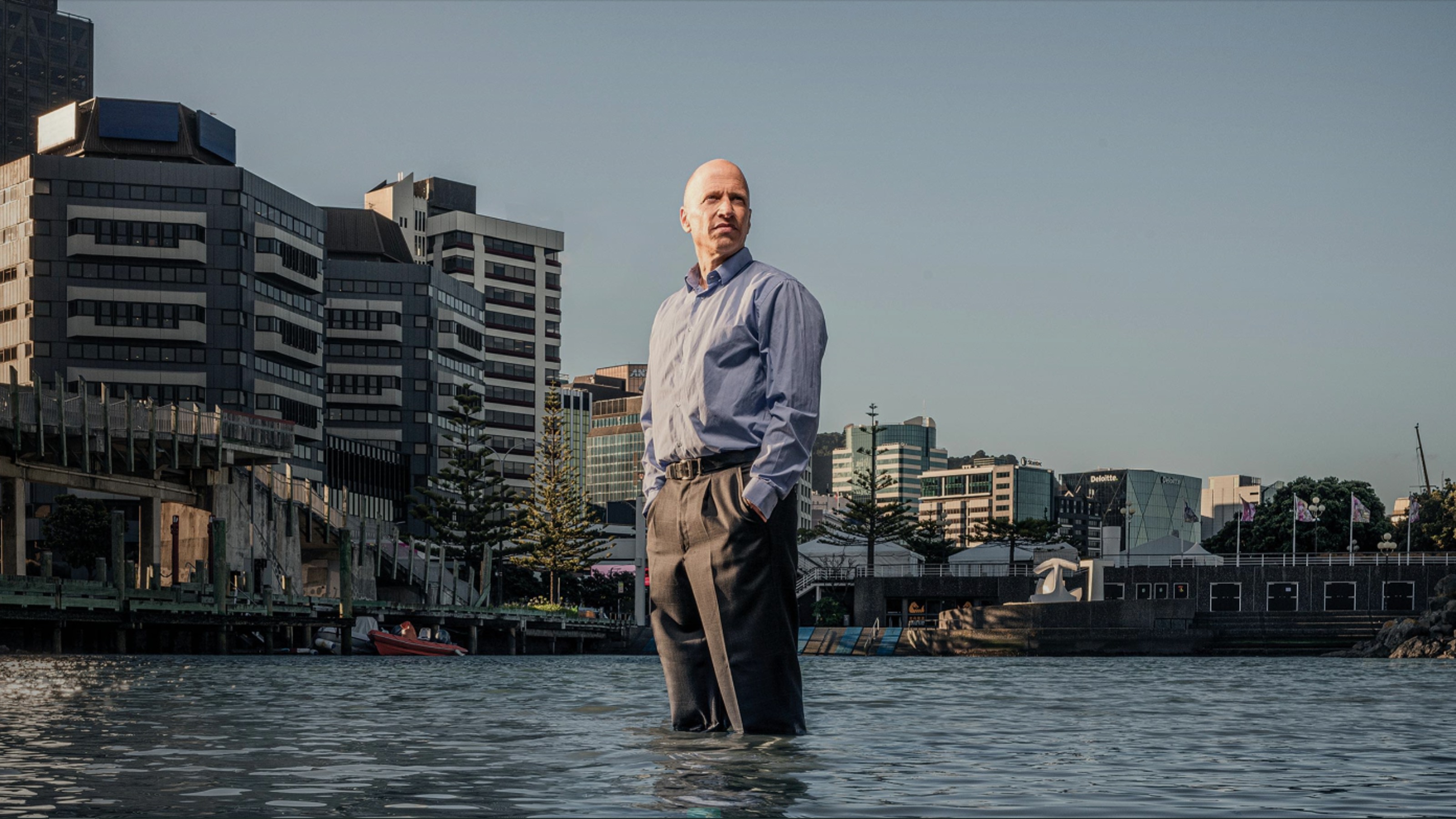
Professor Noy co-authored a widely-cited study that revealed the global cost of climate change was being vastly underestimated, including both the economic impact and the human mortality toll.
Off the back of this work, Professor Noy has been appointed a Lead Author for the next Assessment Report of the Intergovernmental Panel on Climate Change (IPCC)—his focus will be on Loss and Damage.
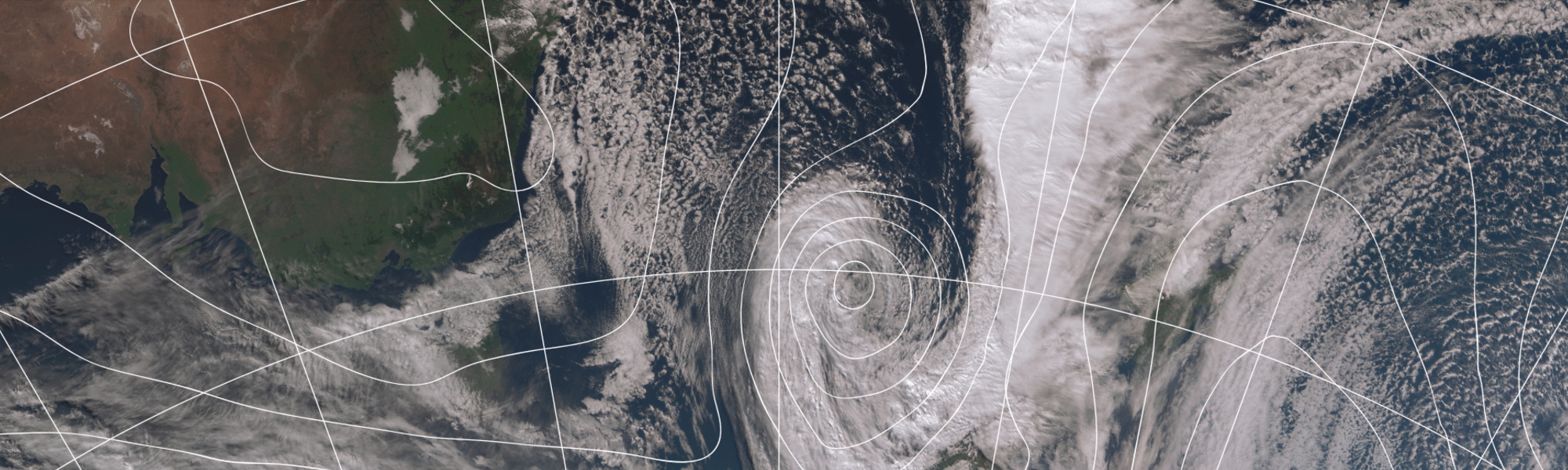
“Low-lying island nations are experiencing the worst impacts of climate change despite not having contributed to the problem by being large emitters of greenhouse gases. Calculating what proportion of the damage from a storm has occurred because of increasing rainfall intensity—a result of warming oceans—is very valuable to these vulnerable countries in terms of demanding compensation as part of United Nations climate change negotiations over Loss and Damage.”
Uninsurable communities
Insurance companies use the term ‘Act of God’ for events that are beyond human control and that cannot be predicted, anticipated, or prevented. Storms, droughts, and floods are all traditionally thought of as Acts of God—but should the reality of climate change modify our thinking on this?
As scientific evidence shows, the way we live is a significant contributor to the climate crisis. Does that mean these events are actually within our control? This raises big questions for each of us, for the companies we buy goods from, for our governments, and for insurance companies.
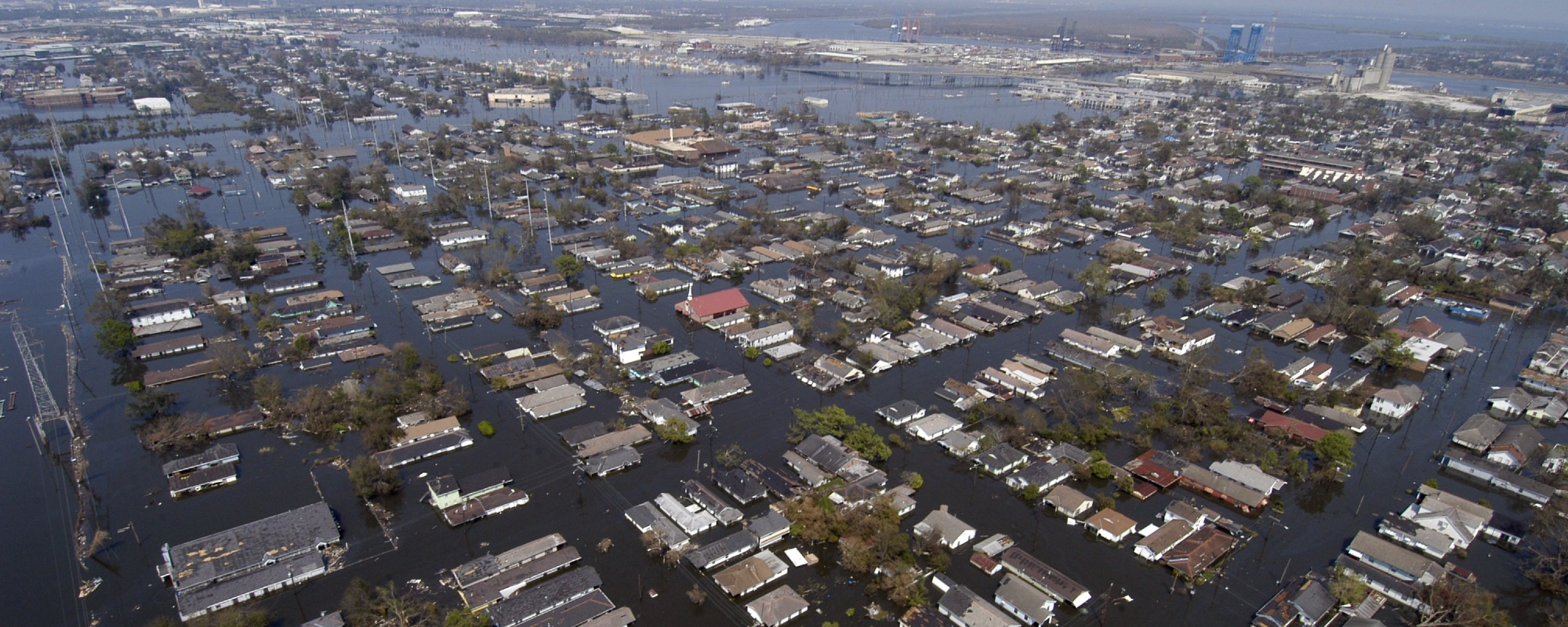
Within a few years we will live in a world where some communities will not be able to purchase insurance at all. This process of ‘insurance retreat’ has already started in some flood-prone locations.
Professor Ilan Noy
Chair in the Economics of Disasters and Climate Change
What happens when a community becomes uninsurable? Does the government provide insurance for flooding, for example, because the private sector perceives the risk to be too high and doesn’t want to insure anymore? Is this insurance to be subsidised by other people who face lower flood risks? This is the stance taken in countries such as the United States and the United Kingdom where national flooding insurance programmes exist, and are heavily cross-subsidising those who live in flood-prone areas.
“These programmes basically socialise the risk of flooding, meaning taxpayers are paying for the risk of flooding. In some cases, the communities that are being subsidised are very wealthy and living in very desirable locations.”
Professor Noy and colleagues are working with the New Zealand Government to assess the current economic impacts of climate change and identify adaptation measures that could be implemented.
A costly retreat
With many major cities around the world situated on the coast, the potential damage from rising sea levels is significant.
In the Asia–Pacific region, the looming threat of inundation has already led to a decision by the Indonesian Government that the capital will be moved from Jakarta to an inland location on the island of Borneo.
“Jakarta is lower than sea level and flooding events are increasing dramatically, so the move is about avoiding that risk. But the price tag on this is breath-taking. It will cost tens of billions of dollars, which is just one example of a cost of the climate crisis.”
Despite the projected costs, Professor Noy says that anticipatory action is often better than dealing with the aftermath of disasters and makes sense economically. Politically, though, it may be far more difficult to convince a community to abandon their homes and retreat from the coast.
“The cost of these ‘planned relocations’ for a country like New Zealand is large but not insurmountable. It is significantly less than the recovery from the Canterbury earthquake.”
Following the 2011 Christchurch earthquake, 20,000 people were relocated from affected areas and compensated by the government, in a move that Professor Noy says was “handled ably”.
“We need to start thinking about similar policies for the impacts of climate change. Our quantification work is important because policymakers need to understand what will happen, and what it will cost if we ignore these issues.
“It is far better for us, for the government, and for future generations and future governments if we act now, rather than continuing to kick the climate change can down the road.”
What does mental health have to do with the economy?
Part of Professor Noy’s research involves closely examining data that is revealing a lot about New Zealanders’ mental health in the wake of natural hazard disasters, including the Auckland Anniversary floods, Cyclone Gabrielle, and the Christchurch earthquakes.
“We use anonymised information about people’s antidepressant prescriptions, income levels, or whether they’ve lost their job after a disaster. This data allows us to ask questions that have an economic component, such as, do changes in income caused by disasters have an impact on your mental health?
“For example, there was an increase in prescriptions for anti-anxiety and antidepressant medication in the months following Cyclone Gabrielle in 2023. We can match up the data to see if people who are depressed experience changes in their income through losing their job, or whether losing their job might exacerbate mental health issues.”
Using similar data, Professor Noy and his research team are also looking at vaccine hesitancy, and at the impact of red-zoning on mental health.
“After the earthquakes in Christchurch, those households in the red zone had far more incidents of prescriptions for antidepressant and anti-anxiety medication. In most cases this dropped back after a year or two, except for the elderly who were red-zoned, who experienced a long-term adverse impact on their mental health.”
He says this has clear implications that policymakers should be prioritising.
Displacement seems to be more painful for the elderly—policy needs to respond to that and make sure there is more assistance available to these people, and maybe look into what conditions caused this in the first place to try and prevent that.
Professor Ilan Noy
Chair in the Economics of Disasters and Climate Change
“This kind of red-zoning or planned relocation, is going to become more and more common with the increasing frequency and intensity of extreme weather, so we need to make sure government policies are designed appropriately.”
Find out more about research by the Chair in the Economics of Disasters and Climate Change.