
Addressing teenage mental health
Terry Fleming researches the impact of digital environments on the mental health of young people.
Associate Professor Terry Fleming researches scalable ways to improve youth health and mental health, with a particular focus on digital tools for youth mental health.
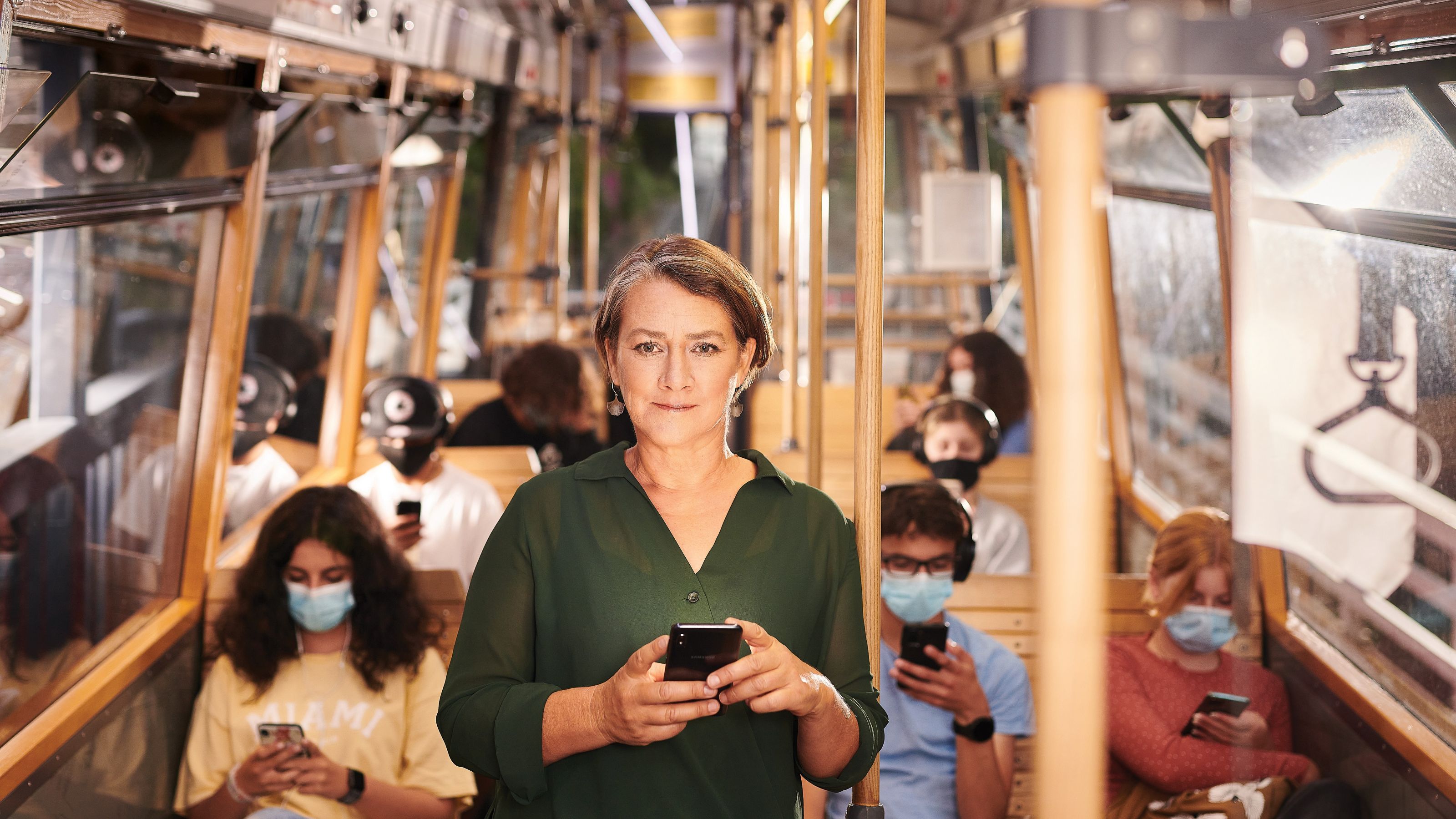
A growing problem
“An increasing number of young people today report feeling distressed, not just in New Zealand but globally. There are multiple reasons for this, including real climate crisis and future worries, and impacts of digital environments as well as other social changes such as increases in perfectionism and in help-seeking,” says Dr Fleming.
“There’s no one reason as to why people report mental health issues. Young people are affected by things that have happened in their past, things that are happening in the present, and what they think will happen in the future.
“Currently, we support young people through clinical services, but it is well-known that these services are under significant pressure. We need to continue to grow these services while bringing in new measures to ensure that our young people are supported. We need to build a range of options that people can access and use, and digital tools are an integral part of this toolkit.”
10–20 percent of young people will have clinically significant symptoms of depression at any one time.
Dr Terry Fleming
Associate Professor

Building a range of options
Digital tools currently available range from websites that offer relevant information, to apps that have millions of subscribers. An increasing number of people are also turning to AI chatbots for counselling services—but what’s the most effective approach?
“Mental health looks different for different people and not everyone wants the same approach. Sometimes, people are alone and suffering and they may have no one to reach out to. Digital tools can be effective at times like these because they are available all the time and they’re often free. Whether it’s to help people find information or provide simple distractions, digital tools can make a significant difference to the way people are feeling.”
Dr Fleming notes that there can be challenges with digital tools. The quality of some of the information available online is mixed, while some apps and tools aren’t designed well enough to build engagement among users. She says that while global apps are available here, they don’t always resonate well with young people in New Zealand. There may also be privacy and cost implications with using global apps.
The uptick in the use of AI counselling tools is a double-edged sword, according to Dr Fleming. She says there are some harmful effects, yet AI can also be very beneficial by providing in-the-moment, personalised responses when someone needs help.
The other key challenge is that there are a wide range of tools available and people don’t necessarily know which ones to trust. It’s our responsibility, as a society, to work with young people to make sure they know what tools to use and how to use them effectively.
Dr Terry Fleming
Associate Professor
“We must better understand how they use the internet and build better tools to support them. We need to create appealing options and put them in people’s hands, so they can help themselves, support each other, and find more help when they need it,” she says.
Dr Fleming’s research also engages stakeholders—Government, health agencies and communities—to ensure that they are aware of how to find the tools and which ones can be trusted.
Is a social media ban the answer?
Like a number of countries around the world, the New Zealand Government is investigating the effectiveness or otherwise of limiting social media access for young people—in December 2025, Australia banned under-16s from using a variety of social media platforms. Dr Fleming has been asked to provide some advice to the Ministerial Roundtable on social media, which is investigating the link between youth mental health and exposure to social media.
She suggests a more nuanced approach than a blanket ban.
Our research shows that social media has a link with mental health for people of any age, but we should be making sure it is safe to use in the first place.
Dr Terry Fleming
Associate Professor
“One way to do that would be to restrict how data is gathered for personalised algorithms, and to have geolocation switched off and privacy settings high as the default,” she says.
“This is likely to be more effective long term rather than a complete ban until the age of 16, at which point young people would have full, unlimited access to social media with no protections in place—if they’re suddenly exposed to unregulated platforms, they possibly wouldn’t have the skills to deal with it in a safe way.”
Dr Fleming says the online world is “in the very air that we breathe”, but it’s important that young people have places they are free from it, such as at school where mobile phone use has been banned.
“There’s no denying that the relationship between young people and digital environments is complicated—it’s like a car, which can help you get places but be harmful if you lose control. But the fact also remains that digital tools are often portals to useful information. They are, in many ways, an amplifier. If you’re in a good mood, they can lift your mood or make you feel worse if you’re already low.”
Dr Fleming reiterates that while digital tools do not—and should not—replace the role that family, community, and mental health professionals play, they are an important part of the ecosystem of support.
“The issue of mental health in New Zealand is urgent and we need to deal with it. Our young people want to live fuller lives and make a difference but it’s hard to do that if you are struggling. As a society, we should care about youth mental health because we can actually do something about it. By building innovative digital tools that can provide quality support to young people and their families around the clock, we can help our community support their young people.”
Find out about research at Te Puna Hauora School of Health.