
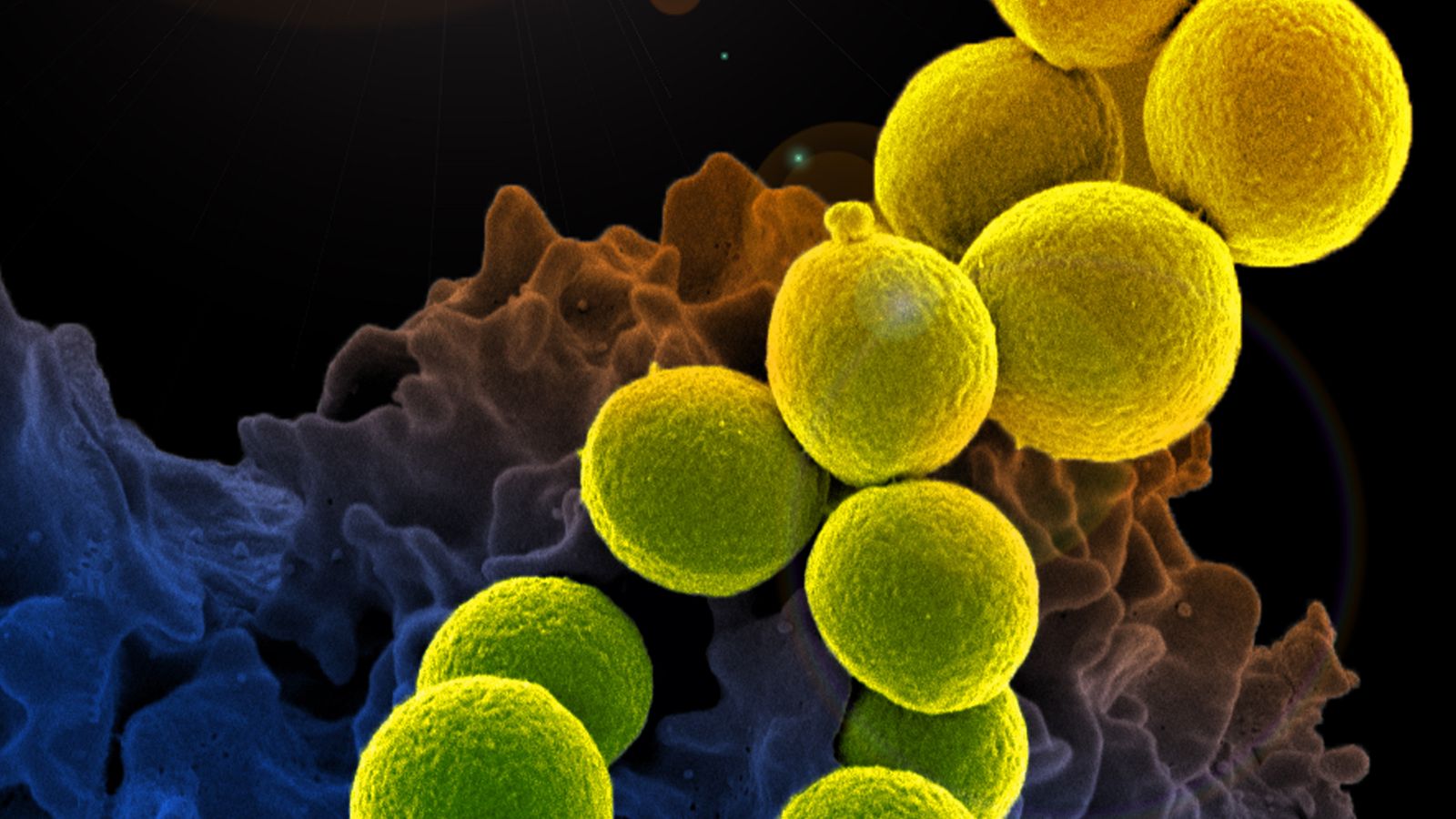
 Image: Methicillin-Resistant Staphylococcus aureus (MRSA) Colorized scanning electron micrograph of a white blood cell interacting with an antibiotic resistant strain of Staphylococcus aureus bacteria. Credit: NIAID
The Challenge of staph
Staphylococcus aureus (often called “staph”) is a common bacterium that can cause a wide range of infections—from mild skin irritations to deadly bloodstream infections. It’s also notorious for becoming resistant to antibiotics, making treatment difficult. Around the world, scientists are racing to find new ways to protect people against this stubborn microbe.
An RNA-based approach
Researchers in the RNA Platform are developing an mRNA vaccine for staph. These mRNA vaccines—the same technology used in COVID-19 vaccines—teach the body to make a harmless piece of the microbe so our immune system can recognise and fight it in the future.
This project is testing whether “anchoring” the staph vaccine components in cell membranes (a transmembrane, or TM, design) might trigger a stronger and more protective immune response compared to the standard “free-floating” version. Early studies for other microbes suggest this TM approach could make mRNA vaccines more effective by helping the immune system build the right kind of long-lasting antibodies.
Project design
The research will involve four components:
- Designing multiple mRNA vaccine candidates that present the staph protein in slightly different ways.
- Testing them in the lab to confirm they are safe, stable, and producing the right protein in cells.
- Doing studies in mice to check whether the TM versions produce stronger immune responses and better protection when challenged with staph bacteria.
- Developing tests for people that can be used in human clinical trials.
Significance
A safe, effective vaccine for staph would be a game-changer—reducing hospital infections, easing pressure on antibiotics, and improving health outcomes worldwide. By exploring this new TM design, the RNA Platform is helping to push the boundaries of vaccine science and place New Zealand at the forefront of next-generation infectious disease protection.
Project team
This project is led by Dr. Fiona Radcliff and the S. aureus vaccine team at the University of Auckland who undertook the mRNA vaccine design, laboratory testing, immunology assays, and in vivo challenge studies, with vital support from a cross-institution team in the RNA Platform:
- Dr. Gavin Painter (Ferrier Research Institute, VUW) –LNP design expertise
- Dr. Rebecca McKenzie & Dr. Sarah Draper (Victoria University of Wellington / RNA Production Facility) – Production and formulation of mRNA and LNPs
- Together with Associate Professor Nikki Moreland (The University of Auckland) who leads the clinical assay testing pillar in the platform, and will co-lead the staph vaccine project, strengths in RNA technology, immunology, and translational research will be combined to accelerate development of a vaccine candidate that could one day protect against stubborn staph infections.
Next steps
The project is scheduled to run over the next 12 months. Results from the lab and animal studies will guide whether the TM vaccine design should move forward into larger-scale development in people.