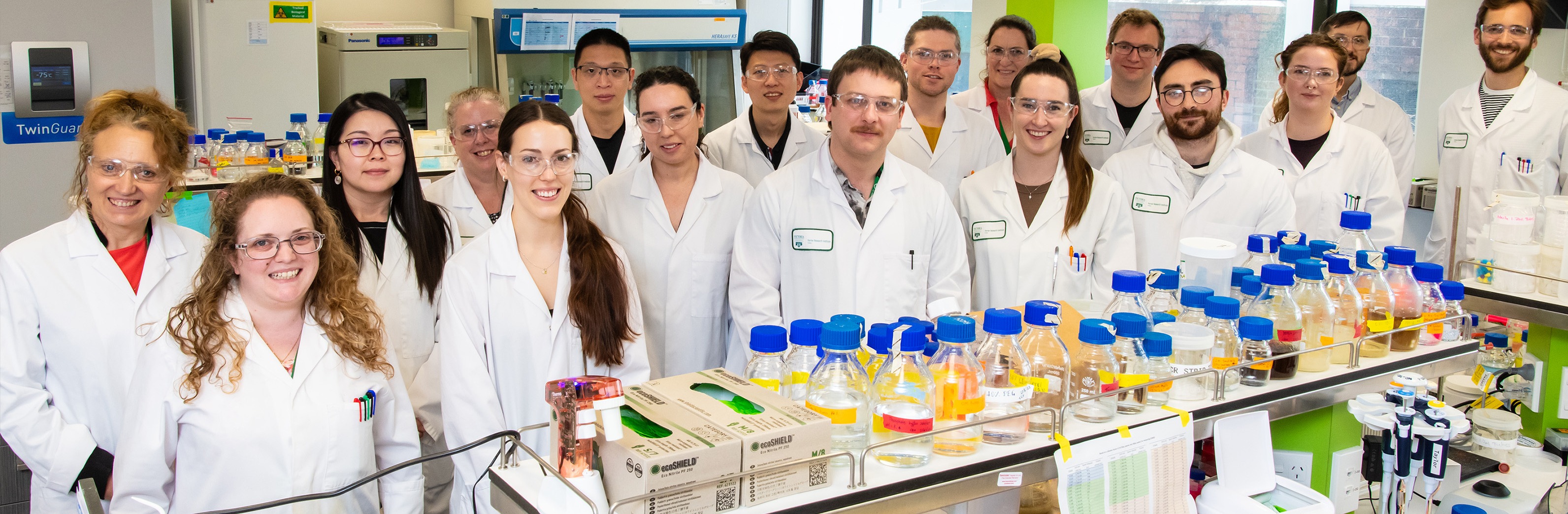
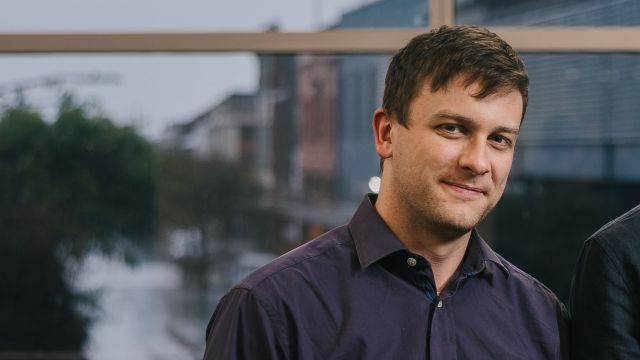
Team Parker is based at the Ferrier Research Institute in Kelburn.
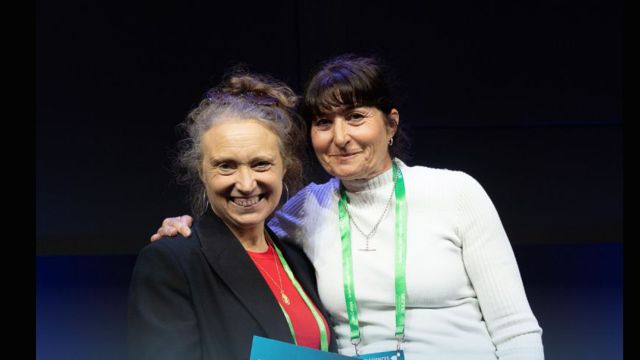
The team, led by Professor Emily Parker FRSNZ, specialises in harnessing the power of nature to efficiently produce complex bioactive molecules—such as enzymes, proteins, and entire metabolic pathways—to advance drug and agrichemical discovery and to develop novel, sustainable methods of manufacture of valuable bioproducts.
“The majority of our work looks at developing novel synthetic biology approaches, such as developing pesticides and other therapeutics from fungi that we can bring to the market,” says Professor Parker.
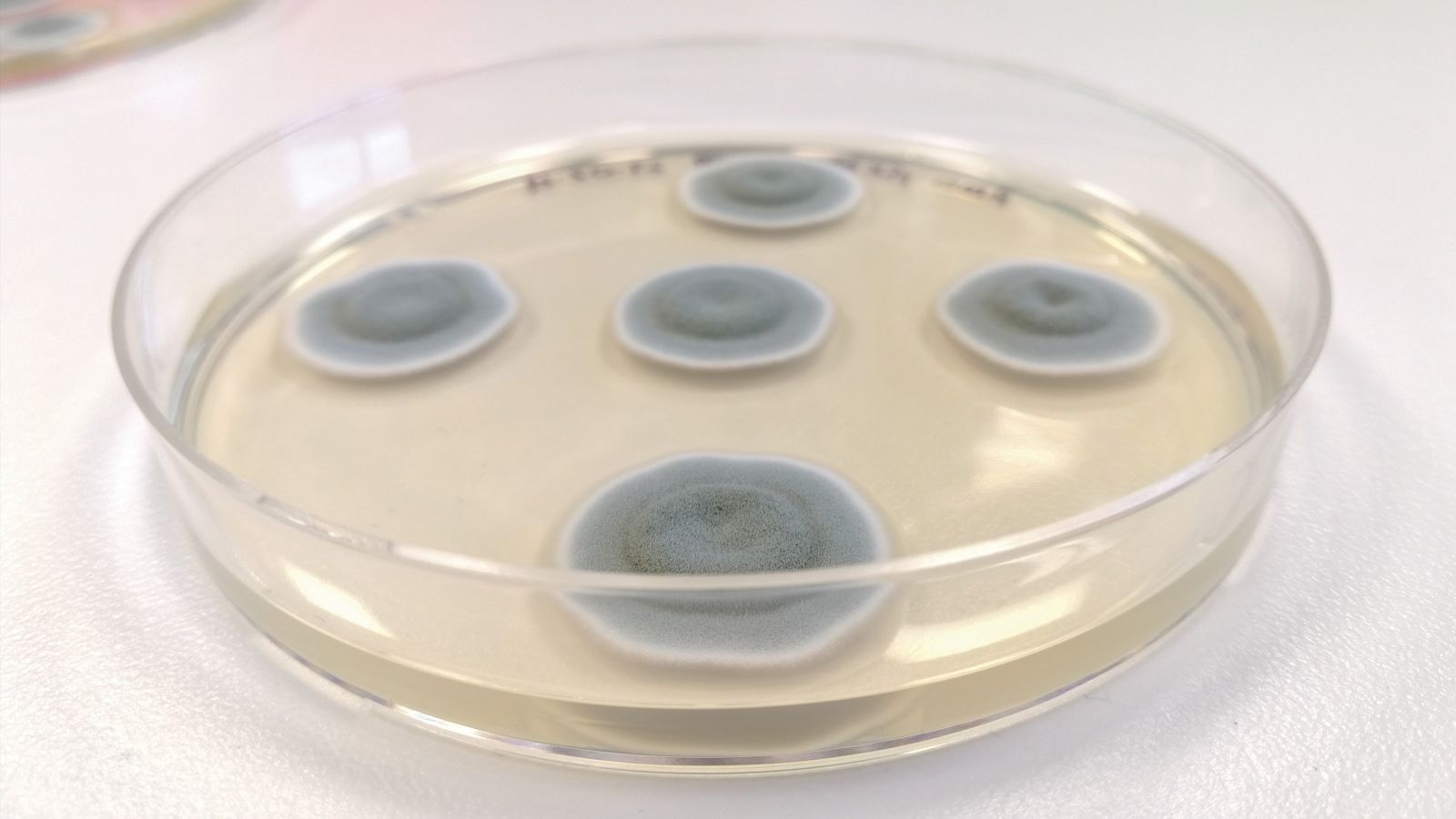
An essential focus of their research is their work on fungi, or mould—an important source of pharmaceuticals and agrichemicals—which is leading to promising advances in the development of insecticides, and anti-cancer drugs. Team Parker's work is transforming these ‘fungal factories’ into gold.
A key strength of the team is its multidisciplinary work at the interface between chemistry and biology within Victoria University’s Kelburn campus. Postgraduate students work alongside experienced scientists, gaining a broad training platform across both fields. This approach equips students with valuable skills and hands-on experience, contributing to cutting-edge science and opening many doors for them post-graduation.
Current projects
Fungal Factories™
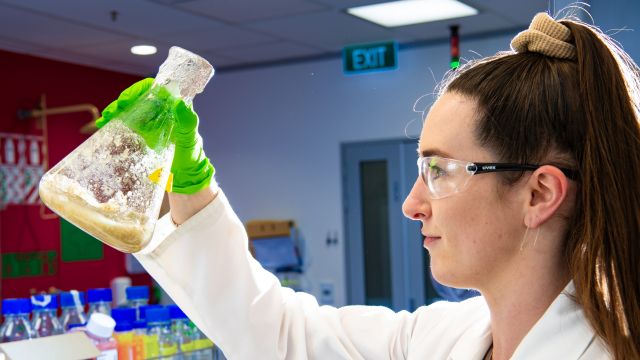
This work extends from an MBIE Endeavour Programme establishing a powerful synthetic biology platform for complex biomolecule manufacture. By reprogramming fungi with the genetic blueprints that enable them to perform new chemistry, fermentation can be used to produce valuable products.
Animal health
Team Parker has developed a new animal insecticide technology, derived from a naturally produced compound, for the New Zealand and international companion pet market. The team has used synthetic biology to reprogramme fungi to produce the compounds efficiently and at scale. The technology is in its early stages of development, with prototype work being spearheaded at Ferrier via its startup company Bontia Bio and supported with pre-seed funding from Sprout Agritech and Booster Fund.
New cancer therapeutics (Glioblastoma)
Team Parker is collaborating with the University of Bonn and the University of Otago on novel synthetic biology approaches to test a new class of anti-cancer compounds and develop therapeutic drugs for the treatment of cancers such as glioblastoma.
Drug design
Through work supported by the Maurice Wilkins Centre, a Centre of Excellence of which Professor Parker was formerly deputy director, the team is researching a range of novel targets and bacterial pathogens—such as tuberculosis and meningitis—to find new methods for creating antibiotics.
For more information about Team Parker’s work, please contact ferrier@vuw.ac.nz.
Research impact
Bontia Bio
Bontia Bio, led by Ferrier, is working in partnership with Sprout Agritech LTD, New Zealand's leading agritech and foodtech accelerator and investor specialising in transformational technologies with real-world applications.
Bontia Bio is advancing a patented technology focused on animal health—particularly insecticides such as flea and tick treatments for domestic and international markets. Traditionally, flea and tick treatments for companion animals have been dominated by synthetic compounds, but Bontia Bio aims to offer safer, more environmentally conscious alternatives derived from nature.
Using the patented Fungal Factories™ platform, they have revived a fungal anti-parasitic compound, first identified in the symbiotic fungus of the plant Bontia daphnoides, which has no observed mammalian toxicity. The genes needed to produce the compound have been engineered into a laboratory strain, forming the foundation of Bontia Bio's manufacturing process.
The next steps involve scaling up production and obtaining regulatory approval to bring this innovative solution to market.
Taylor Reweti Hibbard’s journey from researcher to founder started early on in Gisborne, where he developed his love for sciences and the natural world.