
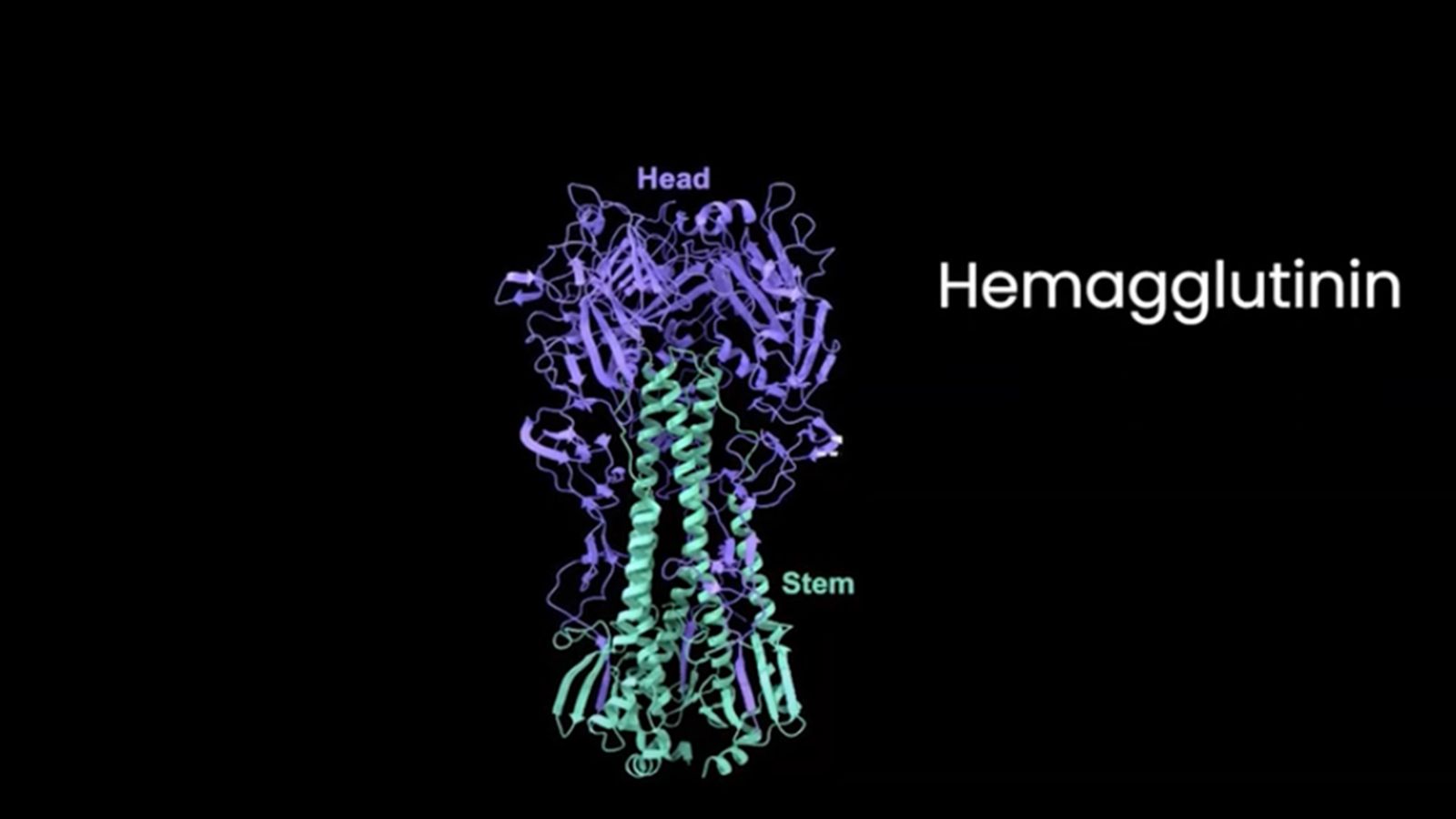
 Image: Hemagglutinin – the key the flu virus uses to enter our cells. This protein sits on the surface of the influenza virus and helps it to latch onto and enter inside our cells. By designing mRNA vaccines that teach the body to make and recognise hemagglutinin, scientists aim to trigger antibodies that block this key step
A universal flu vaccine is one of the RNA Platform’s first two Flagship Projects—ambitious research programmes designed to show what RNA science can achieve in Aotearoa. In this blog, we take a closer look at the challenges the team is tackling, and how researchers from across New Zealand are working together to find innovative solutions.
Every winter, flu season rolls around—and every year, the vaccines we rely on only protect against some of the strains in circulation. The flu virus is a master of disguise, constantly changing its outer coat so that our immune system struggles to keep up. In a normal year this means more people getting sick. In a pandemic year, like we saw with COVID-19, it could mean something much worse.
That’s why researchers in New Zealand are working on one of the “holy grails” of medicine: a universal flu vaccine. Instead of chasing the virus after it changes, the goal is to build protection that lasts across many strains—even ones we haven’t seen yet.
Why current flu vaccines aren’t enough
Today’s vaccines do a good job of reducing illness and saving lives, but they have limits:
- They wear off quickly. Our bodies tend to focus on parts of the virus that change a lot. Once those fade or mutate, our protection drops.
- The virus mutates constantly. Each year, flu strains drift and shift, leaving last year’s antibodies struggling to recognise them.
- The best targets are overlooked. There are stable parts of the flu virus that barely change at all. But our immune system doesn’t pay much attention to them without help.
In short, the vaccines we use now are like chasing moving targets, rather than aiming at the parts of the virus that stay the same.
How a universal flu vaccine could work
Scientists are taking a new approach: redesigning the vaccine to focus our immune system on the virus’s unchanging features. This approach encourages the body to make broader, longer-lasting antibodies that can stop multiple flu strains at once.
The role of AI and new RNA technology
This project is powered by some of the newest tools in science:
- Artificial Intelligence (AI): Programs like AlphaFold help predict what viral proteins look like in 3D, guiding smarter vaccine design.
- mRNA vaccines: Instead of growing virus in eggs or cells, scientists can now “write” an mRNA recipe that teaches the body to make just the right piece of the virus for training the immune system. Designing a producing candidates now happens in days, this accelerates everything from lab testing to manufacturing and helps zero in on the best-performing vaccine much faster.
- Lipid nanoparticles (tiny fat bubbles): These protect the fragile mRNA and deliver it safely into our cells, like bubble wrap around a parcel.
By combining these technologies, researchers hope to create a universal flu vaccine that could be manufactured in advance and stockpiled—ready to roll out at the first sign of a pandemic.
Why this matters for New Zealand and beyond
If successful, this work could change how the world responds to future outbreaks. A universal flu vaccine would:
- Protect New Zealand and Pacific communities against new flu strains.
- Provide an emergency shield while waiting for more tailored vaccines.
- Reduce severe illness and save lives worldwide.
The next pandemic isn’t a question of if, but when. By investing in this research now, we’re working to ensure New Zealand and our neighbours are better prepared for whatever comes next.
Watch this short video explainer to see how AI is helping scientists design smarter vaccines.