
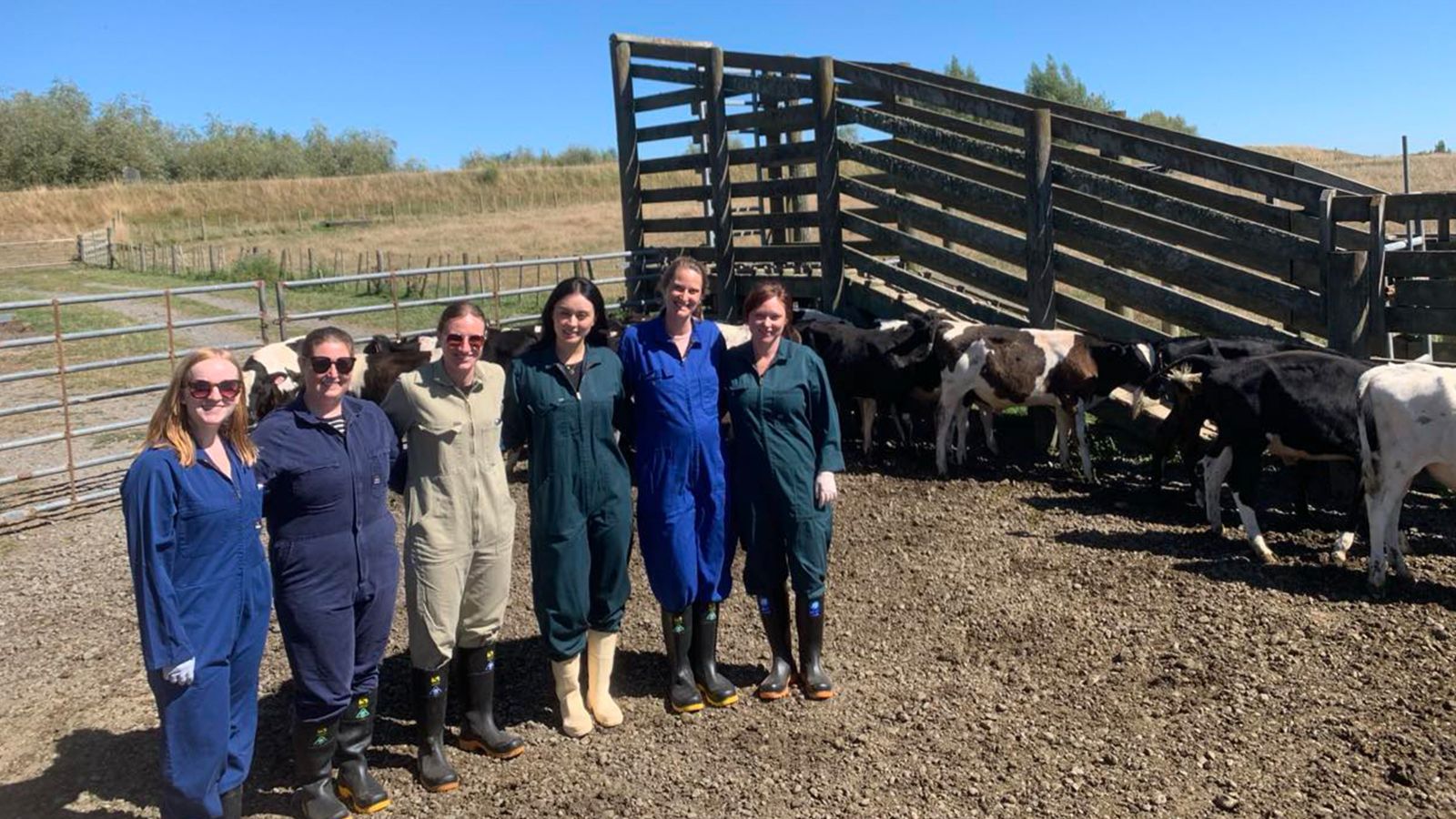
 Image: The RNA Platform Team visiting Aorangi Farm. From left to right: Caitlin MacArthur, Sarah Draper, Amy Foster, Joanna Kuang, and Rebecca McKenzie, with Mallory Ross (AgResearch), Photography by RNA Platform team
The impact of BVD
Bovine Viral Diarrhoea (BVD) is one of the most expensive cattle diseases in New Zealand. It quietly costs farmers more than $150 million each year through sick animals, lost production, and extra farm expenses. The vaccines available for BVD in New Zealand were developed using virus strains from overseas, which means they're only partly effective against the local versions of the virus, leaving animals exposed and outbreaks still happening.
That’s where mRNA vaccine technology—the same breakthrough used in COVID-19 vaccines—comes in. The RNA Platform team wanted to see if it could also protect cows.
Study approach
Researchers worked with a small group of healthy, young calves. Each calf received one of four options:
- a standard BVD vaccine already on the market
- a harmless saltwater injection (placebo)
- a new mRNA vaccine designed to target the BVD virus
- a similar mRNA vaccine with a small “extra signal” added to make it even stronger.
Study results
- Safe for calves: The new vaccines were well tolerated, with no concerning side effects.
- Stronger protection: The mRNA vaccine with the “extra signal” gave the best antibody response — meaning the calves’ immune systems were better prepared to fight the virus.
- Disease-free: As expected, none of the calves developed BVD after vaccination, since the vaccines themselves do not contain any live virus.
Significance
This was the first time mRNA vaccines have been tested in cattle in New Zealand—and the results are encouraging. If further trials confirm the findings, it could mean:
- Better protection for herds against BVD = improved animal welfare and production.
- Reduced costs and stress for farmers.
- A faster, more flexible way to respond to cattle diseases in the future.
Project team
This project brought together expertise from across New Zealand:
- Dr Mallory Ross, Dr Axel Heiser (Bioeconomy Science Institute)
- Dr Rebecca McKenzie, Dr Sarah Draper (RNA Production Facility)
- Farm and animal health teams at (Bioeconomy Science Institute (BSI) provided animal trial support and monitoring
Together, this cross-institution team combined skills in vaccine design, RNA production, immunology, and animal science to deliver the study.
Next steps
The team is now planning larger studies to fine-tune the vaccine and test it against New Zealand’s unique strains of the virus. It’s early days, but this research could open the door to a new generation of animal vaccines.