
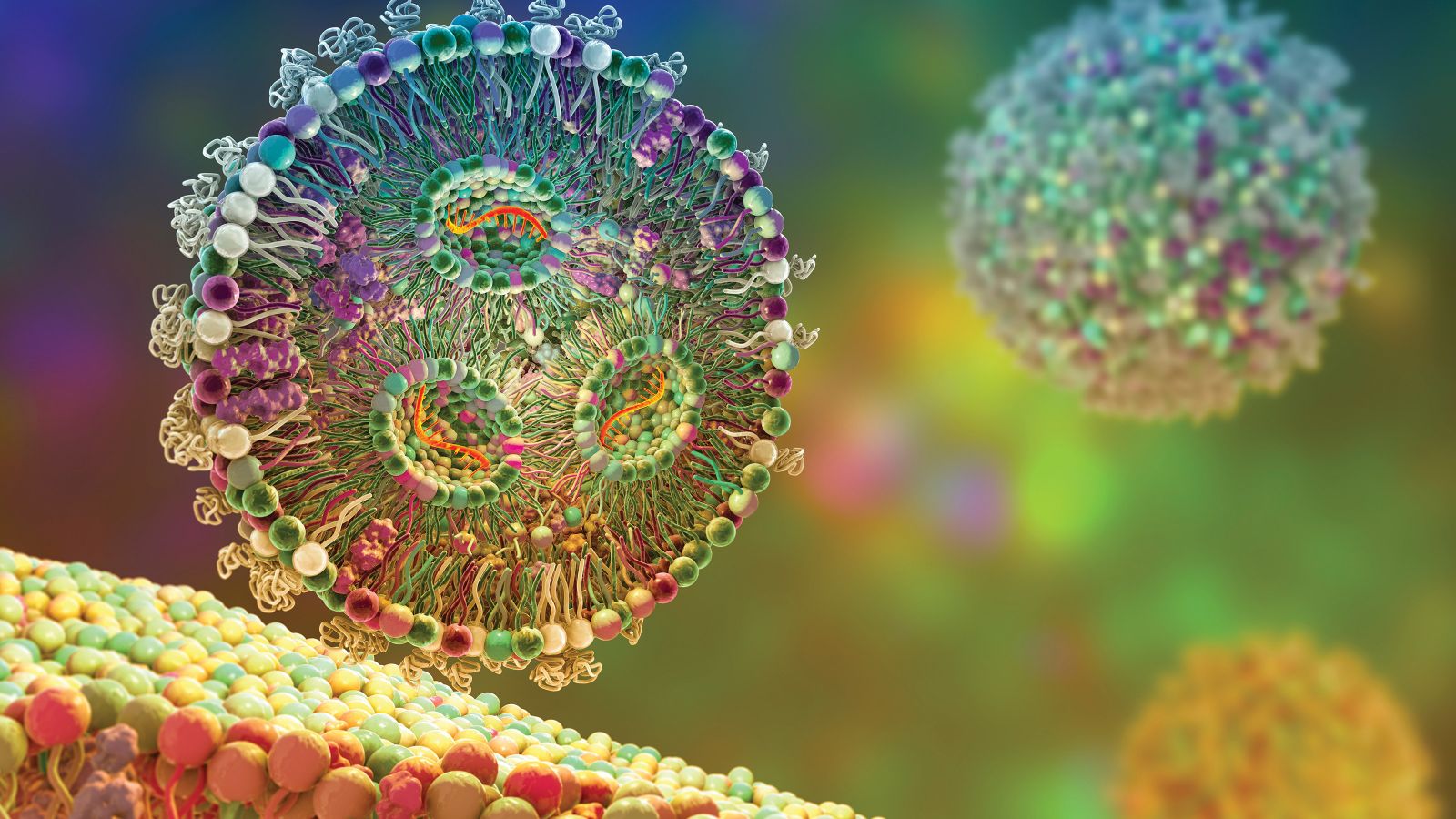
The importance of lipids
Every mRNA vaccine or therapy — from COVID-19 vaccines to new cancer treatments — relies on tiny fat bubbles called lipid nanoparticles (LNPs). These lipids act like protective envelopes, carrying fragile RNA safely into cells where it can do its job.
But the lipids currently used were developed for urgent use during the pandemic and are protected by intellectual property (IP) patents making them inaccessible for the development of NZ-owned commercial products. To truly unlock the next generation of RNA medicines that can be developed and commercialized freely locally, we need lipids that are safer, more effective, more versatile and not protected by IP.
Project overview
The RNA Platform’s Lipids Fast Start project, led by Professor Gavin Painter (Ferrier Research Institute, Victoria University of Wellington), set out to design and test a new family of “ionisable” lipids — special molecules that change charge depending on their environment, helping RNA get into cells that are critical for optimal function of LNPs.
Dr Regan Anderson, an experienced synthetic chemist from the Ferrier Research Institute, designed and made a novel library of ionisable lipid compounds that avoided existing patents – working with the RNA production facility (Drs Draper, McKenzie and Vink) the ionizable lipids were formulated into mRNA-LNP vaccines. Dr Lisa Connors immunology team from the Malaghan Institute then tested the novel LNPs in preclinical models of COVID19 generating exciting and results. The extended national reach of the RNA platform has also facilitated testing of LNPs in other disease indications including a mRNA vaccine for Staph. Aureus (Dr Fiona Radcliff University of Auckland).
Key findings
Promising performance
When formulated into LNPs with mRNA, the new lipids show better safety than current industry standards in vaccination models.
Beyond vaccines
A subclass of these lipids may also work for therapeutic delivery, including mRNA encoding monoclonal antibodies — opening doors to treatments for cancer, autoimmune disease, and more.
Stronger data, fewer animals
Innovative study designs meant the team could collect high-quality results while minimising animal use.
On the path to market
A patent was filed in September. Independent experts are support ECR Dr Sarah Draper validate market opportunities for novel LNPs with a focus on early product concepts that don’t require human safety studies.
Significance
Developing a “NZ-made” lipid library gives researchers here a critical edge. These lipids could:
- strengthen New Zealand’s ability to produce homegrown RNA medicines
- attract industry partnerships and investment
- provide safer, more effective options for vaccines and therapies worldwide
- provide local high-value manufacturing opportunities.
Project team
- Prof. Gavin Painter–Principal Investigator
- Dr Regan Anderson–Design and synthesis of lipids
- Dr. Lisa Connor and Dr. Fiona Radcliff–In vivo testing leads
- Dr. Rebecca McKenzie, Dr. Jochem Vink & Dr. Sarah Draper (RNA Production Facility)–mRNA supply and formulation
- Sam Wojcik (Wellington UniVentures)–Market validation
- Obadiah Plante (consultant)–Industry insight
- Dr. Sarah Draper (Ferrier Research Institute)–Innovative product concepts
- Greg Lynch (CatalystIP)–Intellectual property and patent drafting and filing
Next steps
The team is continuing to broaden its network across the RNA platform, examples include preliminary project data regarding vaccines for livestock (Dr Axel Heiser, AgResearch and Dr William Kelton University of Waikato together with colleagues). To refine and further validate their novel LNPs the team are looking to partner with various Australasian Institutes, including the Monash Institute for Pharmaceutical Sciences, that have developed specialized LNP testing panels to better differentiate and guide ongoing design improvements.