
China and the Media Landscape in the Pacific
A panel presented by Holz and Collins on China’s media footprint in the Pacific, with commentaries from Dreaver, Sachdeva, and Powles.
22 September 2025
On Monday 22 September, the Centre for Strategic Studies (CSS) hosted a well-attended panel discussion on China’s media footprint in the Pacific region. The event featured CNA researchers Heidi Holz and Genevieve Collins, alongside panellists Barbara Dreaver (TVNZ), Sam Sachdeva (Newsroom), Associate Professor Anna Powles (Massey University) and CSS Director Professor David Capie.
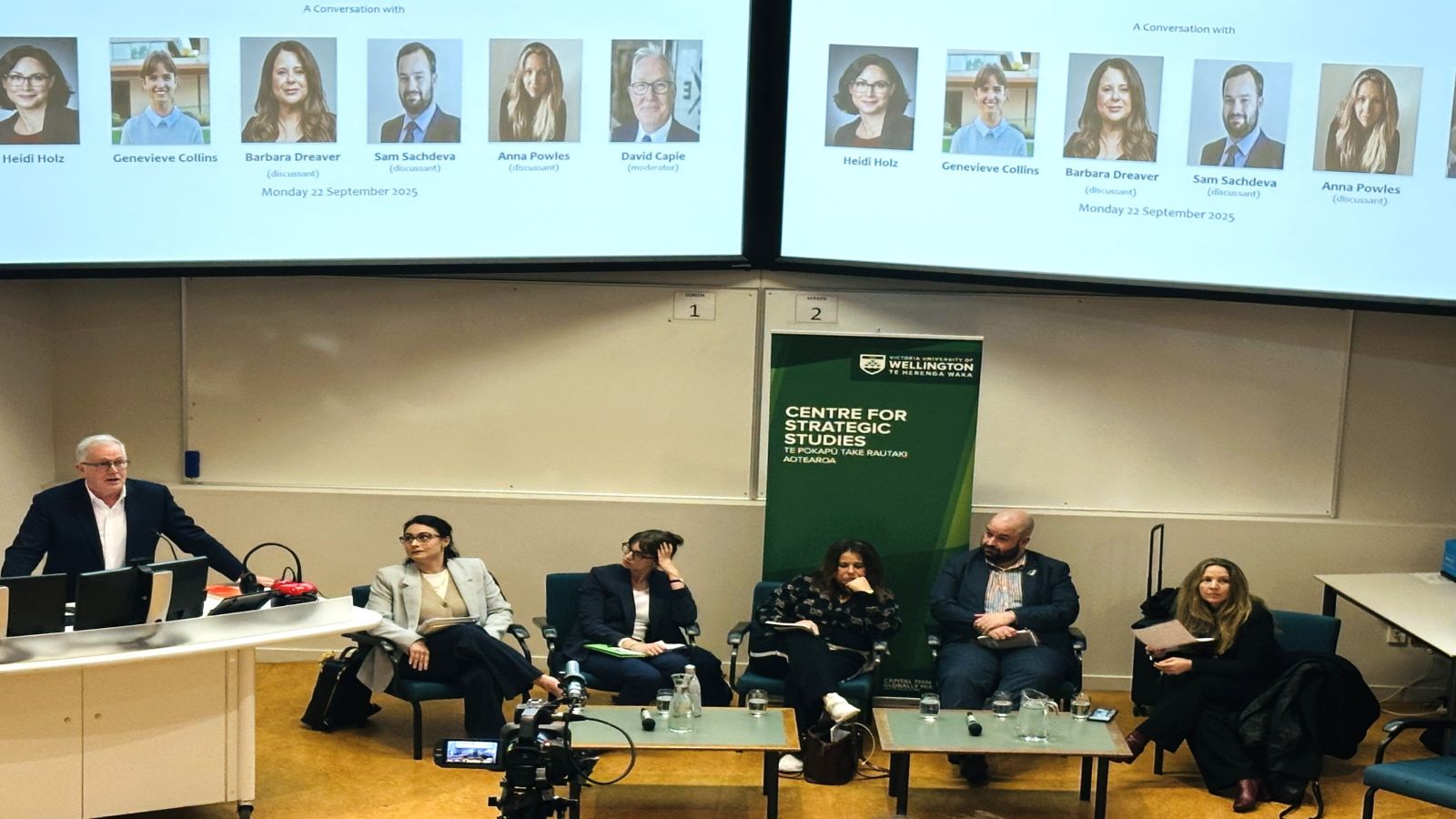
The three discussants offered thoughtful reflections based on their own experience and research. Barbara Dreaver emphasised that government-imposed restrictions on media access and freedom in Pacific countries are a greater threat than foreign influence. She spoke of the resilience and integrity of Pacific journalists despite limited resources and increased pressure. Sam Sachdeva observed that New Zealand’s media environment is more mature, but highlighted regulatory gaps in oversight of Chinese-language media and social media platforms. Anna Powles called for a deeper analysis of demographic shifts and media influence in the broader context of diplomatic, economic and security domains. She suggested that two researchers include issues such as climate change, disaster responses and election coverage to assess influence more effectively.
The panel was followed by an insightful and robust engagement with the audience of students, academics, journalists and the public. The themes discussed included recognition of cultural context and journalists’ courage, the need for Pacific voices to be heard, the increasing sophistication of China’s messaging, and the impacts of China’s media strategy on other countries’ media footprint in the region.