
Haere rā and bonne chance, Associate Professor Clive Aspin
Associate Professor Clive Aspin (Ngāti Maru, Ngāti Whanaunga, Ngāti Tamaterā) is retiring from Te Herenga Waka after six years of teaching and research in Māori Health. His career, shaped by the uncommon combination of Applied Linguistics and Public Health, is defined by a strong commitment to social equity and impact.
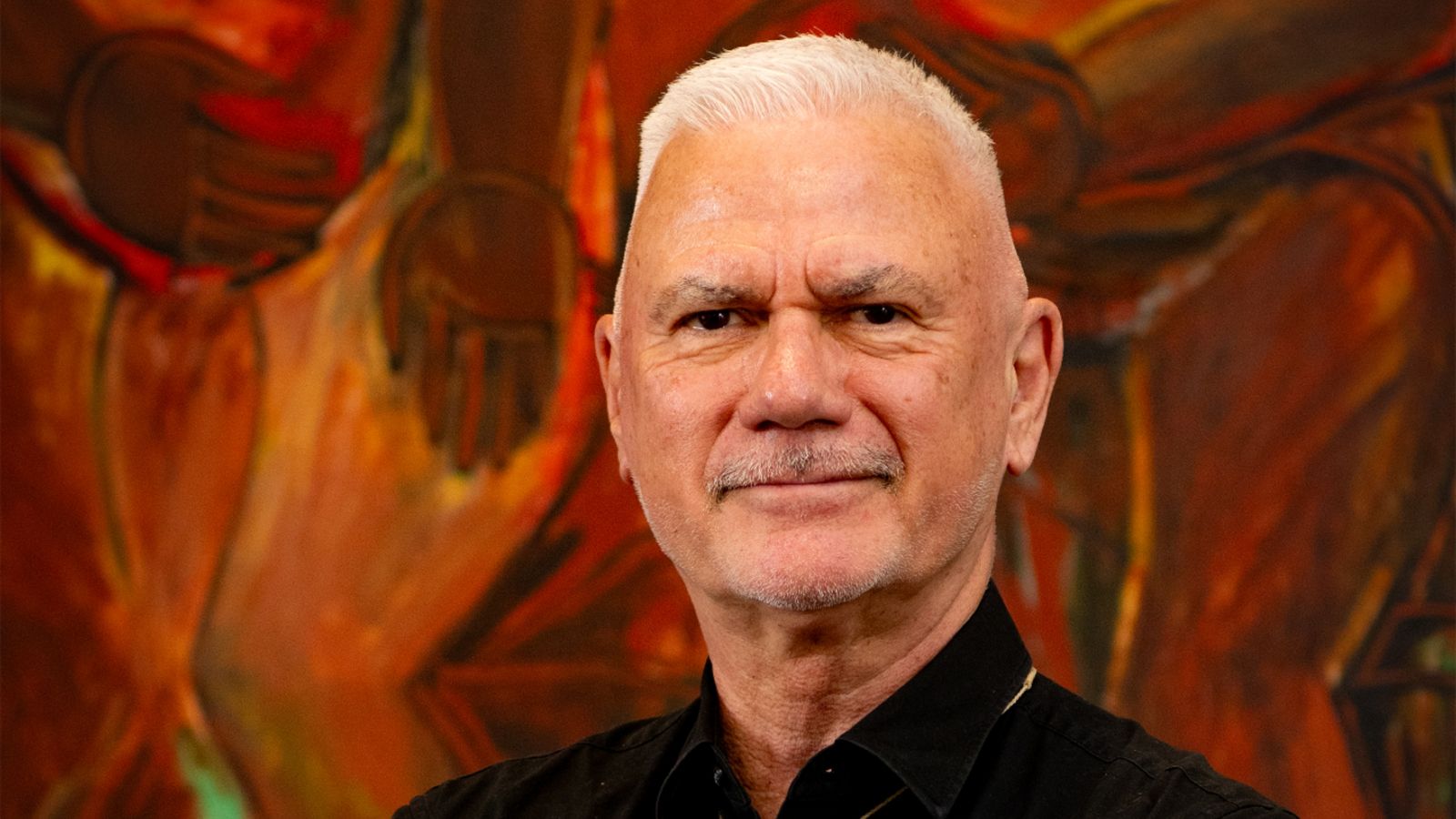
Clive Aspin (Ngāti Maru, Ngāti Whanaunga, Ngāti Tamaterā) began his career as a teacher in the early 1980s, teaching in high schools both in Aotearoa and in France. He taught English at the Institut Francais de Gestion in Paris during the early years of the HIV pandemic—a period that would later shape the direction of his scholarship. In France, Clive honed his language skills while witnessing first-hand the public health consequences of the pandemic, particularly for the French LGBTQ+ community.
“France had some of the worst HIV outcomes in the OECD in the early stages of the pandemic. Blood banks were using contaminated blood from prison inmates for transfusions, and public health responses were hampered by prejudice and the limited mobilisation of affected communities, in contrast to cities such as New York, San Francisco, and Sydney.”
Clive returned to Aotearoa in the early 80’s—fluent in French and passionate about the power of bilingualism—and soon after, came to study a master’s in Applied Linguistics at Te Herenga Waka. His thesis, A Study of Mathematics Achievement in a Kura Kaupapa Māori, examined the educational outcomes of ākonga Māori learning mathematics in total immersion te reo Māori settings, compared with ākonga studying in English-language settings. His findings showed that a strong cultural identity, coupled with whānau engagement and support, was associated with better learning outcomes.
Although te reo Māori became an official language in 1987, attitudes towards te reo as a language for instruction across the curriculum remained sceptical. Faced with limited access to mentoring and support to continue in this field of research, Clive accepted a scholarship to study for a PhD at Otago University looking at the early impact of HIV on Māori in Aotearoa.
This unexpected “silver lining” steered his career towards public health research and teaching in New Zealand and Australia. His scholarship and practice centred on Māori health and sexuality, including the persistent inequalities in Māori health outcomes highlighted during the HIV and COVID pandemics. Alongside this work, he advised government on policy development and led community-based health management initiatives.
Clive returned to Te Herenga Waka as a senior lecturer in Māori health in 2020. His deep conviction of the importance of te ao Māori in education was reflected in his appointment as the first Associate Dean Māori of a faculty at Te Herenga Waka. Associate Professor Helen Rook, current Head of Te Puna Hauora—School of Health says, “As the first Associate Dean Māori for the Faculty of Health, Clive didn’t just step into a new role, he helped create the conditions for what that role could become. He shaped it with clarity, confidence, and a deep sense of responsibility to people, to place, and to purpose.”
Clive is proud of the many connections, collaborations, and research funding opportunities he has attracted during his time at Te Herenga Waka. Outputs from a recent HRC-funded project—examining the impact of coronial practices on Māori youth mental health, communities, and suicide rates—are currently under review, soon to be published in The Lancet and other journals. A comprehensive report on coronial investigations into rangatahi suicide is planned for release this year and will be of interest to coroners, policy makers, and whānau bereaved by suicide.
Clive is also particularly proud of being awarded the Te Rangi Hiroa Medal in 2023 by the Royal Society Te Apārangi for his contributions to social and cultural diversity in Aotearoa, and his work in the field of HIV.
Looking back on his long career, Clive says teaching has been a joy. “Being exposed to young people’s thoughts and observations is a rare privilege—that is one of the things I will miss the most.”
He hopes to see further expansion of the Māori Health curriculum at Te Herenga Waka and greater representation of Māori academics in senior leadership roles. “While the number of Māori academics is growing, there is still a need for active recruitment programmes to grow Māori teaching and research capability.”
“People like me, we have a lot to share, but there comes a time when we have to move aside and make room for others.”
In retirement, Clive is planning to travel, paint, and write. He is currently working on an account of his life story and is looking forward to documenting the impact of HIV on Māori and other Indigenous peoples from the perspective of someone who has both researched and lived through the pandemic in a number of countries for more than four decades.