
NZCIEL 2025—a busy year in international economic law
From welcoming world-class researchers to unpacking Trump's tariff moves and sending one of our own to Geneva—2025 has been anything but quiet at NZCIEL.
What a year it's been at New Zealand Centre of International Economic Law (NZCIEL)! As we look back on 2025, we're thrilled to share the energy, expertise, and international connections that have defined our work this year.
Fresh perspectives on IP law
We're excited to welcome two exceptional researchers whose work brings vital new dimensions to how we understand innovation in the communities Aotearoa New Zealand trades with.
Dr Khushbu Kumari joins us with a laser focus on patents and pharmaceuticals in India. Her timing couldn't be better as New Zealand negotiates a free trade agreement with India, Khushbu's research on data exclusivity and its impact on India's pharmaceutical sector offers crucial insights into navigating one of the world's most complex pharmaceutical markets.
Dr Hai-Yuean Tualima brings something equally important: deep engagement with Pacific communities, particularly in Samoa. Her work isn't just theoretical, Hai-Yuean is providing practical pathways for protecting traditional knowledge and recognising customary law. Having led Pacific delegations on the WIPO Treaty on Intellectual Property, Genetic Resources, and associated Traditional Knowledge, Hai-Yuean continues to shape policy at the highest levels.
A Swiss connection
This July, we wrapped up an enriching visiting scholarship with Professor Nicolas Diebold from the University of Lucerne, Switzerland. Nicolas spent time with us exploring how states walk the tightrope between economic liberalisation and regulatory autonomy—a question that's never been more relevant. We hosted a symposium on "Economic Freedom and Market Regulation" during his visit, sparking conversations that will influence our thinking for years to come.
My time at NZCIEL was intellectually stimulating and deeply rewarding. The symposium created a unique space and the insights I gained from engaging with New Zealand's perspective on these issues will certainly shape my research.
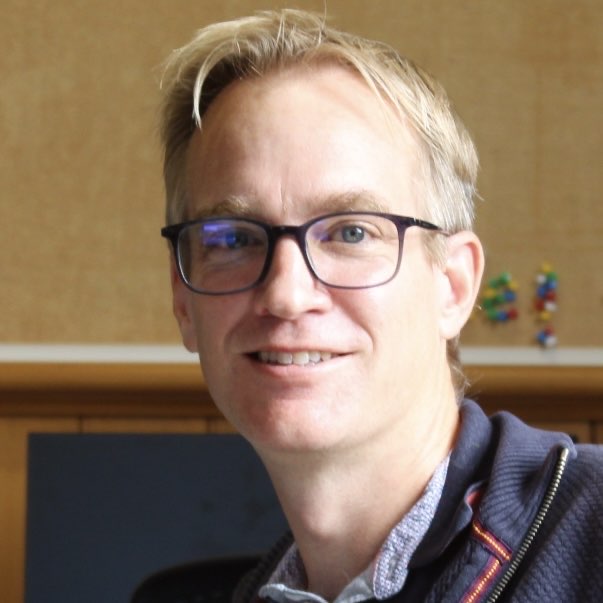
Nicolas Diebold
Professor, University of Lucerne
Making sense of IP and services in trade
Nikita Melashchenko and Susy Frankel have been busy collaborating with the New Zealand Pacific Economic Cooperation Council (NZPECC), developing a tool that untangles the connections between intellectual property and services. Even better? Version 2.0 is on the way, with enhanced visualisation and interactivity to make these complex relationships even clearer for policymakers and researchers.
Student voices matter
The students in our interdisciplinary Master of International Trade programme continue to impress us. This year's cohort—bringing together perspectives from law, economics, political science, and international relations—have written student notes that we'll be publishing later this year. Watch this space!
Trump tariffs and trade law
In May, we teamed up with the New Zealand Centre for Public Law (NZCPL) for a timely discussion that packed the room. Our own Meredith Kolsky Lewis dissected the first 100 days of Trump 2.0, examining whether his sweeping tariffs on trading partners actually square with US law and WTO rules. Spoiler: it's complicated. Moderated by Dr Matthew Castle from the School of History, Philosophy, Political Science and International Relations, the conversation explored not just the legality of current measures, but what additional tariff tools Trump might deploy next.
Trade and sustainability network
Alberto Costi, NZCIEL Co-Director, has been at the forefront of connecting trade law with environmental and social challenges, particularly those facing Pacific communities. His work on climate mobility and food systems has taken him from Rome to Belgium, London and beyond, examining how law and policy can respond to climate-driven displacement and threats to Indigenous food security.
Climate change is forcing us to rethink the foundations of international economic law. The work we do at NZCIEL is essential to developing the innovative, principled thinking needed to align trade, development and climate justice, particularly in the Pacific.
Alberto Costi
Professor
Heading to Geneva
Finally, some bittersweet news: Susy Frankel is taking leave in 2026 and 2027 to serve as Counsellor in the Intellectual Property, Government Procurement and Competition Division of the World Trade Organization in Geneva. While we'll miss her presence here, we're proud that she'll be working directly with WTO Members to implement and deepen their understanding of the TRIPS Agreement.
This is an incredible opportunity to support countries in navigating the TRIPS Agreement and shaping international IP policy. I'm looking forward to bringing insights from the NZCIEL to the WTO, and I know I'll return with fresh perspectives to share with our students and colleagues.
Susy Frankel
Professor, Chair in Intellectual Property and International Trade
It's a testament to the calibre of work happening at NZCIEL.
As we move into 2026, we're energised by the momentum we've built. Stay tuned for more updates, research outputs, and opportunities to engage with the pressing questions shaping international economic law today. Subscribe to our mailing list and follow us on social media to stay connected!