
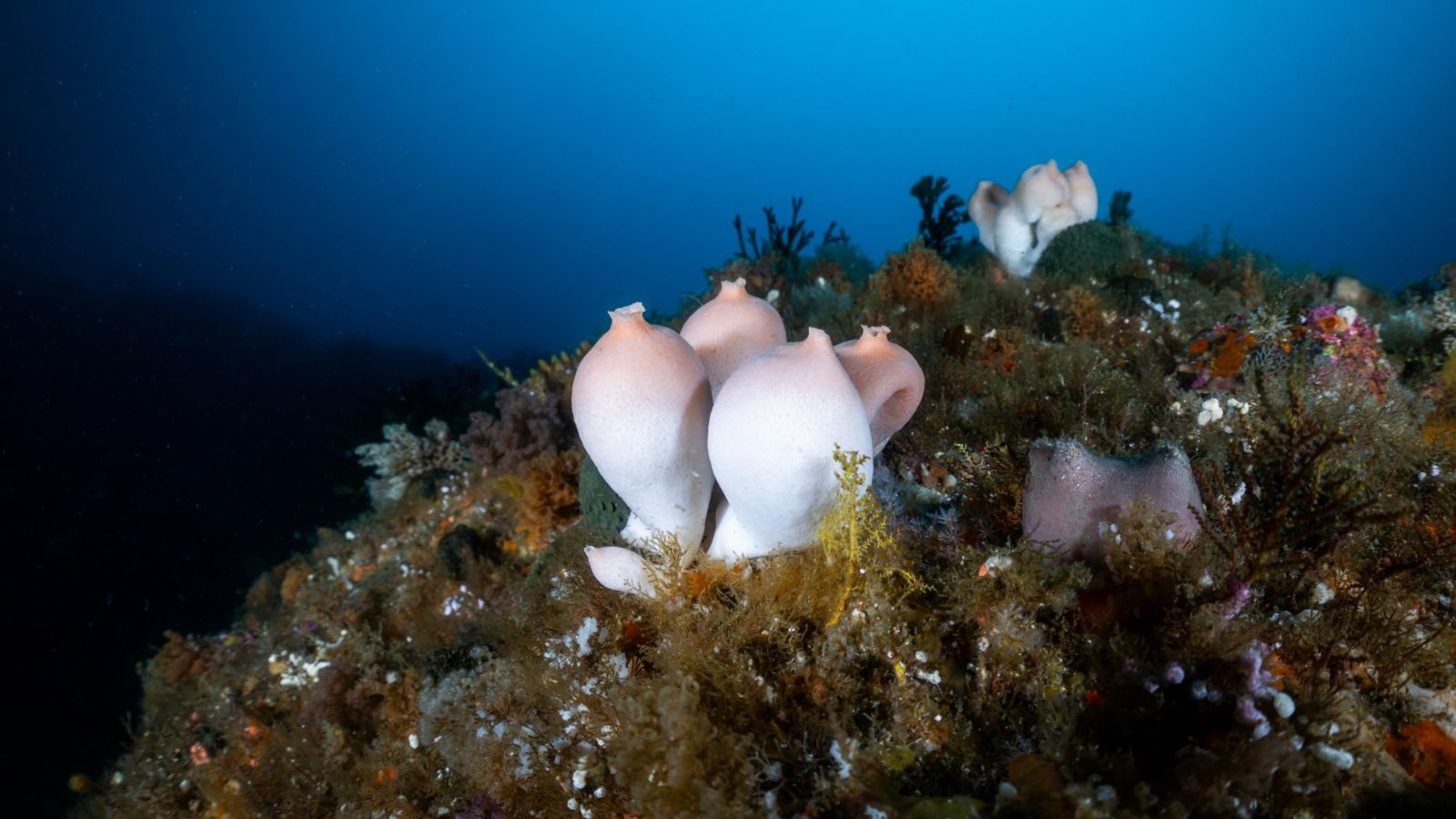
More intense marine heatwaves as a result of climate change could lead to the mass loss of a sponge species found around Aotearoa New Zealand, a new study suggests.
The study found a temperature increase of just 1°C above previous marine heatwave peaks could cause the widespread death of Rowella lancifera, a sponge common in shallow waters around the coast.
“We know marine heatwaves are already affecting sponge populations, but our latest research shows the effects could be much more severe as heatwaves intensify,” said Professor James Bell, a marine biologist at Te Herenga Waka—Victoria University of Wellington and study co-author.
Marine heatwaves are increasing as the climate warms. In 2022, a marine heatwave was linked to the mass bleaching of more than 50 million Cymbastella lamellata sponges in Fiordland and caused almost half to die.
“In previous marine heatwaves, most shallow-water sponge species actually survived. However, in our recent lab tests we found a 95 percent mortality rate when the Rowella lancifera sponge was exposed to slighty warmer temperatures than those recorded in 2022,” said Professor Bell.
The highest water temperature used in the lab tests was 21.5°C, just 1°C warmer than the top temperature recorded during the 2022 marine heatwave in Fiordland.
The study involved 96 Rowella lancifera sponge specimens. They were collected from sponge populations living at two different water depths so researchers could assess whether depth affected the animal’s response to rising temperatures.
“We saw the same strong stress response, regardless of the water depth at which the sponge had been living. Our results suggest we’re only a 1°C increase away from losing numerous populations of this sponge—and very likely other sponge species too,” said co-author Manon Broadribb, a PhD candidate at Te Herenga Waka.
Given the key role sponges play in the marine environment, the widespread loss of sponge populations would have major flow-on effects, she said.
“Sponges cover up to 70 percent of our rocky reefs, providing habitat for other species and recycling nutrients in the water column that support marine life. With marine heatwaves becoming more intense and occuring more often, there’s a very real risk we could see the mass loss of sponges with ecosystem-wide effects.”
Results of the study are published in the journal Proceedings of the Royal Society B.