
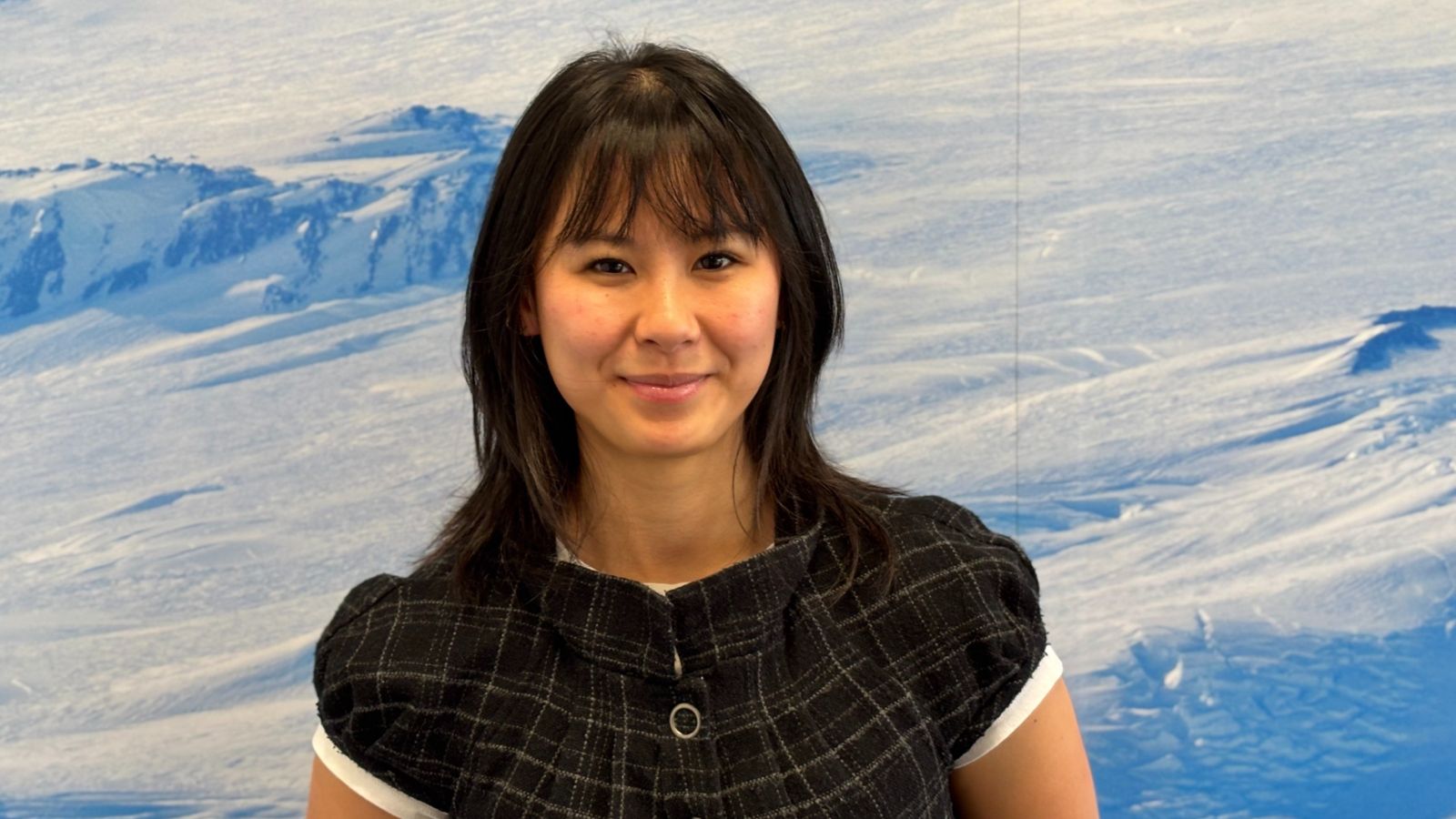
“Yes, studying climate change and the biodiversity crisis can be depressing, but I also find it so empowering. The more knowledge we have, the better-informed our decisions can be.”
Anna has always felt an intrinsic connection to the environment and spends much of her spare time in nature—the most recent hike in her calendar was a trip to the Tararuas. “The environment is part of my sense of identity and place. I want to help protect it.” The Antarctica New Zealand scholarship, sponsored by New Zealand Post, gives Anna the opportunity to visit one of the most unique environments in the world, and through her research, to meaningfully contribute to environmental science.
At first, Anna wasn’t sure if she would apply for the scholarship. The deadline was only one month into starting her Master of Environmental Science—not much time to settle on a research question. Plus, she would be up against PhD students applying for the same funding. But ever since her Bachelor’s degree at the University of Auckland, she had wanted to do Antarctic research—in fact, Te Herenga Waka’s world-leading Antarctic Research Centre is what brought her to do postgraduate study. So, with the support of her supervisor, she decided, “why not just give it a try?”
A surprising phone call offer and $10,000 later, Anna is now preparing for her Antarctic expedition to the Ross Sea, leaving mid-October.
Anna will pass through Scott Base at the beginning and end of her trip, but for most of her seven-week stay, she will be camping “out in the wop wops.” While there, she and her research team will enjoy average temperatures of minus 7°C, 24-hour sunlight, and toilet facilities that “definitely won’t be glamorous”.
But it will all be worth it for her research. As part of her supervisor’s research team—funded by the prestigious Royal Society Marsden Fund—Anna will explore a cluster of newly discovered seafloor vents, known as ‘seeps’, where methane leaks out from underground reservoirs. Methane seeps attract many weird and wonderful creatures of the deep because of the nutrients and habitat diversity they add to the area. But new seeps may also create toxic conditions which may drive certain species away.
Anna doesn’t know what she will find in Antarctica. So far, most research on methane seeps has been done in tropical or temperate deep-sea regions—a sharp contrast to the freezing, shallow waters of the Antarctic coastline.
Anna has always been fascinated by life that can survive in extreme environments. However, she does not play favourites, there’s no one seafloor organism that she is particularly interested in. “But hey,” she said, “maybe when I'm down there, I'll find something especially charismatic.”
The research team have remotely operated vehicles which they will use to collect samples from around the seeps, but also to set up underwater cameras so they can get visual information all year round. “The sea gets so cold in winter that the cameras all need little windscreen wipers to get rid of ice build-up.”
Her research is more important than simply finding out what’s down there: “our work will establish baseline data, which is crucial for long-term monitoring”. And because polar ecosystems are very climate sensitive, says Anna, this will be especially valuable for understanding how climate change is affecting ecosystems in Antarctica over time.
Anna hopes this is just the first of many trips to Antarctica. Whether she continues her current focus on methane seeps, or moves into a different area of environmental science, Anna intends to find plenty more reasons to explore the most remote continent on Earth.