
A voice for the disabled community
Finding her voice as an advocate for the disabled community was almost inevitable for Alice Mander. This week, as she graduates from Te Herenga Waka with a double degree—Law with Honours, and a Bachelor of Arts in Film studies and sociology—she will address the crowd at graduation and reflect on her impressive journey.
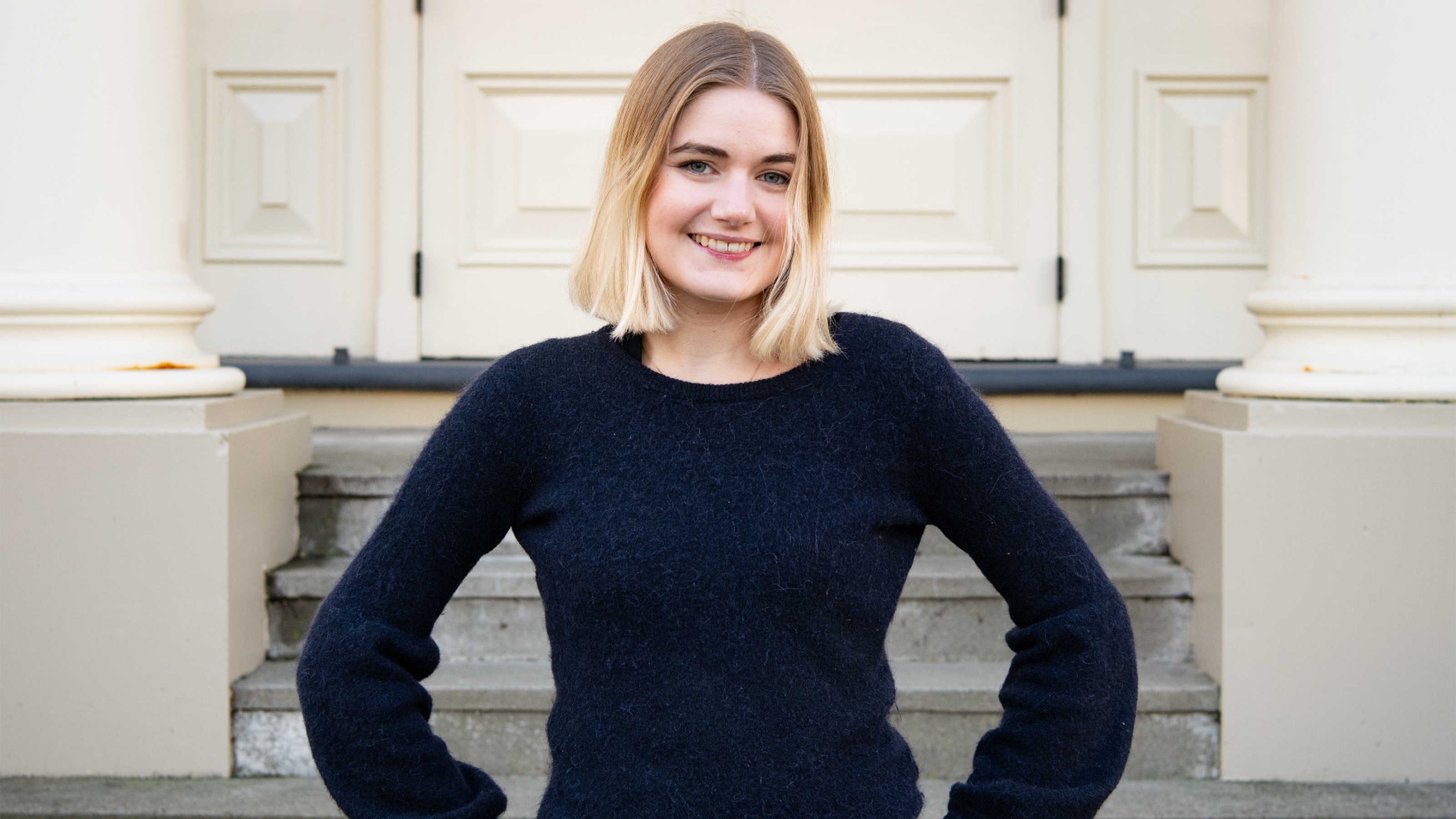

Alice—who attended Diocesan School for Girls in Auckland— was fascinated by the impact of film and media on society, recognising early on their power to shape attitudes and advocate for causes.
“At school, people saw me as outspoken and suggested I study Law. I didn’t know much about the law or how it could be used for change—that understanding came later. I liked the intellectual challenge, writing, and reading, so it made sense,” she says.
Combining Film, Sociology, and Law at University felt like a bit of a gamble, but it all fell into place. She says, “when I added sociology to my arts degree, I fell in love with it. It’s all about how society, people, and systems work, so it felt like the perfect fit.”
Having chosen to leave her support network and study at Te Herenga Waka, Alice soon discovered how challenging student life could be, especially as a disabled person, having to deal with accessibility issues on her own. “I didn’t have family here. I was the only person with an obvious disability in the halls and found it hard. That inspired me to get involved with disabled student advocacy, and general advocacy,” she says.
Alice began to write for the student magazine, Salient. It was her column—Token Cripple—that drew the attention of the disabled community who was glad to see their experiences on campus discussed openly as she navigated her own challenges. Campus accessibility, a lack of information about available support, and finding community were issues she addressed.
Soon, she was able to put the skills she was learning in her Law degree to work and found many causes to advocate about.
In 2021, while still a student, Alice was recognised by the Young Women’s Christian Association (YWCA) as one of 25 inspiring women under 25 for her work to establish the National Disabled Students’ Association (NDSA).
“One of the best things about a Law degree is the skills it teaches you such as critical thinking to really understand an issue, writing, and speaking,” she says.
“It’s very holistic, analytical, and strategic at the same time. That approach to systems was useful when I went into meetings with, for instance, the Ministry of Education or dealing with the Ministers themselves.”
Alice recommends students get involved in advocacy groups if they feel passionate about social justice and wish to sharpen their advocacy skills.
“It can be a full-time job, unpaid, and challenging, but if you’re passionate about it, definitely!
There is VUWSA, the Disabled Students’ Association, the law student representative groups and subject matter organisations, such as the Wellington Community Justice Project, to name a few.”
The highlight for Alice, as she reflects on her Law School journey, has been living in Wellington and taking all the opportunities that have come her way—from getting involved in the life of the University through student politics, to setting up the NDSA, to the work opportunities outside of her degree. She is excited to see her friends and cohort graduating and going into the workforce.
With her Professional Studies and a big European “O.E.” under her belt, Alice has joined the law firm Simpson Grierson as a member of their litigation team. She is also putting the final touches on a documentary web series, with D-list media, which she has helped write, direct, and host. The series—Clickbait & Crutches—comes out this month and explores how disabled people use the Internet to gain empowerment for employment and other purposes.
As a voice for the disabled community, with many strings to her bow, Alice says community is important to help build resilience.
“I joined the Disabled Students’ Association because a huge part of what these student communities can do is show you that you’re not alone and that what you’re experiencing is not your fault—others are experiencing barriers like you. It can feel very isolating if you are the only one in your social circle.”
Contact: Sylvie Poupard-Gould