
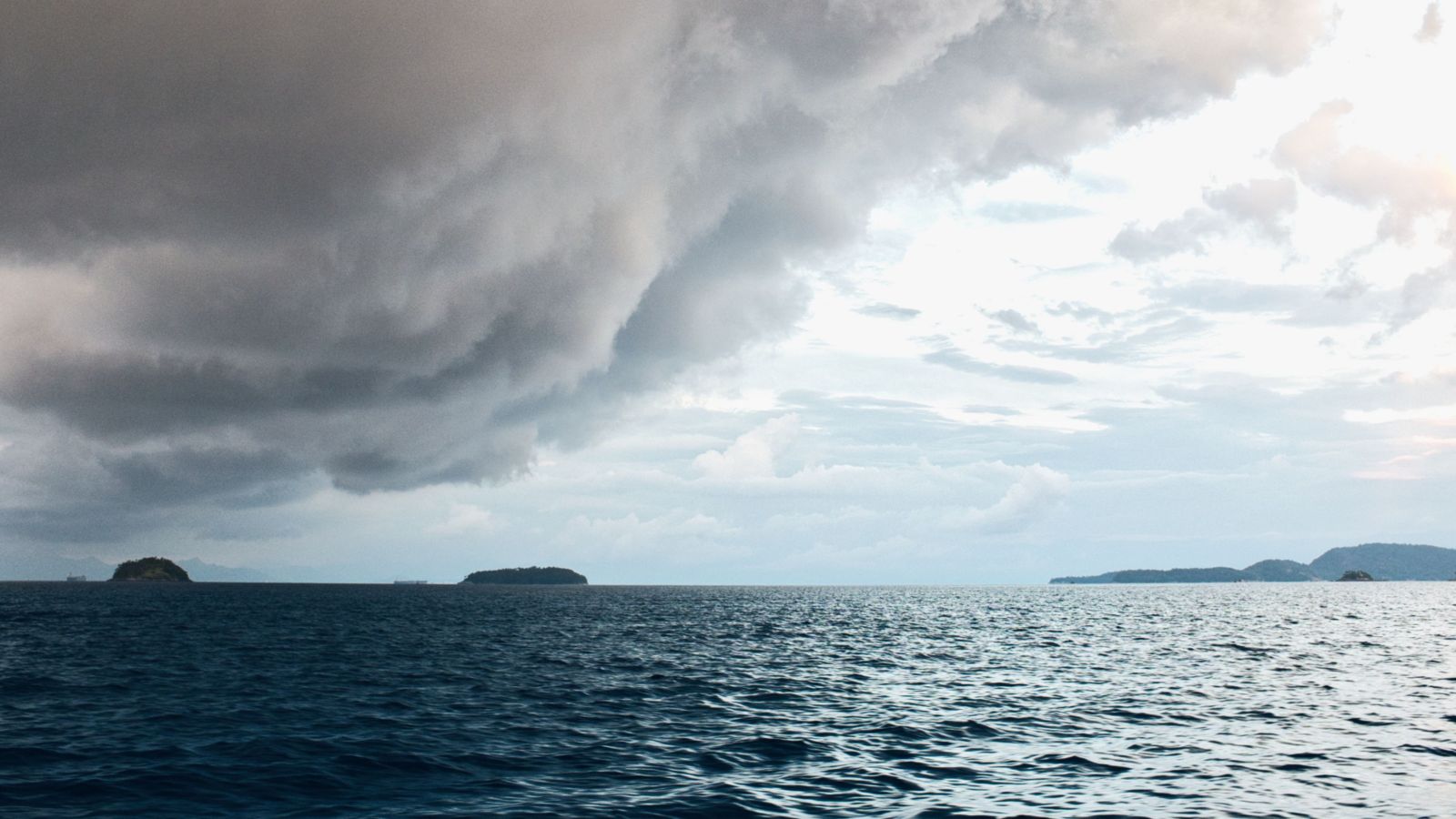
Comment: Residents of Te Whanganui-a-Tara Wellington know it is always wise to prepare for any weather—to pack sunglasses, a raincoat, and at least one extra layer. This “be prepared for anything” approach can equally be applied to Aotearoa’s ocean weather during this year’s “super” El Niño. Forecasts are fickle, unexpected outcomes are likely, and preparation is needed.
El Niño—as well as its opposite phase, La Niña—are natural climatic features caused by swings in atmospheric pressure over the Pacific.
Typically, trade winds over the central Pacific blow from the east, drawing cold, nutrient-rich water from the deep ocean to the surface off the western coast of South America in a process called upwelling.
But during an El Niño phase, a reversal in atmospheric pressure over the Pacific causes trade winds to weaken and/or reverse entirely.
Without easterly winds, upwelling does not occur. Instead, warm, tropical surface waters accumulate in the eastern Pacific, which release heat into the atmosphere, increasing air temperatures.
El Niño phases vary in strength, but the El Niño currently building in the Pacific is on track to be the strongest recorded. Ocean temperatures in the central Pacific are forecast to reach new heights this summer—potentially 3.6°C hotter than normal. Air temperatures in the coming year will likely reflect these extremes.
Temperature hikes may be particularly dramatic because this El Niño is occurring against a backdrop of warmer-than-normal air and ocean temperatures caused by climate change. To understand the range of possible effects on Aotearoa’s coast and marine life, we can look at similar past events.
The last strong El Niño was about a decade ago in 2015/16, with prior strong events in 1982/83 and 1998/99. Taken together, these events provide a good picture of what will happen on land—stronger, more consistent westerlies throughout the summer, heavier rain along the west coast, and heightened drought and wildfire along the east coast.
In the ocean, however, the picture is less clear, and ecological effects will likely be mixed.
Unlike El Niño effects in the eastern Pacific, these phases typically bring slightly cooler-than-average sea surface temperatures to Aotearoa. This dip in ocean temperatures could provide short-term relief for heat-stressed marine ecosystems coping with rapidly warming ocean temperatures because of climate change.
Persistent westerlies may also increase coastal upwelling along our west coast, fuelling the productivity of photosynthesising organisms such as phytoplankton and kelps, thereby benefiting the species that depend on them for food or habitat.
Meanwhile, increased rain along the west coast may cause higher freshwater flows into marine environments, increasing coastal sedimentation within heavily logged or farmed watersheds. More sediments in the water have a range of negative effects: they decrease oxygen and light availability for marine organisms, smother bottom-dwelling invertebrates, and reduce the ability of certain organisms (for example cockles, mussels, and sponges) to filter food from seawater.
While El Niño typically brings cooler water temperatures, we can’t rule out the co-occurrence of marine heatwaves. These heatwaves are becoming longer, more intense, and more frequent with climate change.
For instance, during the 2015/16 El Niño, the Tasman Sea off the west coast of Aotearoa experienced a 251-day heatwave, with sea temperatures reaching 2.9°C above normal. This heatwave profoundly affected the marine environment, as have subsequent ones.
In the South Island, these events resulted in high mortality of salmon stock and habitat-forming kelps, including the coast-wide extinction of bull kelp. Throughout Aotearoa’s coastal waters, bleaching and necrosis have been observed among marine sponges in response to heatwaves.
In Australia, warm waters have also been linked to outbreaks of new diseases on oyster farms and die-offs of wild pāua.
Thus, if a marine heatwave occurs this summer, it may have outsized impacts on our coast compared with those of El Niño. The exact influence of El Niño on ocean currents and residual heating in our region are unknown, as are the potential impacts further north of Aotearoa.
Even once this year’s El Niño ends, its lingering impacts on sea and air temperatures, coupled with ongoing climate change, assure us that our ocean—in both the short- and long-term—will continue warming.
Events like this remind us that we should be prepared for the unexpected. They should also remind us that we will need an adaptive management approach, one informed by mātauranga Māori and robust data collection and analysis, to support decision making in the face of erratic ocean weather and long-term climate change.
This article was originally published on Newsroom.
Amelia Hesketh is a lecturer in the School of Biological Sciences and Christopher Cornwall is a senior lecturer in Marine Biology at Te Herenga Waka—Victoria University of Wellington.