
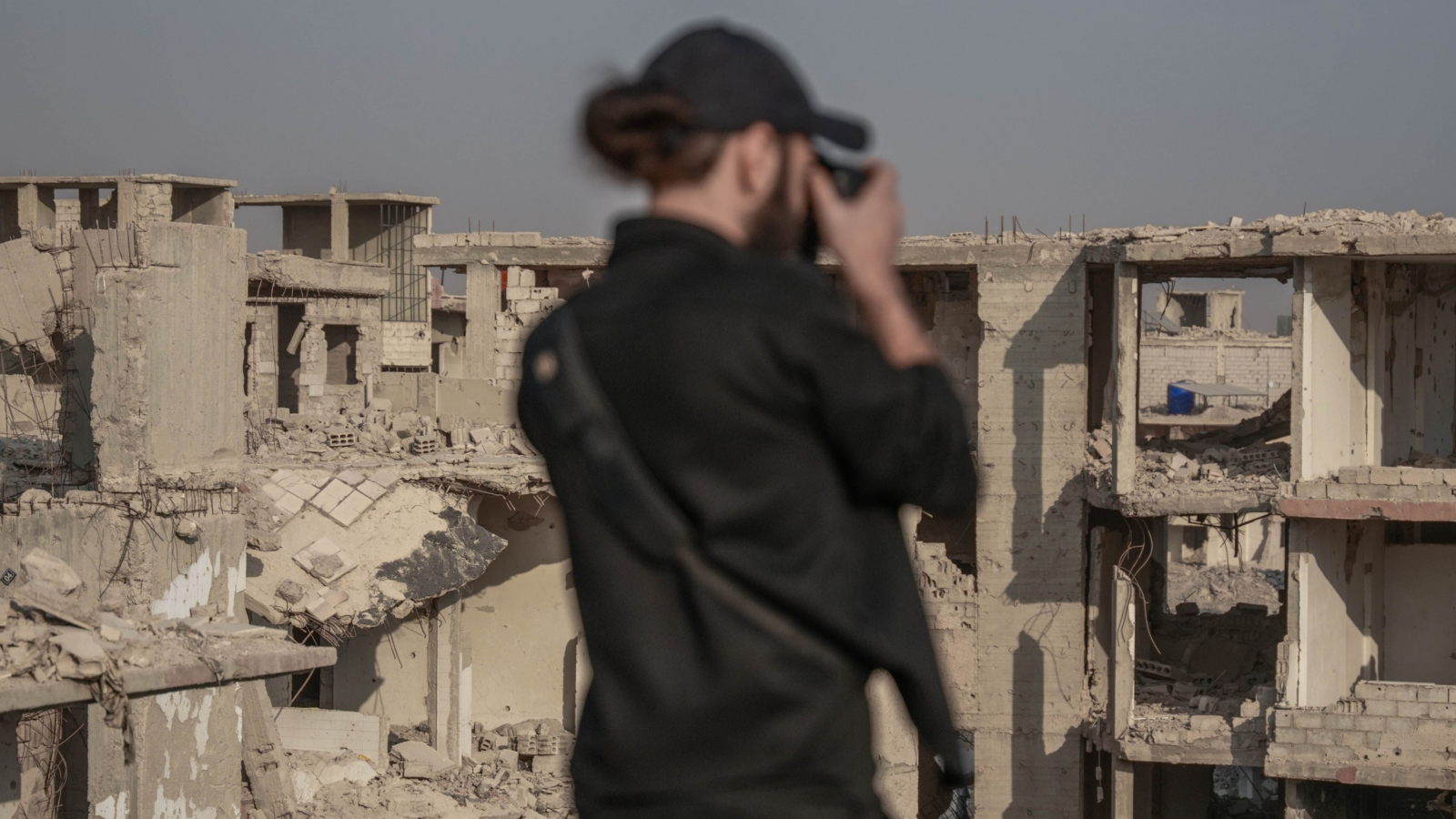
The news media are a primary channel for independent coverage of an armed conflict to reach the rest of the world. They perform a critical role in identifying the parameters of a conflict for viewers and answering our questions, such as: what is the relevant context surrounding the conflict? Who are the parties, what claims are they making, and what are their objectives? And perhaps most importantly, are there paths to peace? In their role as primary sources, providing on-the-ground reporting, news media also report potential war crimes in the first instance, creating a crucial pipeline to accountability.
The war in Gaza, which escalated into what the UN Independent International Commission of Inquiry considered in 2025 to be genocide, presented many complexities to the task of reporting war, including impeded access for foreign journalists into the Gaza Strip. As a result, smaller news media entities, including those in Aotearoa, are dependent on coverage from reputable news networks. Yet major news networks across the UK, US, Canada and Australia were subject to allegations that they were providing skewed or imbalanced coverage of the war.
I wanted to understand how New Zealand’s media regulatory framework currently responds to the risk of wider imbalance in armed conflict reporting. This led me to our media regulators.
New Zealand’s news media regulators are the Media Council and the Broadcasting Standards Authority (BSA). They decide complaints about breaches of Media Council Principles (for print media) and broadcasting standards (for broadcast media) in a particular segment or publication. Both regulators received complaints about Gaza War coverage in New Zealand, highlighting that armed conflict coverage matters to New Zealanders. A review of their decisions formed the centre of my study.
I found that New Zealand’s media regulatory framework does not currently provide an effective mechanism for regulators to determine whether balance has been achieved over time. This is largely because the Gaza War is a long-running issue, which triggers exceptions to our current balance principle and standard. Relatedly, not all types of news media content trigger the balance standard or principle — most prominently, bite-sized news updates throughout the day. While regulators can determine complaints based on specific articles or segments, the broader question of whether balance has been achieved over a series of articles or broadcasts remains unanswered.
So how do we address the risk of wider imbalance? I found myself traversing a niche but important history of attempts under international law to address the role of news media in armed conflict. I found that early discussions focussed on the role of news media as promoting peace. Most prominently, the Mass Media Declaration of 1978 recognised that media have a leading contribution to make to the strengthening of peace and international understanding. Peace journalism scholars have also built on this theme in the context of armed conflict coverage.
Drawing on the concept of news media as promoters of peace, I proposed a new draft standard that is uniquely tailored to addressing armed conflict coverage. The essence of my draft standard is to establish a standard of particular care when it comes to reporting armed conflict, to ensure balance is indeed achieved over time. It encourages news media to think about reporting armed conflict holistically, with a view of the short- and long-term consequences of the conflict, peace efforts, and by referring to international legal developments that can help viewers better understand the conflict.
I am hopeful that my study will provide a modest first look at how New Zealand media regulation could pave the way for thinking about armed conflict coverage in a more nuanced and holistic way.
This article was originally published in the Sunday Star-Times as part of its Brainwaves series. Sarah's research was supervised by Dr Marnie Lloydd and Steven Price.