
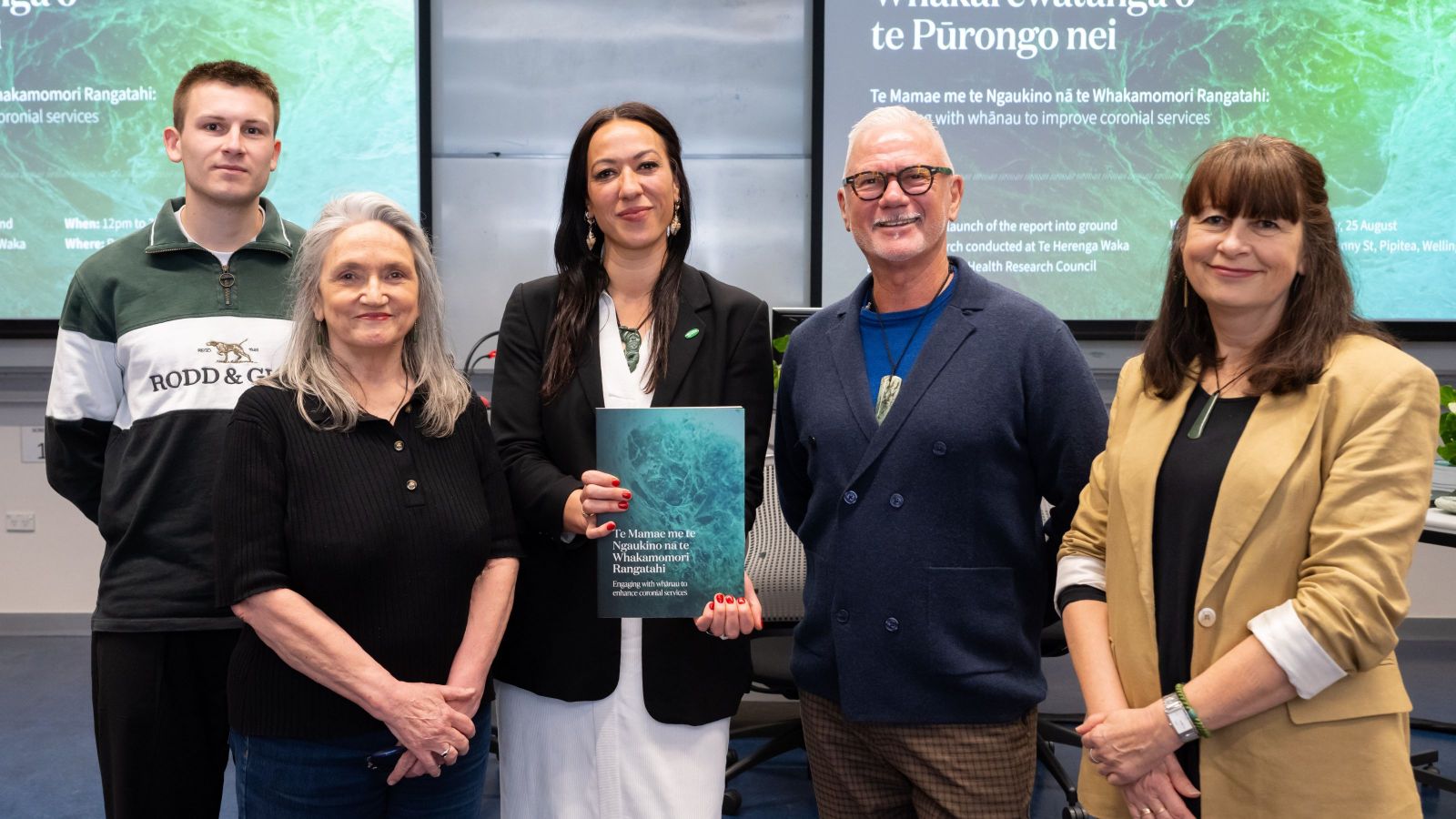
Changes to coronial services to better support whānau who have lost a child to suicide have been outlined in a new report published this month.
Suicide is the leading cause of death for people aged 15-19 years, with rates markedly higher for rangatahi Māori.
“Our research found there’s a strong case for enhanced engagement with whānau at all stages of the coronial investigation that follows a suicide. Closer engagement between whānau and coroners is likely to lead to greater community awareness of suicide risks and, over time, a reduction in the number of people who die by suicide,” said project lead Dr Clive Aspin (Ngāti Maru, Ngāti Whanaunga, Ngāti Tamaterā) from VUW’s School of Health.
The report, titled Te Mamae me te Ngaukino nā te Whakamomori Rangatahi: Engaging with whānau to improve coronial services, is the result of a three-year project funded by the Health Research Council.
The project aimed to examine how coronial processes can better recognise and uphold Māori knowledge, values, and worldviews. It included interviews with 14 whānau members who had lost a family member to suicide, and 11 coroners who had worked on rangatahi suicide investigations.
“Both the family members and coroners we interviewed expressed concern that whānau weren’t sufficiently involved in the coronial process. We also found that almost all coroners’ findings we looked at were based on reports from police and various health professionals, with no evidence recorded from bereaved whānau members.”
Based on their research, Clive and the project team identified four key recommendations to make the coronial process work better for whānau.
“First, there needs to be better communication and engagement practices. Whānau need timely support and information so they are aware of what is happening and are able to access information about their rights. Second, enhancing awareness within the coronial system about tikanga practices would make a difference to how whānau experience and engage with the process,” said Clive.
The report also recommends establishing a “dedicated liaison” service that can offer support to whānau throughout the process to help reduce stress and ensure whānau voices are included and valued.
Lastly, it recommends enhancing the overall coronial process. “While coroners do their best to support whānau, there are inherent challenges in the system they work within. This system can be enhanced by exploring how barriers to whānau engaging in the coronial process can be removed, looking at ways for them to participate in coronial investigations, and embedding an understanding of how adopting te ao Māori worldviews can offer comfort to whānau,” he said.
The report identifies two additional areas that require more research. The first is an analysis of the legal framework underpinning the coronial process to identify law changes that may be required. The second focuses on the broader question of whether coronial processes should be a judicial function in Aotearoa or whether there’s a better approach.
Results of the research have been provided to Government ministries and decision-makers, in the hope that they lead to systemic changes, which will lead to a reduction in the number of people who take their own lives.
The research team included staff and researchers from VUW and the University of Auckland, and consultants Dr Melanie Cheung and Dr Denise Blake, who have extensive experience in community engagement, kaupapa Māori research methodologies, and mental health and addiction.