
Globally, steelmaking is responsible for close to 8 percent of anthropogenic carbon dioxide emissions, releasing 2-2.5 tonnes of carbon dioxide for every tonne of crude steel produced. Although the use of hydrogen to strip oxygen from ironsand is a promising route to decarbonising the industry, this hasn’t been possible so far in New Zealand - as no existing hydrogen process seemed to work well on New Zealand's titanomagnetite ironsand.
A key co-founder of Cullbeck is Dr Bavinesh Maisuria, who has recently completed his doctoral studies in Materials Engineering at the Robinson Research Institute, under the supervision of Professor Chris Bumby. The new technology has been developed through a long-term research programme funded by the Government (MBIE Endeavour) and NZ Steel, with the core reactor concept emerging from Dr Maisuria’s doctoral research. A continuous 10-kilogram-per-hour demonstration reactor, which is covered by a provisional patent, is now operating within the Institute’s Gracefield laboratory.
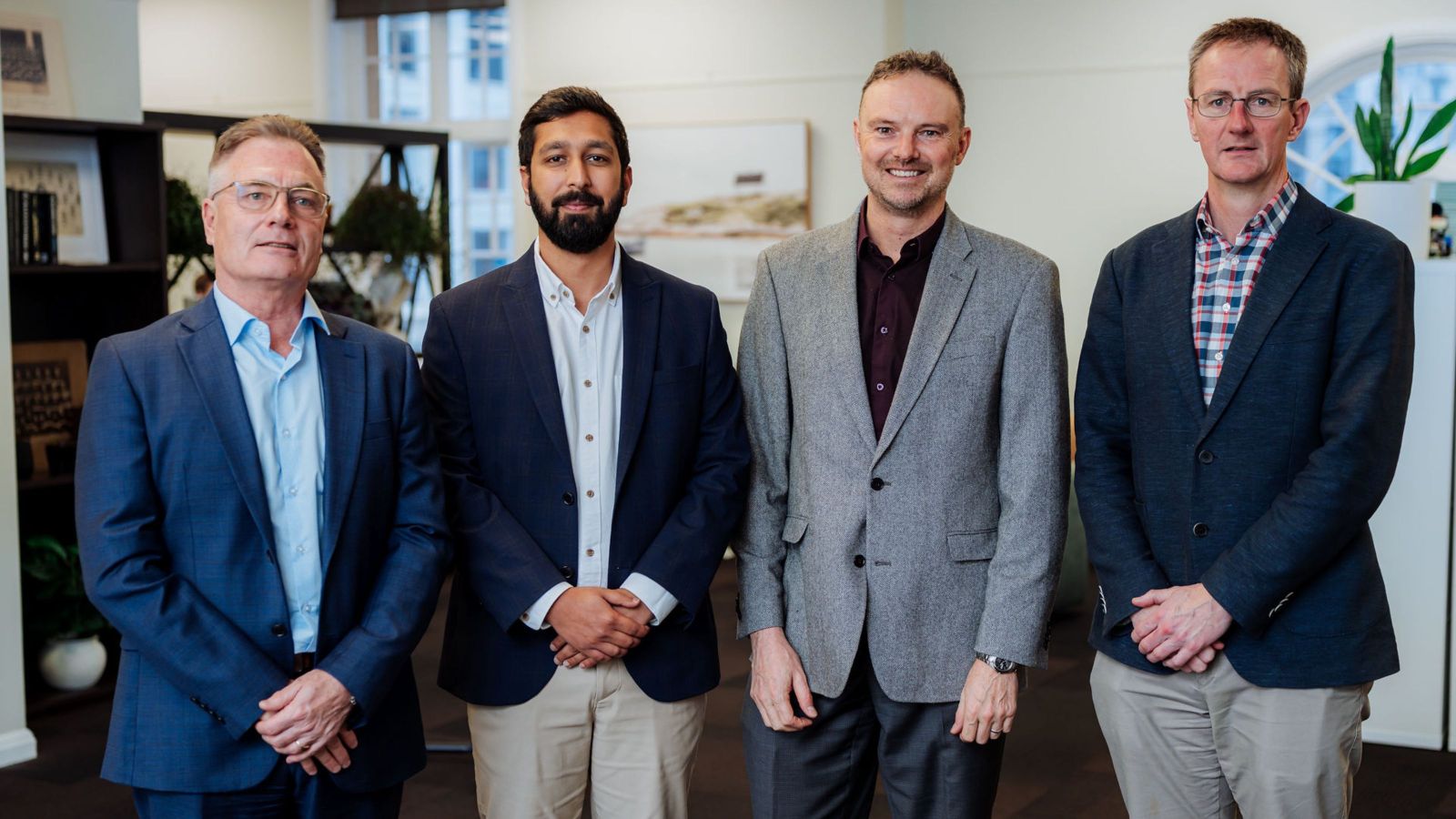
Dr Maisuria takes the role of Chief Technology Officer of Cullbeck while Martin Hacon and Chris Jansen have taken up roles as the Chief Executive and Chief Financial Officer respectively. Mr Hacon brings over 40 years of experience in the global steel industry, while Mr Jansen has more than a decade of experience in the oil and gas industry. In addition, Professor Bumby, and Professor Matt Watson (from the University of Canterbury) will take on Technical Advisor roles for the company.
Given that titanomagnetite ores sit largely unused around the Ring of Fire—including in Indonesia, Fiji, Australia, Canada, and the United States—Cullbeck’s technology has global market potential.
CullBeck has closed an oversubscribed $20 million capital raise, the largest recorded first raise for a New Zealand deep-tech company. Currently part of the Aurora Climate Lab, a 12-week accelerator run by Motion Capital, the company is raising the funds to build a 2.5-tonne-per-hour pilot plant adjacent to NZ Steel's Glenbrook site, with commissioning targeted for the end of 2028.
The round was led by Outset Ventures, with substantial commitments from Punakaiki Fund and Climate VC Fund 2, alongside Aspire (NZ Government), K1W1 and Icehouse Ventures. "It's a matter of great pride that what started as a research project is now developing into technology that could have global impact and play a significant role in addressing key environment-related concerns," says Dr Maisuria.
This project also creates real momentum for BlueScope’s Glenbrook precinct which is fast becoming an epicentre of decarbonisation technologies and industrial R&D innovation.
“With this technology, we’re hoping to unlock new titanomagnetite ores across various geographies to help nations become more independent in steel manufacturing. The story starts in New Zealand, but will be relevant across the world,” he adds.
"This is exactly the kind of outcome our Future Magnetic and Materials Technology Platform was designed to deliver," says Professor Nick Long, Director, Paihau—Robinson Research Institute. "When we set out the platform's plan, funded by the New Zealand Institute for Advanced Technology (NZIAT). We identified hydrogen fluidised-bed DRI reactors as a flagship process technology ready to move from the laboratory to commercialisation. To see that anticipated spin-out now raising capital and building a pilot plant is enormously satisfying. It shows what becomes possible when world-class research is given a clear path to real-world impact, and we're proud to retain an ongoing research and development relationship with the company as it grows."
Read more about research at Paihau—Robinson Research Institute.