
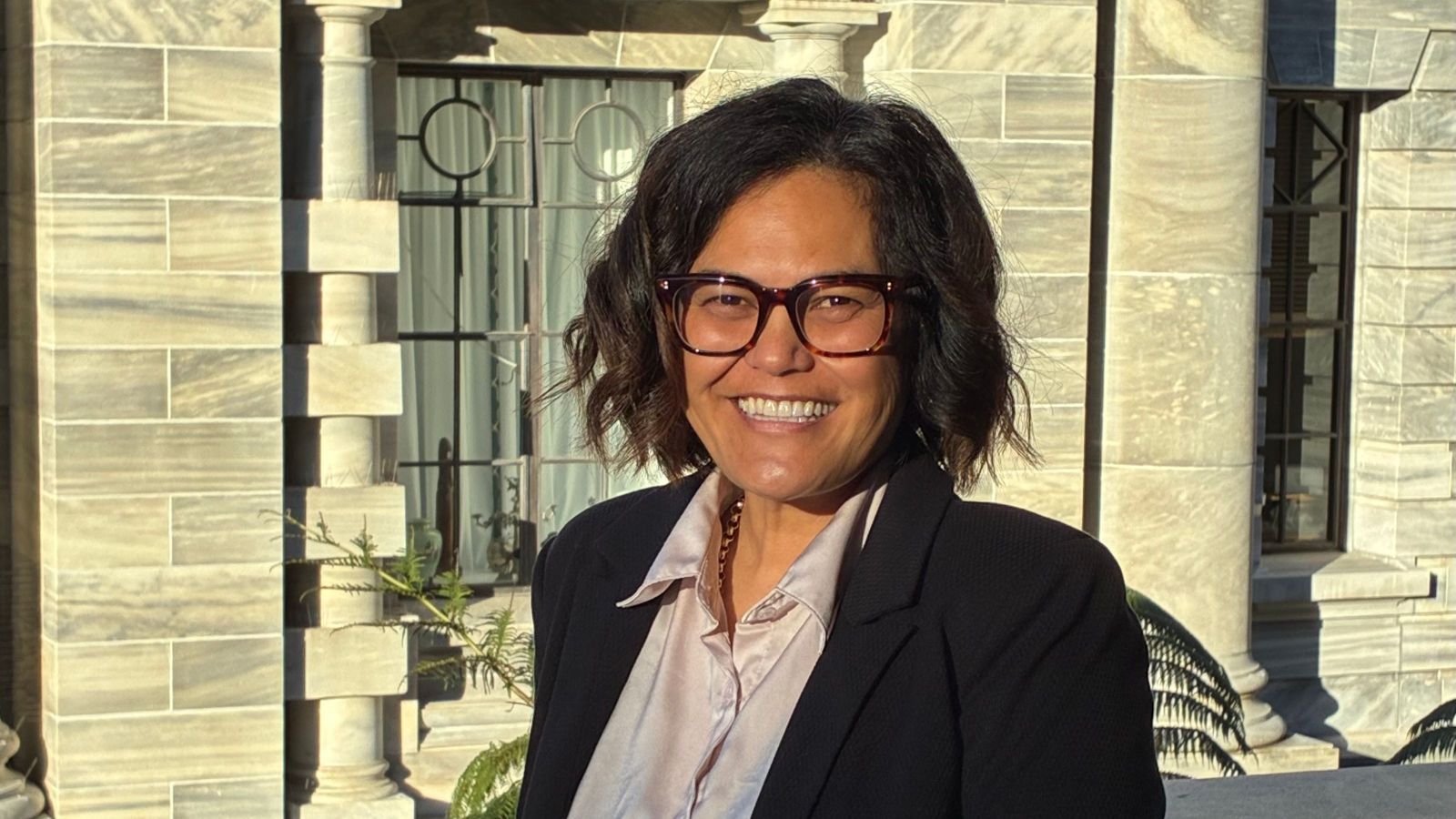
Janet Mei Collier-Taniela (Ngāti Porou) is set to graduate with a Professional Doctorate in Health. Her thesis, Ki te ū o te Ūkaipō—Wāhine Māori and Reintegration Support, examined the re-entry needs of Māori women, who are one of the most incarcerated Indigenous groups worldwide.
“Wāhine Māori make up 63 percent of Aotearoa’s female prison population. Despite their over-representation in the justice system, there is a huge gap in understanding their re-entry experience, and what contributes to successful reintegration to keep them out of prison,” explains Janet Mei.
“My research centres the voices of these wāhine—I wanted to find out what the real key supports are outside of the prison gates.”
Janet Mei interviewed 17 wāhine Māori who had been out of prison for at least 6 months.
“I found that whānau was really pivotal as their main support—that can be in a positive way, but was sometimes also the biggest source of risk to their successful reintegration. That’s because some of these women would go back to environments that contributed to risky decision making—resulting in crime, for instance. So I wanted to understand the ways whānau helps or hinders, and how to ensure these vitally important relationships were able to best support the wellbeing of wāhine Māori.”
Janet Mei says another key factor in determining successful re-entry were the programmes on offer in the community.
“Some of the available programmes were really helpful, but there was a scarcity of services targeted specifically for wāhine Māori,” she says. “A lot of the reintegration services are designed for men, and use a eurocentric way of thinking about reintegration. One of my recommendations is that we really need gender focused services to truly understand and support the needs of wāhine Māori. There are some services , such as Iwi organisations offering it, but there's just not enough.”
Janet Mei focused on women because, she says, their incarceration has a deeper impact.
“When women are imprisoned, they are generally the main carers, protectors, and nurturers of their whānau,” she explains. “So when you remove Māori women from their whānau, the whole structure fractures—that key person is taken away. So there’s a lot more at stake for their tamariki and whānau when that happens.”
Janet Mei says successful reintegration after prison is a way of breaking the cycles of not only incarceration but the wider historical impacts of colonisation on Māori.
“Colonisation and the fractures, dislocation, and disconnect from culture and whenua are still visible today through those who have been incarcerated,” she says. “I firmly believe that if you improve outcomes for Māori, you can achieve great things for society as a whole, so improving wellbeing for Māori and supporting them to flourish in their life without prison, is where my passion lies.”
Janet Mei studied nursing and worked in primary healthcare with high priority populations for around 20 years, before joining the Department of Corrections as a prison inspector where she saw first hand the impact of incarceration on Māori.
“The need was so overwhelming to see, visiting these prisons where majority of the prison population were my people. It gave me a raw insight into the travesties in the prison system and the wider impact of intergenerational imprisonment on the lives of Māori and their whānau—how do you recover from that? How do you rebuild your lives? I was compelled to do something.”
She then returned to Te Herenga Waka to lecture in the School of Nursing, Midwifery and Health Practice, and embarked on her Professional Doctorate.
“What is really great about the Professional Doctorate programme is it allows people who are working full-time to be able to engage in this type of study—it was a really good choice for me. And it's also a practical and applied thesis—I was working in the area, and I was able to apply what I had learned and experienced through my background in health and justice.”
These days Janet Mei works at Oranga Tamariki—Ministry for Children, where her mahi continues to focus on improving outcomes for whānau Māori.
“Because the Professional Doctorate is an applied research, there’s an opportunity and expectation that your research will be used in a practical way. In my case, the gift of these strong women sharing their pūrakau (stories) with me—what is and isn’t working for them as they re-enter society after prison—has given me a sense of obligation to apply that knowledge to improve outcomes for Māori in the justice system,” she says.
“It has been a real privilege to hear those voices—hopefully by my elevating their voices I can contribute to changing the lives of he iwi Māori. That is what really excites and ignites me.”