
Comment: If your home insurance renewal arrived recently and you flinched at the price, you’re not alone. But for a growing number of New Zealanders, the problem is worse than cost.
Some properties are becoming hard to insure at all. And a home you can’t insure is a home you can’t sell or mortgage, let alone rebuild if disaster strikes.
For many families, their home is their primary or only asset. When insurance disappears, so does everything they’ve worked for. And in a country as risk exposed as ours, without broad insurance coverage we will see more inequality as the effects of climate change intensify. Only the wealthy will remain protected.
The global insurance system is already under strain from climate change. In Australia, one in seven households now spends more than four weeks of gross income on home insurance. In California and Florida, major insurers have stopped issuing new policies. Places most exposed to climate risk are losing protection fastest.
Traditionally, New Zealand has maintained high insurance coverage, despite being the second most risk-exposed country in the world relative to GDP. That’s not luck. It’s because 80 years ago we built a public insurance scheme that spread risk collectively and kept cover accessible despite our vulnerability to earthquakes.
But this protection is under pressure as climate change accelerates and our flooding risk escalates.
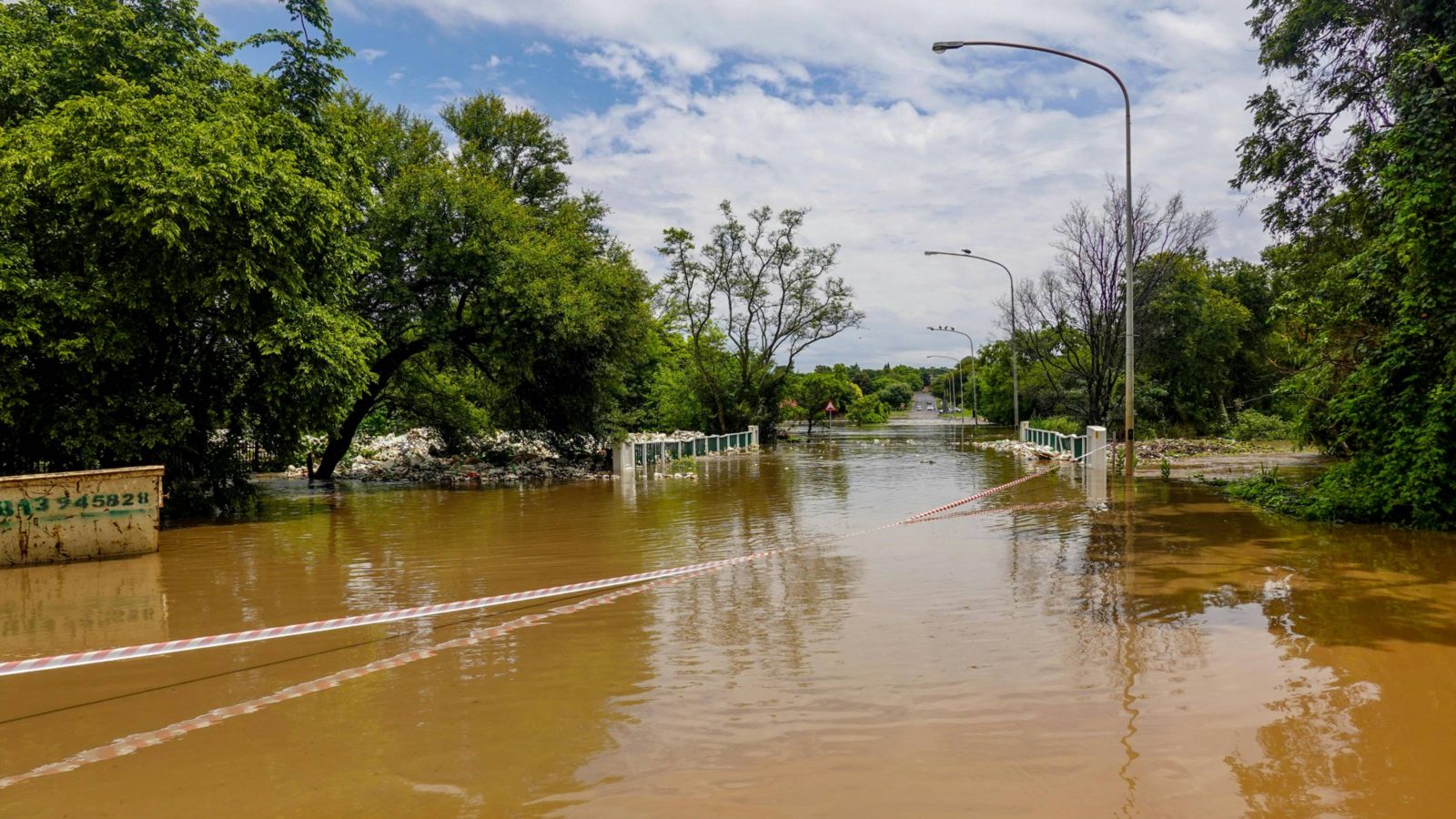
The wild storm that hit this month, part of a summer of deadly weather events, arrived almost exactly three years after Cyclone Gabrielle. The 2023 Auckland floods and Gabrielle each cost nearly $2 billion in insurance claims—10 times larger than any previous weather event in our history.
Losses of this scale are now testing insurance accessibility in Aotearoa. How do we protect it?
Built for earthquakes. What about floods?
Around the world, when private insurance becomes unaffordable or unavailable, governments can step in with hybrid public schemes to keep coverage accessible—what we call "protection gap entities".
Insurance gaps emerge for different reasons. Sometimes it’s sudden uncertainty, such as after 9/11 when construction in New York was threatened due to the withdrawal of terrorism insurance.
Increasingly, the problem is the opposite: too much precision.
We can now model flood risk to the individual property. Insurers can set technically precise prices. But when prices exceed what people can pay, they drop out and the collective pool that makes insurance work begins to weaken. The market is doing its job—setting price relative to risk—but the outcome is exclusion for some.
New Zealand was ahead of its time in recognising the limits of private cover in our hazard-prone isles. After earthquakes in the 1930s and 1940s, private insurers refused to cover earthquake risk. In 1944, Minister of Health Arnold Nordmeyer told Parliament: “Most of the private insurance companies refuse to take any further cover against earthquake risk.”
The government stepped in, creating what is now Toka Tū Ake, the Natural Hazards Commission. It removed the riskiest layer of earthquake risk from private insurers and spread the cost collectively, making coverage accessible to all. This high level of insurance cover mattered enormously when the Christchurch earthquakes hit.
But this system was built for earthquakes. Cover for flood risk is strictly limited and doesn’t extend to damage to buildings. That made sense once. I argue it doesn’t anymore.
Insurance as climate infrastructure
Concerns about expanding public insurance are legitimate. A scheme that repeatedly pays to rebuild homes in known flood zones entrenches risk rather than reduces it. And any expansion carries fiscal costs.
That’s why scheme design matters. Risk can still be priced transparently so homeowners and councils get the signal some places are becoming uninsurable. Payouts can be tied to flood-resilient rebuilding, and insurance data can inform land use planning decisions.
The goal is not to make risk invisible, but to ensure households are not left financially stranded while the country adapts.
Public insurance will not be an enduring solution for every at-risk home. For some communities, managed retreat is the only realistic long-term answer. But retreat takes time—years of planning, negotiation, and government-led support. In the meantime, families in affected communities need financial and psychological protection.
A well-designed public scheme can serve as a bridge: maintaining accessible cover while retreat pathways are developed and even helping fund the transition by tying repeated claims to relocation support rather than endless rebuilding in place.
Switzerland shows what’s possible. Ninety-five percent of households there are insured. Under the Swiss model, insurance is integrated with prevention rather than separated from it: preventing loss, intervening after disaster to rebuild better, and insuring what remains is part of public insurers’ mandate. And it is precisely because there are public insurance entities for natural hazards that this can be done. Their integration in government enables them to shape where and how people build, not just compensate them afterwards.
New Zealand could apply the same principle. Expanded public insurance must come with a new mandate for Toka Tū Ake and insurers to work alongside planners and councils, so that insurance data shapes where we build and how. Not just what we pay when things go wrong.
This is the shift New Zealand needs to make. We need to evolve the mechanisms that made earthquake insurance possible to also support climate adaptation and flood insurance.
Toka Tū Ake already does risk-reduction work and public education as part of its mandate. The question is whether we give it the tools and scope to do much more: connecting insurance data to planning decisions and turning what we know about risk into action before the next disaster, not just payouts after it.
Extending public insurance to cover residential flood risk would spread the premium costs across the whole country. International evidence shows systems that rely on the private market and individual responsibility—rather than introducing some collective solidarity—lose insurance accessibility. Expanding our current public scheme, in some shape or form, to cover flood would therefore be a way to protect our hard-won social infrastructure of high insurance coverage.
Private insurers would remain essential partners in any evolution. The current public layer has always enabled the private market to function, not replaced it.
We’ve done this before. A small, pragmatic country on multiple fault lines built a public-private system that let people stay insured and rebuild after disaster. Climate risk now demands the same pragmatism: extending that model to flooding, in coordination with the bold adaptation choices government must also make.
Insurance is not just a household expense. It is social and economic infrastructure, and it is worth protecting.
This article was originally published on Newsroom.
Rebecca Bednarek is a professor in the School of Management at Te Herenga Waka—Victoria University of Wellington.