
Professor Ocean Mercier is at the forefront of exploring ways the knowledge systems of science and Aotearoa New Zealand’s Māori community can speak to each other to tackle pressing issues ranging from climate change to genetic modification.
Māori provide fresh ways of thinking about these issues along with long-term environmental observations that pre-date European settlement of Aotearoa by hundreds of years, says Professor Mercier.
Thousands of years of knowledge
Indigenous science—not just in Aotearoa but also in other countries such as the United States, Canada, and the Pacific islands—has amassed thousands of years of knowledge, she says.
“Indigenous knowledge enhances our historic, social, environmental, and cultural understanding to create a richer, deeper picture. Mātauranga Māori is rooted in Pacific knowledge, the navigations and migrations of Polynesian ancestors, and the accumulated observations, knowledge, and practices developed by Māori living in Aotearoa.”
Applying a kaupapa Māori lens to Western science
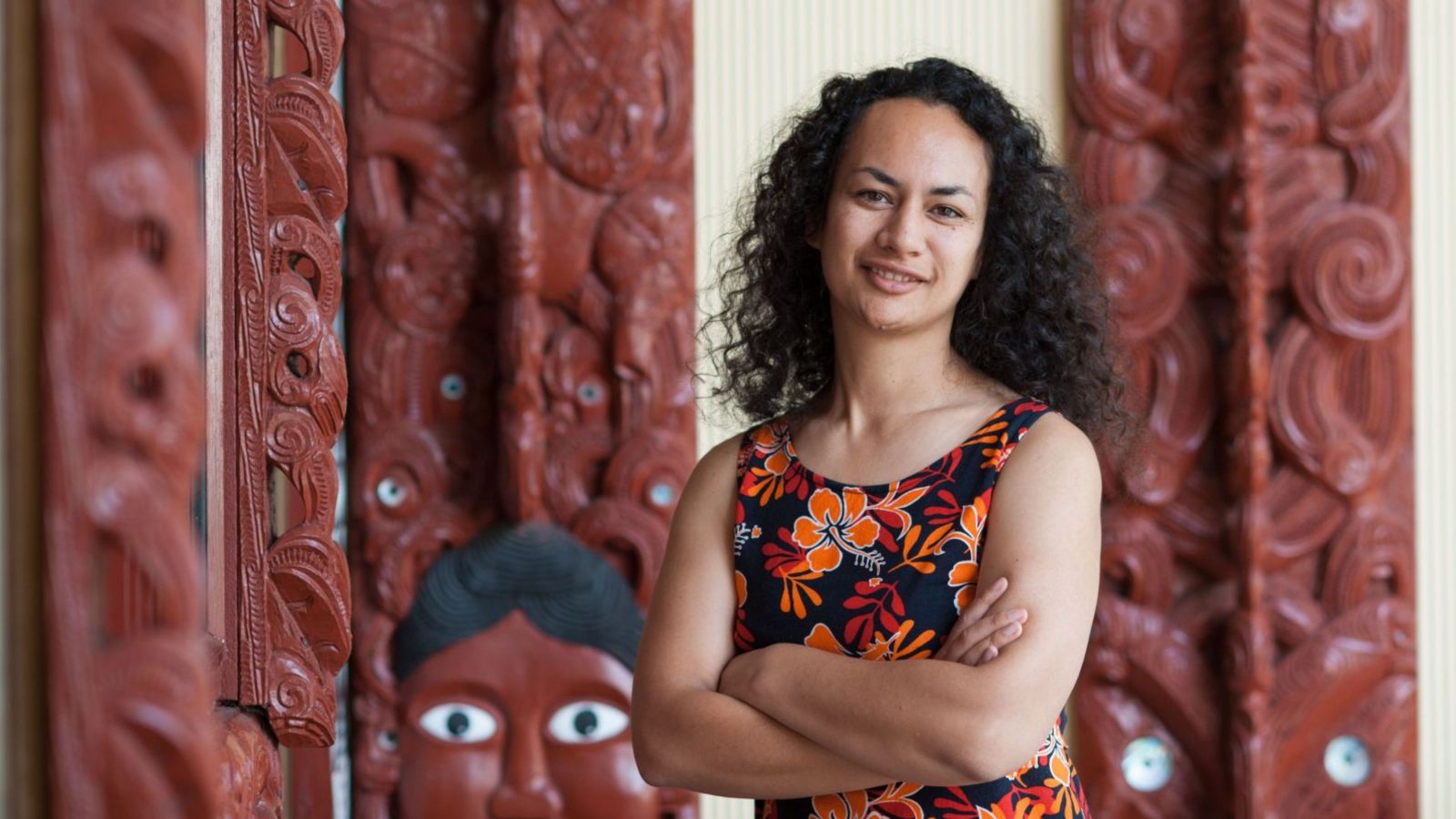
Professor Mercier (Ngāti Porou) is based in Te Kawa a Māui, the School of Māori Studies, at Te Herenga Waka—Victoria University of Wellington. She is also a Principal Investigator at MacDiarmid Institute, in its Pūtaiao Māori Research Programme—she is investigating pathways for Māori in the physical sciences.
Professor Mercier develops research that applies a kaupapa Māori lens to Western science, and facilitates an exchange of ideas between them.
Her work includes Māori perspectives on the development of biotechnologies for pest control in Aotearoa, an international project that aims to improve our understanding of ocean circulation and connectivity to support the way marine environments are managed, and, with Taihoro Nukurangi, the National Institute of Water and Atmospheric Research, looking at tohu (environmental indicators) in Antarctica, including the impact of the lunar pull of marama (the moon) on seafloor seeps of greenhouse gases.
She is also collaborating with iwi in different parts of Aotearoa on their groundwater systems. The multi-year project, led by Te Pū Ao Earth Sciences New Zealand, is backed by the Ministry for Business, Innovation and Employment’s Endeavour Fund—it aims to secure Aotearoa’s freshwater resilience in the face of climate change. Professor Mercier is working with Ngāti Kahungunu ki Heretaunga (Hastings) and Te Aupouri iwi in Te Hiku o te Ika (Northland) to offer them some Western science tools to help them better understand and fulfil their aspirations for their groundwater systems.
“Bringing together bodies of knowledge, and working with their similarities and differences, can make a positive change to our future,” says Professor Mercier.
History of science
She says the history of science “has been bound up with colonisation and empire and power and all those sorts of hegemonic questions around who has power in societies and who has the right to determine what’s valid as ways of knowing and as knowledge.
“You can’t, as a scientist, go into a place anymore and treat it as empty space. As though there’s no history, there’s no culture, nobody’s been there before, and, for instance, take a leaf and do experiments on that leaf, because everything in the environment has some history, some relationship that ties it to particular people.
“Without an understanding of that social context that we’re in, we’re doomed to repeat some of the mistakes of the past in terms of science continuing to be a handmaiden of colonisation.”
Mātauranga Māori and Te Ao Māori, along with other Indigenous peoples’ knowledge and worldviews, “give science the opportunity to lift its head from the petri dishes and see the broader context in which it operates”.