
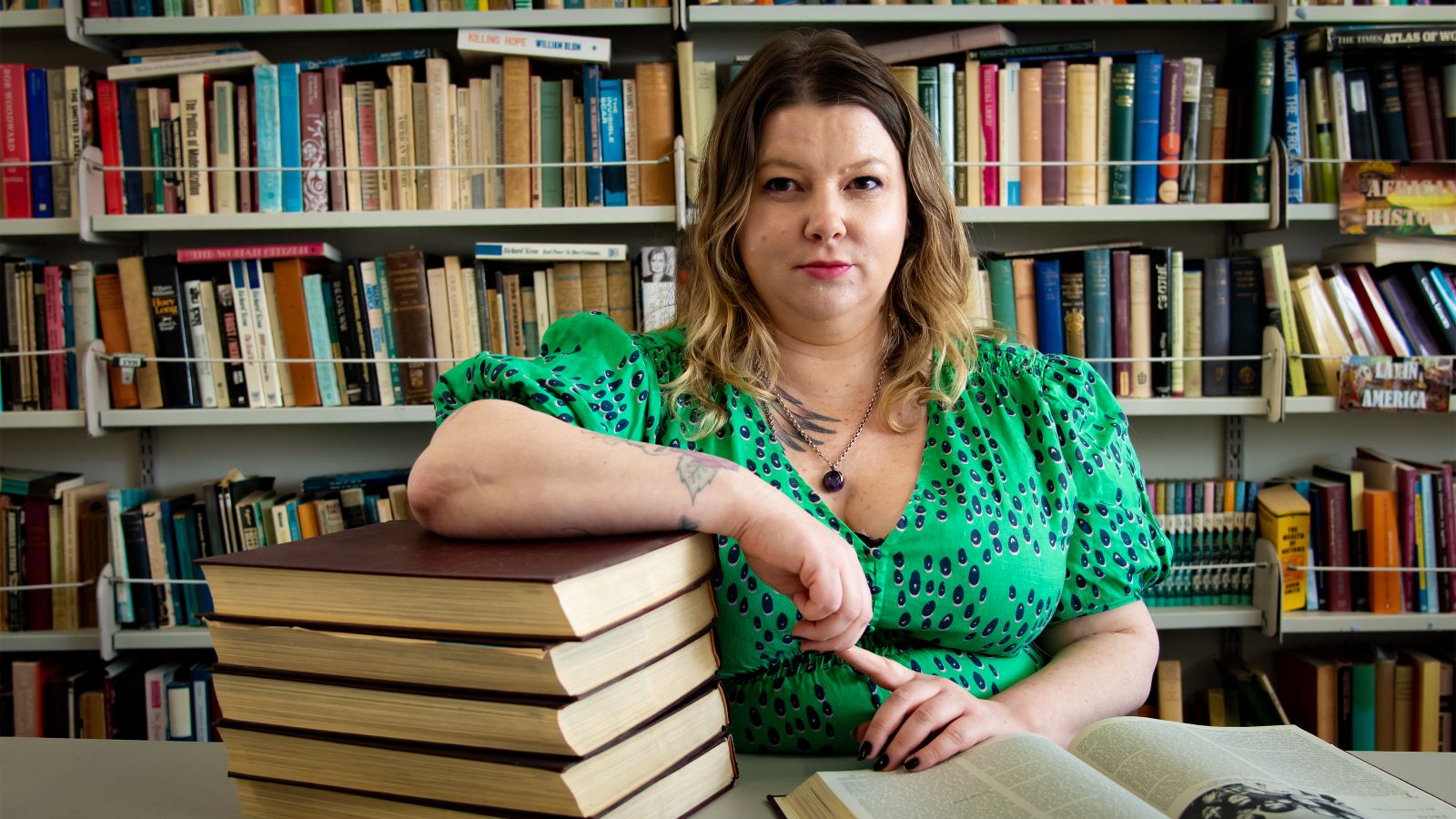
Ashleigh is the recipient of the Charlotte Badger MA Scholarship in History, which was established by Emeritus Professor of History Charlotte Macdonald with contributions from other generous donors.
The scholarship was named after Charlotte Badger, a nineteenth-century convict with a colourful life who was involved in a shipboard mutiny in 1806. Due to the limited documentation of her adventurous life, speculation has grown, with some accounts even portraying her as the leader of the shipboard rebellion.
The Charlotte Badger scholarship is supporting Ashleigh to complete her Master’s thesis. She is relishing digging up the histories of other characters who were considered to be outside the mainstream, focusing on the cultural exchange between Māori, Pākehā, and Chinese people dealing in medical cures in Aotearoa in the late 19th and early 20th century.
Ashleigh is interested in concepts of morality and respectability involving the body and how these intersect across ethnicity and class.
“Many of the attitudes to healing resonate with what is happening today,” Ashleigh says. “I am hoping to identify individual case studies of ordinary people, bringing them to life so people can see themselves in history.”
Her research methods include studying newspapers as well as coronial inquests and shipping records, which are now digitised and available online. Ashleigh was astounded at the detailed accounts of people’s life sagas that were reported in the papers of the time.
“We are warned about social media today, but these stories are still available 150 years later!”
The papers include racially-based critiques of tohunga and Chinese medical practitioners who were not then considered part of ‘respectable’ society.
“I found many heartbreaking stories where it was obvious that prejudices of the time meant that people’s stories weren’t believed when they were pitted against members of the ruling class in court.”
Ashleigh was struck by the amount of long-term disability—including deafness, blindness, and paralysis—created by diseases like measles and diphtheria, which have now been largely eliminated. In those days, diagnosis was in its infancy, there were no antibiotics, surgery was risky, and there was often little that doctors could offer patients, leading many people to rely on alternative cures, quackery, and faith healing.
There were a fair number of ‘quack’ healers roaming New Zealand, including Pākehā ‘doctors’ who set themselves up in Māori communities.
“I am surprised by the amount of international movement I am finding using shipping records. Fraudsters were often able to outrun their bad reputation by moving around by steamship or train. You can see the same accusations were made about people in different locations.”
Ashleigh returned to study as a mature student, having started a degree in Political Science after high school. After many rich life experiences, including working as a chef and raising a family, Ashleigh’s thoughts turned to finishing her degree. Following COVID-19, her partner was able to work from home, allowing for more flexible childcare arrangements.
Ashleigh’s favourite part of studying was being surrounded by passionate young historians who were investigating a wide range of subjects.
“I found studying history gave me a good grounding in research methods and ‘thinking outside the box.’ The School encourages students to do what they want to do and find creative ways to look at things.”
In 2024, Ashleigh graduated with a Bachelor of Arts in History and Media Studies, followed by an Honours degree, achieving excellent grades.
Being awarded the Charlotte Badger Scholarship was a welcome boost for Ashleigh. “I am super thankful to have received the scholarship and found it humbling. You put yourself out there and other people get what you’re doing.”