
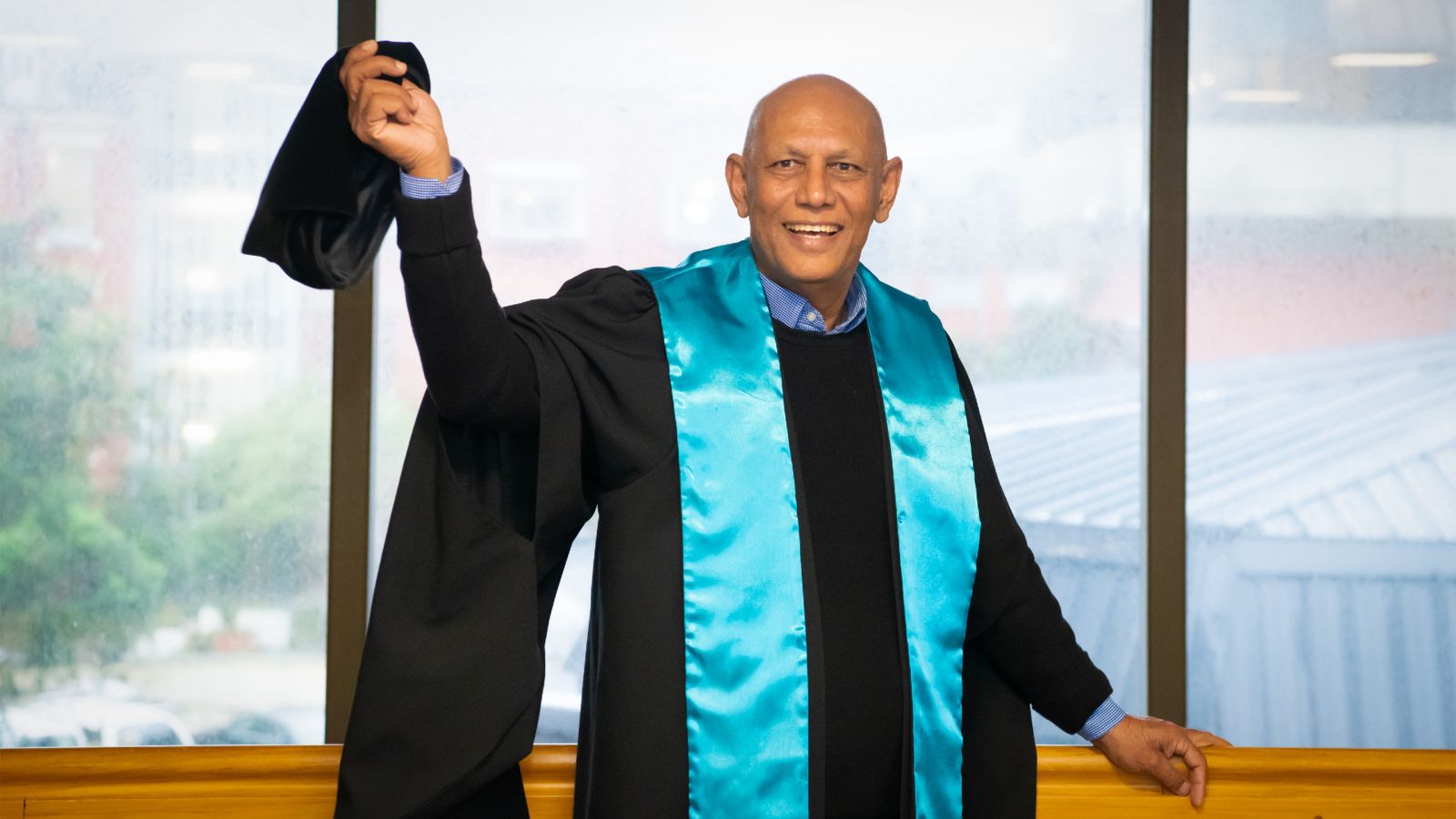
Pursuing a doctorate had long been a dream for Dr Kumar.
Previously an accomplished teacher from Ba, a sugarcane farming town in Fiji, he moved to New Zealand in 2012 to take up a lecturing role at Te Rito Maioha—Early Childhood Education New Zealand.
When visiting a primary school while in this role, he was inspired to commence his EdD, about how teachers support refugee children in Aotearoa New Zealand.
“I’m from a different cultural background and had migrated here myself, so when I visited primary schools, I noticed children from culturally diverse backgrounds; this caught my attention,” he explains.
“I was especially interested in refugee children who are forced to flee their countries. These families come to New Zealand with their own language and culture, which is very different from the New Zealand way of life. This really touched me. I wanted to explore how they’re supported by teachers and what those teachers experience.”
Through classroom observations, interviews, and reflective video sessions, he examined how teachers built relationships, where they learned to work cross-culturally, and how well their training had prepared them.
His findings revealed that while teachers found the work meaningful, they often felt underprepared. Many worked hard to support children emotionally and culturally, but limited training posed a challenge. Efforts to involve parents were also hampered by communication difficulties and mismatched expectations.
“We’re seeing a growing number of refugees arriving in New Zealand, and that’s reflected in our classrooms. I believe it’s essential for teachers to be aware of the diverse cultures, languages, and backgrounds they’re engaging with.
“I think the impact of this research is that teachers need adequate support and training to meet these needs. This could involve creating a group of teachers working with refugee children, where they can collaborate and share best practices. It also means improving teacher training, ensuring course content includes this focus, and providing practical experiences in schools or early childhood centres where refugee children are learning.”
Continuing to advance his research, he has already presented at conferences in New Zealand and Australia and aims to keep sharing his findings with teachers to encourage discussion.
Dr Kumar’s passion for education was sparked early in life, influenced by the teachers he admired while growing up in Ba. He spent 17 years as a primary school teacher, while completing his Bachelor’s and Master’s degrees through extramural study. Eventually, his dedication led him to a lecturing role at Fiji National University.
“I always looked up to my own primary school teachers. I’ve had a lifelong love of learning and a deep passion for working with children and supporting their growth.
“My parents were also a huge inspiration. They instilled in me a respect for education, the value of hard work, and the importance of honestly. I’ve always believed in goal setting and continually improving, and that is something that’s shaped my professional philosophy.”
Now, after seven years of part-time study alongside his work at Te Rito Maioha, Dr Kumar is set to graduate with a doctorate in Education.
“Graduating is a dream come true; for me and my family. When I told my brothers and sisters, they said they’d already knew I was destined to achieve something great as I was a very studious child.
“Reaching this milestone is inspiring, not just for my own children, but for others too. It shows that age is just a number, and if you’re passionate about exploring a subject, you can.”