
We’ve seen the minister of arts, culture and heritage remove te reo greetings from an official Matariki invitation.
We’ve also seen the Government’s ongoing efforts to limit te reo use in the public sector – efforts the Waitangi Tribunal found breached te Tiriti and caused prejudice to Māori.
These attacks on te reo Māori have gone hand-in-hand with the perpetuation of false narratives framing Māori as ‘entitled’ and thus as undeserving. Or at a minimum, deserving of much less than the pittance our hands were forced to accept.
So, Te Wiki o te Reo Māori—the one week a year when we celebrate our reo—has been a long time coming for many. But this year, let us not worry too much about those who wish to attack te reo. Let’s instead remember and celebrate the mahi of those who have helped the language flourish despite the obstacles put in front of them.
Your ability to say ‘Kia ora’ is everlasting, thanks to Naida Glavish, the woman who refused to stop using the greeting when she worked as a telephone operator at the New Zealand Post Office.
Te Wiki o te Reo Māori is also not just the week to speak te reo, but a week, thanks to the efforts of Te Hōhaieti o te reo Māori (Māori Language Society), Ngā Kaiwhakapūmau i te Reo (Wellington Board of Māori Language) and its founding member, Huirangi Waikerepuru CNZM (Taranaki, Ngāpuhi), who led the te reo Māori claim (WAI011) in the Waitangi Tribunal in the 1980s.
Let us also cast our minds back to when our language had little to nothing or te wā o te kore, and remember a few of those who were instrumental in fostering te reo and their amazing and worthwhile work. They include:
- Ngoingoi Pewhairangi QSM (Te Whānau a Ruataupare) and Dame Kāterina Te Heikōkō Mataira DNZM (Ngāti Porou), co-developers of Te Ātaarangi, the language revitalisation movement established in the late 1970s and still thriving today.
- Lady Tilly Reedy (Ngāti Porou) and Sir Tāmati Reedy KNZM (Ngāti Porou), who curated ‘Te Whāriki’, the revolutionary early childhood curriculum now celebrating 30 years. Lady Tilly was also co-responsible for the naming of Te Kohanga Reo.
- Professor Whatarangi Winiata (Ngāti Raukawa), the pioneer of Whakatupuranga Rua Mano (the progenitor of all future iwi language strategies) and Te Wānanga o Raukawa.
- Dame Iritana Tāwhiwhirangi DNZM MBE (Ngāti Porou, Ngāti Kahungunu, Ngāpuhi), who led and promoted the Kōhanga Reo Movement.
- Te Wharehuia Milroy QNZM QSO (Tūhoe, Ngāti Kōura), who co-established Te Panekiretanga o te Reo (Institute of Excellence in the Māori Language).
- Henare Kingi MNZM (Ngāpuhi), Māori radio broadcast veteran, respected mentor, and te reo Māori advocate who inspired others, such as Rauru Broughton (Ngāti Ruanui).
These are just some of those who took action, but did so with a strong and clear vision because they wanted better for us as a people and better for our language. They are a powerful minority who saw a gap or an opportunity for our language, and therefore our people, and went full speed ahead. These rangatira, their mana, their integrity, and the kaupapa they helped carry are vast, and their legacy alone as individuals is one that will far outlast, outlive, and outshine that of any government.
We need to continue to build on the foundation they laid down for us. We can do so by being active in using our reo, our voices, and the tools we have to give – just like they did.
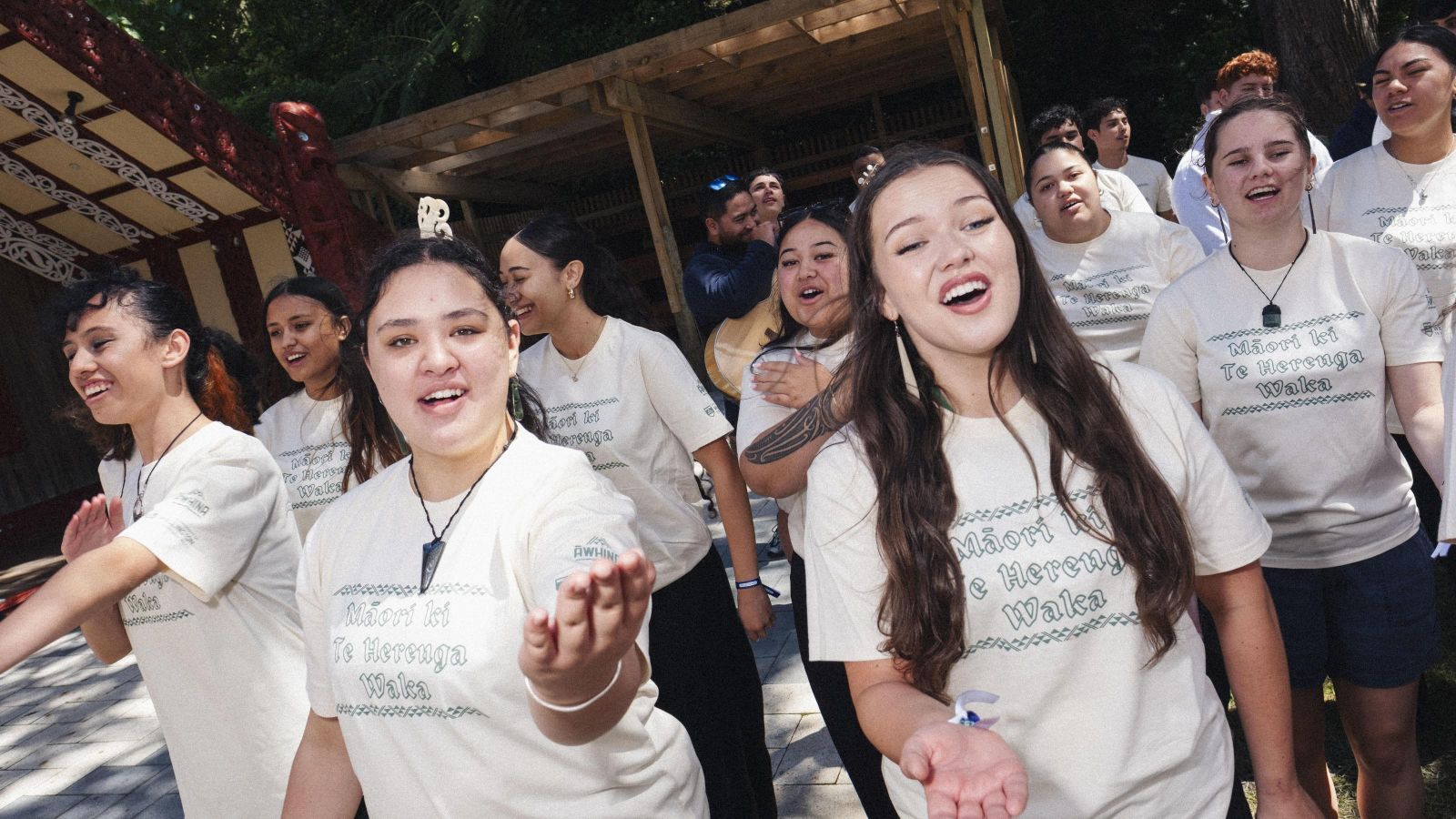
So this week, take whatever respite you need and use the week to invigorate yourself. Because the celebration of our language is not signified purely by walking during the annual Te Wiki o te Reo Māori march, but in the everyday moments we choose te reo Māori.
Wear your kākahu, sing your waiata, listen to Māori radio, read your reo Māori pukapuka, and share a joke or many with your hoa.
This week, let’s celebrate our language in the best way we can—by using it, because it really is that simple, and use it in a manner that suits you because everyone’s reo Māori is their own.
Let us celebrate the guardians raising better speakers than themselves, and the teachers of now and of times gone.
Lastly, let’s celebrate everyone simply trying to do their best. Here’s to them, and here’s to you for choosing te reo in the little and significant moments, no matter how big or how small. Remember also that we stand on the shoulders of giants, because our language is one of high chiefs; therefore, so too are we who use it and embrace it.
Better rauORA living, everyone, and kia kaha te reo Māori!
This article was first published in Newsroom.
Ariana Thomson-Lawrence (Ngāti Konohi, Rongowhakaata, Ngāi Tāmanuhiri, Ngāti Rākaipaaka, Rongomaiwahine) is a lecturer at Te Kawa a Māui, at Te Herenga Waka—Victoria University of Wellington.